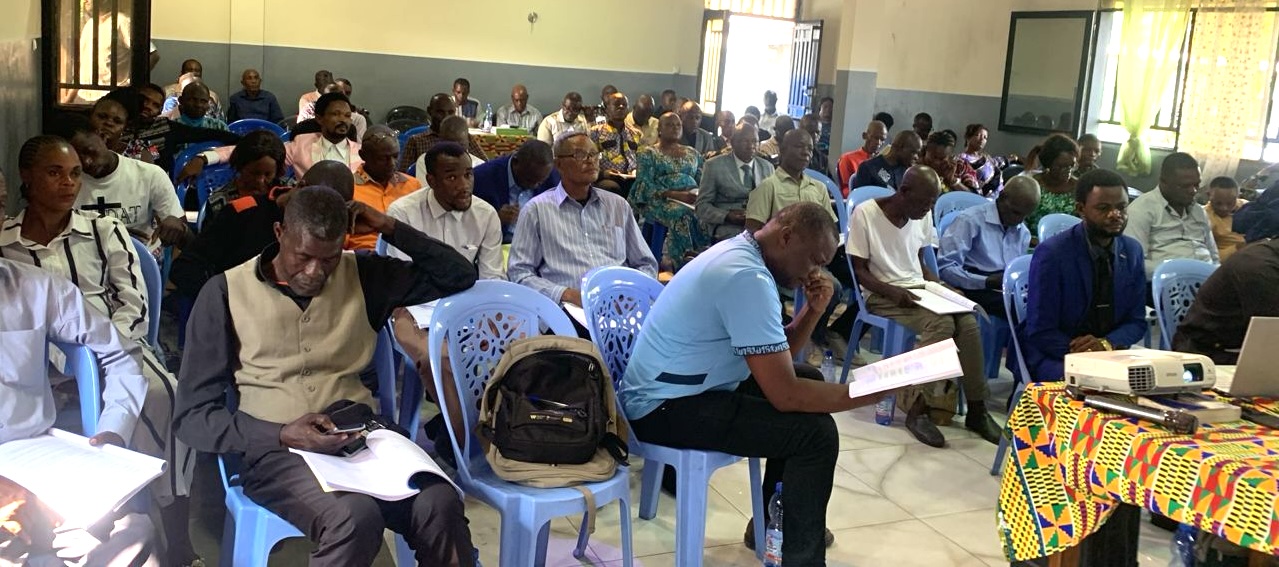
We are delighted and somewhat amazed that we are increasingly being invited into French-speaking African countries to offer our Certificate in Holistic Liberation. I offer here a brief history and update.
Gracie and I moved to France for theological studies in the Institut Protestant de Théologie (IPT) in Montpellier in 1988. After six years serving the rural poor in Honduras in the 1980s, we felt a need for a period of deep reflection in a new place where we could find a fresh perspective. The Église Reformée de France’s graduate school drew students from France and also francophone Africa. We met many students from Cameroon, Congo (then called Zaire), Benin, Côte d’Ivoire, Madagascar, Mauritius as well as from previous French colonies in the South Pacific like Tahiti, and Nouvelle-Calédonie. African students were especially hospitable. We certainly had no idea at that time that we would be teaching courses in these countries!
Years later in 2018 a fellow student from the IPT, Bernard Coyault invited us to offer our training to a group of Sub-Sahara African pastors in Rabat, Morocco. Bernard was one of the founding members and the first director of the ecumenical seminary Institut Œcuménique de Théologie Al Mowafaqa. In 2017 he invited us to offer our then three, four-day module Certificate in Holistic Liberation in French to migrant pastors serving in Morocco. We agreed to start the training in the Fall of 2018, and were then curiously invited to offer the same training in Paris.
Then in July 2018 I was diagnosed with follicular lymphoma, just before launching our first French Certificates in Paris and Morocco in October. My oncologist told me I must cancel all travel plans as chemotherapy was necessary. Then he let me know of a clinical trial drug that I qualified for– which would allow me to take a single pill once a week in lieu of chemotherapy, making my planned trips possible.
Our courses went beautifully, however my follow-up CT scan two months later showed the tumor had grown 18%, prompting my oncologist to urge me to abandon my scheduled courses and start chemo immediately. However since I was still under the 20% limit to allow me continuation on the trial drug, I decided to proceed with our scheduled module 2 trainings in Bristol, Paris and Rabat. My oncologist scheduled a CT scan and needle biopsy for a few days after my return, insisting I prepare for chemotherapy.
At the end of our training in Morocco the group of 40 or so Sub-Saharan African pastors took me to one of their house churches and prayed for my healing. When I returned home I went in for my CT scan. The next day at my scheduled needle biopsy the radiologist told me that they couldn’t proceed with the biopsy as the CT scan showed the tumor had shrunk by 50%. Over the next four months the tumor continued to shrink until it was mere scar tissue. I’ve been in full metabolic remission since June 2019. We were able to complete the certificates in Bristol, Paris and Morocco.
Most of the pastors who prayed for me were refugees from war-torn Congo and Cameroon. They shared with me the need for these trainings to be offered in their home countries, and elsewhere in Francophone Africa. I began to explore connections in these countries, but nothing materialized. It was a year or so later that I had the following dream.
In my dream an African man appeared, telling me in French “venez a Gabon!” (come to Gabon!). I awoke and immediately looked up Gabon, which I knew was a country but I didn’t know where it was and had never met anyone from there.
Over the last five years we have offered our Certificate in other francophone places, including Lausanne, Casa Blanca, Mauritius and Burundi. In each of these places I have asked people about Gabon, but no one has had any connections. I have felt bad, that unlike Paul who responded to a man from Macedonia who appeared to him in a dream, telling him: “come to Macedonia!” which he immediately did, I had not immediately obeyed the voice. I sensed that we needed to first visit Congo and Cameroon, but didn’t have invitations from these countries either, until this year.
In March 2026 Gracie and I joined our two African colleagues Vera and Viviane to offer our Certificate in Kinshasa. It was there where I met one of our hosts, pastor Lucien, to whom I shared my dream about the man from Gabon. I confessed to him my regrets that I hadn’t yet been obedient to the vision.
“You haven’t yet been disobedient,” said Lucien. “You just didn’t ask ‘when’ you were to go.”
He then shared that one of his closest friends, a medical doctor from Gabon, already knew about the training we were doing in Kinshasa and wanted to make contact with me. The next week we met on WhatsApp and he asked me when I was next in the area. When I told him about my planned trainings in Cameroon and Congo in May/June he said: “But you are right there!” (Vous êtes juste là!)– Venez a Gabon! (Come to Gabon!).
I told him that my flights were already booked from Cameroon to Congo. But he kept insisting: “Venez a Gabon!”– with the same expression that I remembered from the dream. At this point I asked him to send me a photo of himself– as his voice was identical to the voice in my dream. When he sent me his picture I was shocked. The face was the same as what I’d remembered.
Just then an email came in from Ethiopian Airways announcing that my flight from Cameroon to Congo had been cancelled. While still on the call with Stanislas I found a flight from Cameroon to Gabon, and on to Congo, which would allow me to spend a free weekend in Gabon. He was thrilled and offered to organize a taster for local pastors. I booked my flight.
The first leg of my journey was a five-day training for pastors and social workers I’d arranged to co-teach with two of our African teachers, Tawanda and Colleen in Limbe, Cameroon. I flew from Switzerland to Ethiopia to Cameroon and was picked up at the airport by our host, pastor Benvictor.
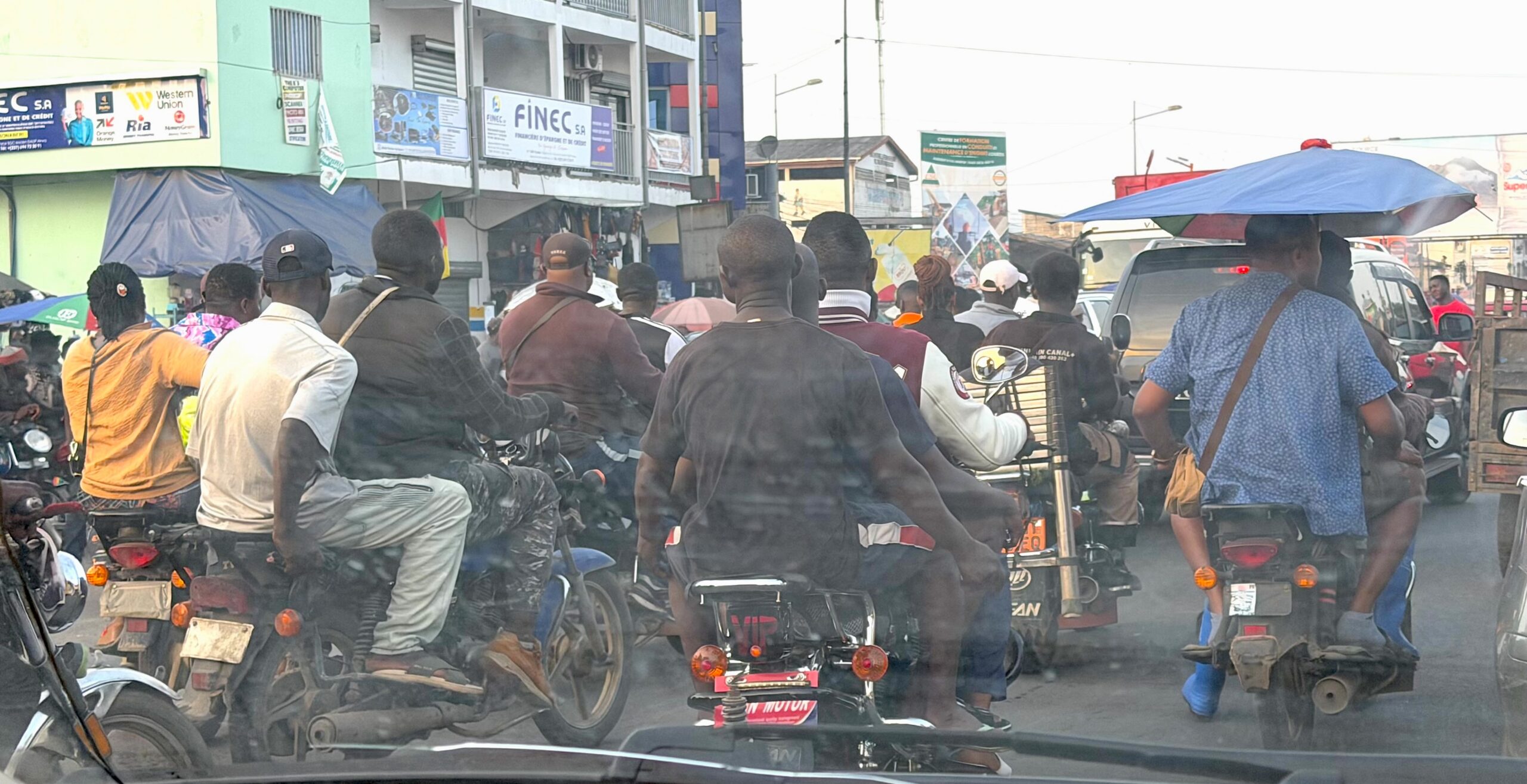
Our time in Cameroon was both distressing and deeply moving. I hadn’t been aware of the extent of the civil war that’s been ongoing in the English-speaking part of Cameroon for the past ten years. We crossed the heavily militarized line from the French-speaking into the English-speaking province and entered another world. Lush, tropical, mountainous, with umbrella-covered motorcycle taxis wizzing in an out of heavy traffic on heavily potholed roads.
Our host, Benvictor, is a visionary leader with a heart for the church serving the most vulnerable communities in his country. He has been separated from his wife for 9 years as she had to flee due to political persecution.
Chaos and neglect were visible in roads worn thin, and garbage strewn everywhere. The French-speaking central government haven’t been repairing roads or paying garbage collectors. Unbeknownst to me the first day of training fell on “ghost Monday,” a regularly scheduled general strike day that meant people were not to show up for work (or even go out of their houses in many places). Otherwise theuy could face “consequences.” Pastors and leaders still showed up for our training, attentive and open, eager for fresh input.
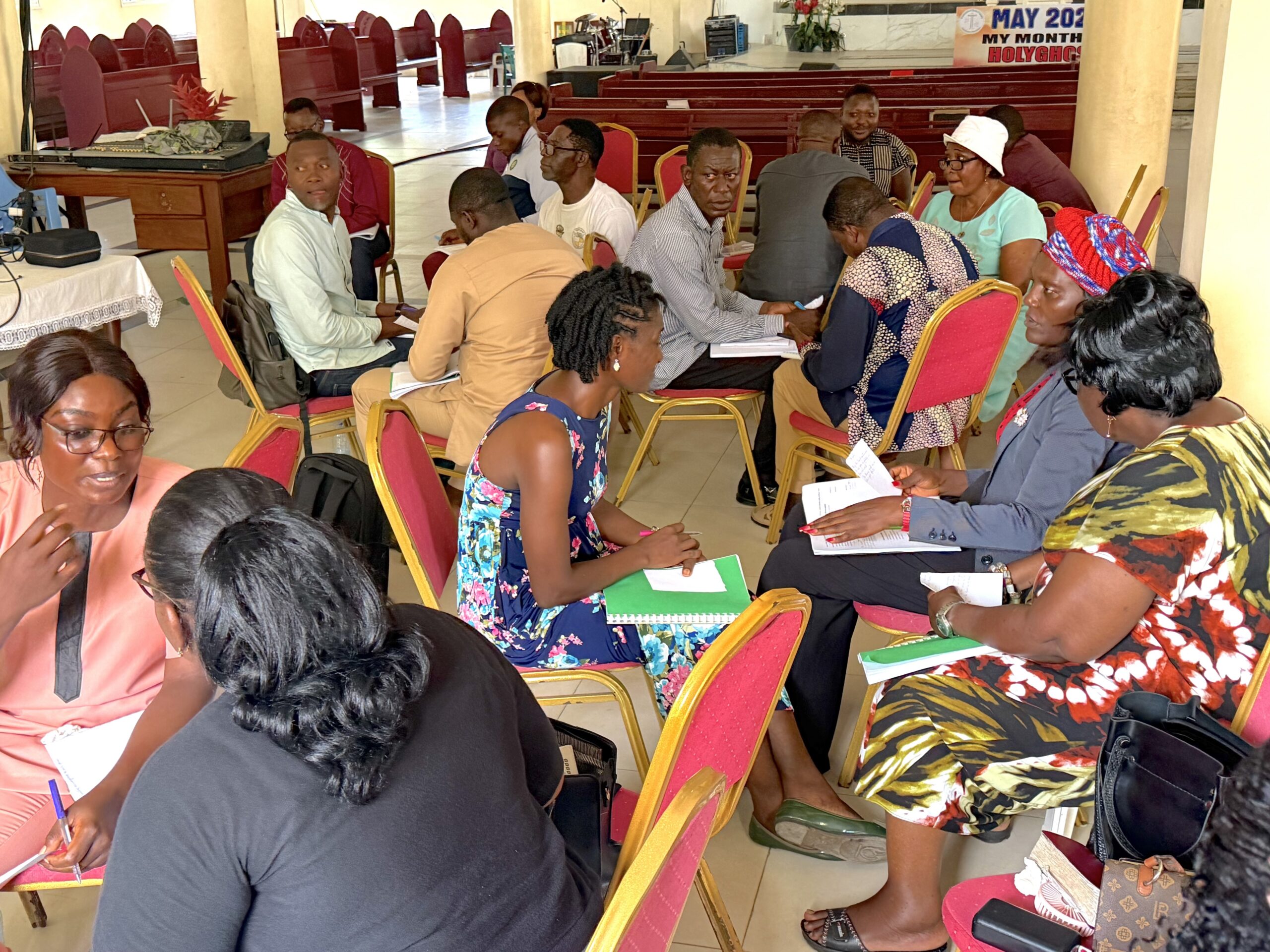
Discussing and worshipping together with our sisters and brothers from Cameroon was deeply encouraging, strengthening my spirit for struggles here in the USA.
Meanwhile the next two stages of my journey were feeling increasingly up in the air. The Ebola pandemic in Eastern Congo was causing alarm. Country after country, including the USA, was urging their citizens to not go to Congo. The Trump Administration made it a requirement for anyone who’d been to Congo in the last 21 days to re-route flights to Washington DC, Atlanta, Houston or Dallas for screening– requiring me to cancel and re-book flights if I were to go– a huge expense.
I didn’t have a visa for Gabon, as Stanislas, had told me not to worry about getting a visa (though I’d started the process). He said he would be personally going to the immigration office and sending me a special entry permission in time for my Friday evening flight.
As the days passed and my flight to Gabon was a day away, I hadn’t heard back from Stanislas, who was on a ministry trip to Ethiopia and hadn’t been responding to my WhatsApp texts. He let me know the day before my flight that he’d been to immigration, submitted everything and been told I’d been approved. However, upon arrival to the airport I still didn’t have a visa or permission letter– and FlyGabon was requiring proof of my visa.
I explained to the airline official that my host in Gabon had assured me that Gabonese immigration had approved my visa. He made some calls while I waited, watching everyone check-in, and head to security. Departure time fast approaching. “Don’t worry!” the FlyGabon agent told me, “It will all work out.” Finally he gave the nod and the agent printed up my boarding pass and checked in my suitcase.
Upon arrival in Gabon I had to show my Yellow Fever vaccination card, and then proceeded to immigration. An immigration officer asked for my visa and I explained that I didn’t have a copy– but that my host had personally been to immigration, and was assured that I’d been approved.
“I cannot admit you into the country without a visa!” she stated strictly.
“Having a friend who talks with immigration and tells you you’re approved is not how it happens in our country. There’s a process. Would I be admitted into the USA that way?” she asked in a severe tone.
“You will be deported back to Cameroon on the first flight in the morning!”
She then told me to wait where I was, turned away and walked briskly into an office. I tried following her, advocating to no avail. An immigration officer ushered me to pick up my suitcase and head to I wasn’t sure where– apparently a jail or airport holding room. When we came out into the arrivals section there was my host Stanislas, who whispered “Ne t’inquite pas” (“Don’t worry), and pointed up making a gesture to pray (which I was).
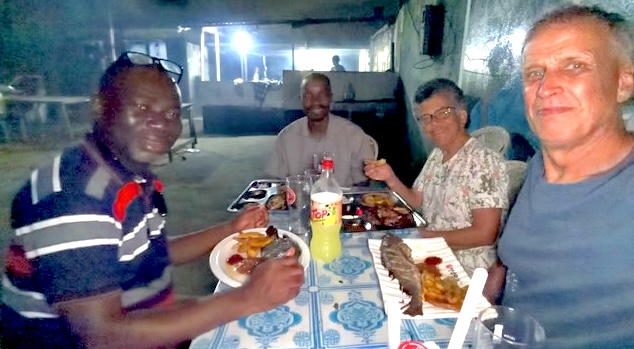
Suddenly the officer accompanying me was called over to the border police window (pictured below behind Stanislas’ wife Perine).
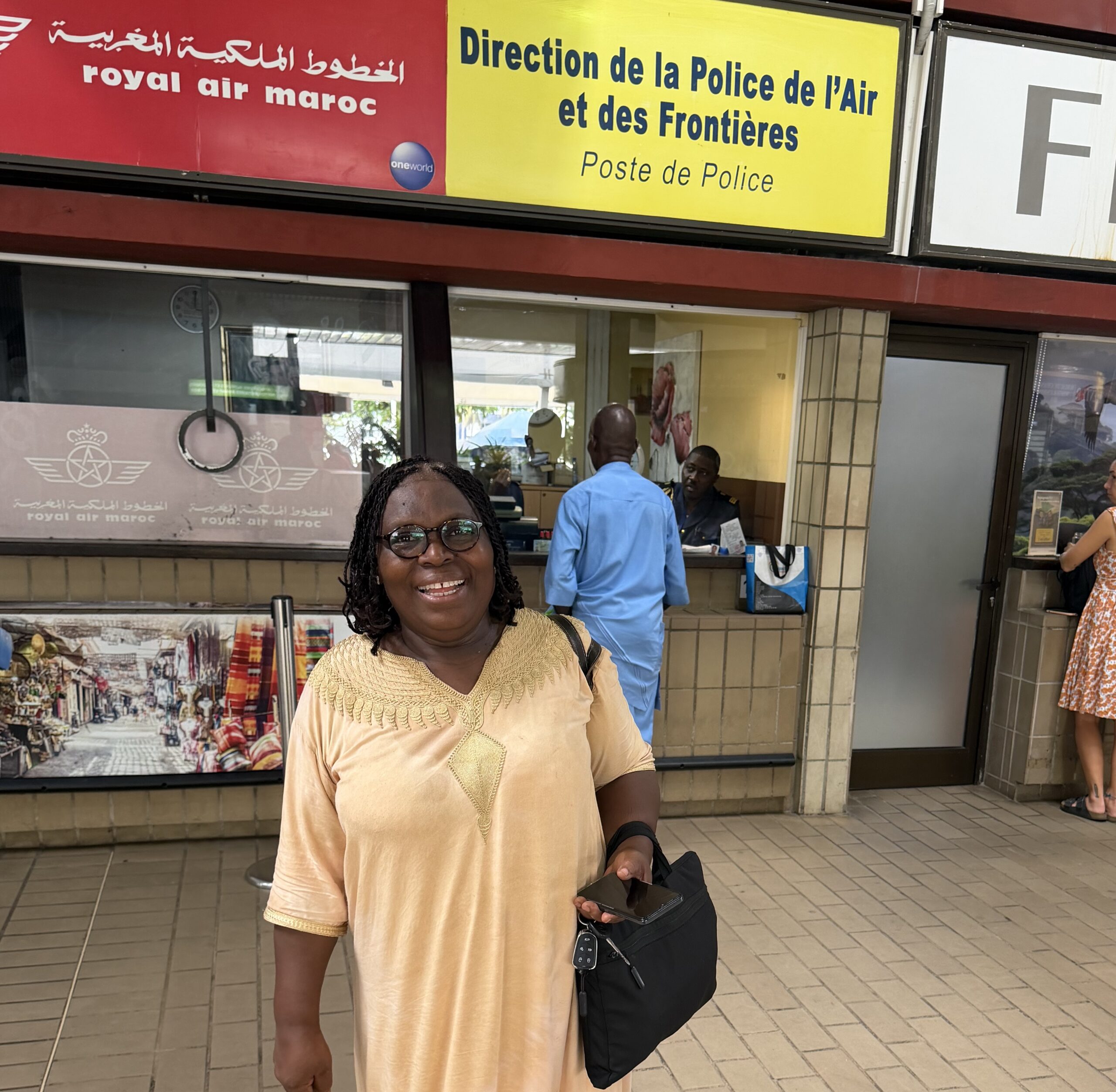
After he had a brief conversation with someone on the other side of the window the official motioned for me to follow him. We walked back past security and baggage claim to the visa section, where I was placed before an official at a window, who said it would just be a minute. The woman had me stand for a photo, filled out a visa and printed it up, pasting it into my passport. A man at another window called me over to make payment, just as someone came and handed a wad of cash to the women. I was given my passport with a 30 day visa, and ushered back out by the officer to arrivals, where Stanislas recounted with delight what he called a miracle.
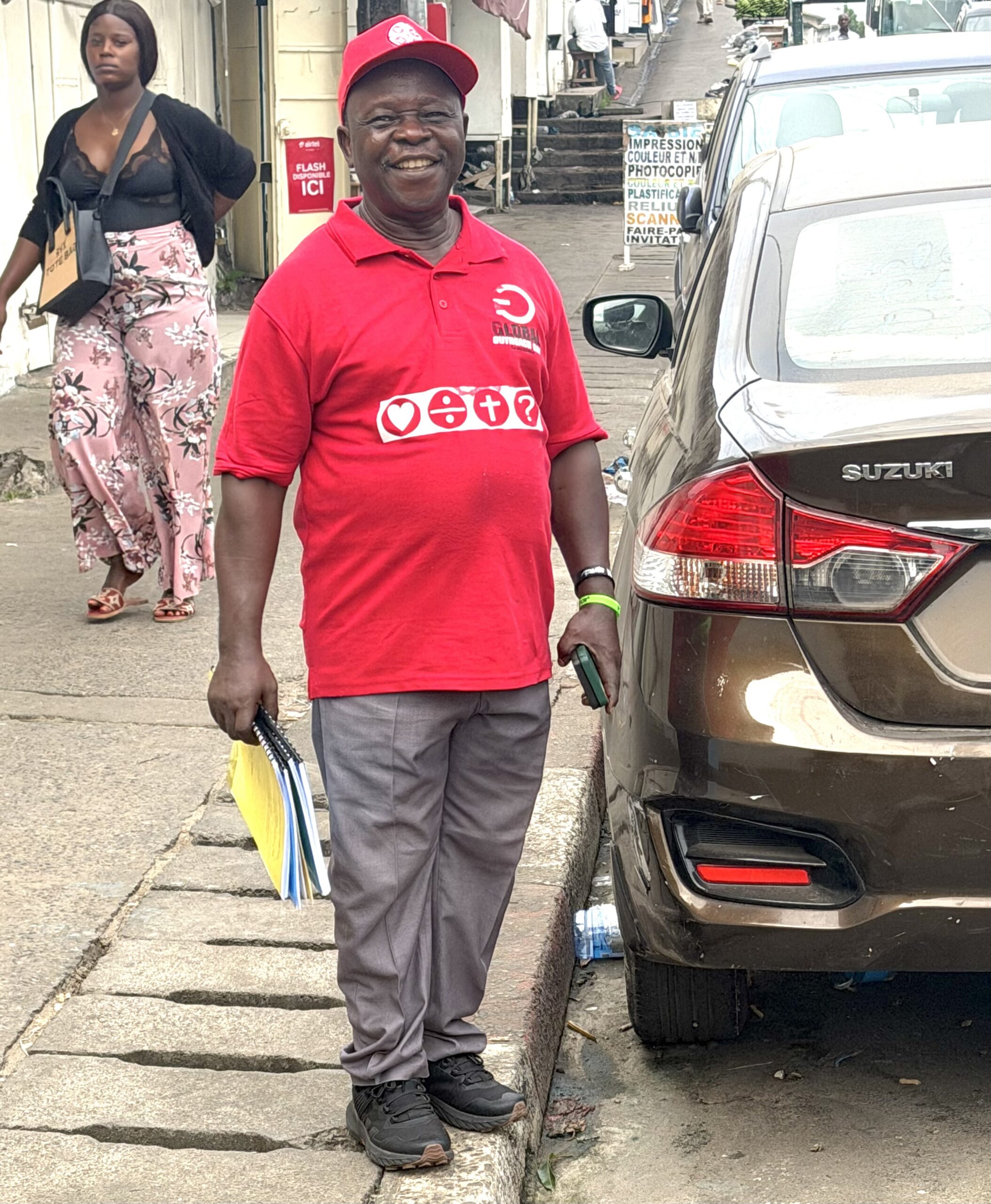
Stanislas explained how the previous day a captain at the immigration office had called him to tell him my visa had been approved. There at 11pm as the woman was insisting to him that I was being refused entry he remembered the number of the captain was on his phone and he called him. There from his home the captain answered his call, and after hearing about the situation asked to speak with the woman who was refusing me entry, who was then forced to reverse her decision.
That night I learned that my colleague from Mauritius scheduled to teach with me in Congo still hadn’t received her visa– and her country was prohibiting citizens from going to Congo. Our host in Congo, Pastor Oddon told me for $700 he could set up a strong enough internet connection and big screen TV so we could offer our training in Kinshasa via Zoom. It turned out he’d been a specialist in digital communication before he became a pastor! I booked a flight back to Geneva for Monday at noon.
The next day I taught a group of pastors, followed by a attending an open-air outreach in an impoverished neighborhood of the city. The next day I preached in a local church made up largely of street kids who’d been taken in by pastor Claude. We spent the afternoon on the most colorful beach i’ve ever seen. Pastors Stanislas, Perine and Claude are eager to host our Certificate in Gabon beginning later in this year.
The next morning before my flight I was able to teach the first session of the Certificate via Zoom from my hotel. While I was checking into my flight Viviane offered the second session. I gave the third session from the airport lounge. Viviane taught the last two sessions of the day from Mauritius as I flew to Geneva.
A close friend picked me up at the airport in Geneva and took me to her home in France, stopping for pan au chocolats and croissants on the way. She set me up to teach all day from her house, which worked beautifully. I was able to teach in coordination with Viviane the rest of the week from France. 110 pastors and church leaders graduated Friday evening in Kinshasa, Congo (photo below).
I am thrilled to experience God’s faithful support as we move forward with the trainings, despite all the complications. July 15 I head back to Europe and on to Benin, joined by Viviane, Oddon and his wife Lukelu from Congo, Stanislas from Gabon, and our host Dr. Segbegnon to offer the full 42 session Certificate in Porto Novo and Cotonou to 150 pastors and leaders. In this way our Congolese partners will be equipped to offer the trainings in seven cities where we’ve received invites, and Stanislas will have experienced the course firsthand.