Bob & Gracie Ekblad

  • About
    • Schedule
  • Ministries
    • Tierra Nueva – New Earth
    • The People’s Seminary
    • Teaching
      • Speaking Topics
    • New Earth Refuge
  • Blog
    • Blog en Español
    • Blog en Français
  • Podcasts
    • Podcast in English
    • Podcast en Español
    • Podcast in Persian
  • Resources
    • Books and Articles
    • Talks & Lectures
    • Articles
    • Ekblad Updates
    • Bob and Gracie Ekblad’s news
  • Get Involved
    • Links
  • Contact
  • Store

God answers our cries for justice, so let’s cry out now in these desperate times 

08.19.26

Jesus’ parable of the persistent widow in Luke 8:1-8 has always troubled Gracie and I. The description of the unrighteous judge who finally helps the widow get justice against an adversary so she won’t keep bothering him seems to reinforce how how many of us see God. Yet this parable actually states the opposite. At first glance Luke’s introduction seems to prepare us to see the widow’s way as exemplary—with the assumption (we make) that God is then like the slow-to-act judge. 

“Now he was telling them a parable to show that at all times they ought to pray and not to lose heart” (Lk 18:1).

“Must we pray without ceasing so God will finally answer?” we wonder, disheartened— our unbelief and fear lurking like persistent predators.

A closer look at this parable caused us to re-think our view of God as judge, inspiring us to new levels of faith-filled intercession. In fact, the very introduction clearly states this parable was told “to show that at all times they ought to pray” so that we would “not lose heart”

Persistent appeals before a human judge

The parable presents a stereotypical judge described as operating out of “a certain city” (your city), “who did not fear God and did not respect people” (Lk 8:1).

I can think of many a judge we’ve sat before in our local courts as we’ve advocated for vulnerable people. Many municipal, county or superior court judges come across as jaded, expecting the worst in people, and showing faith only in the penal system they serve. Many a politician today appears to care only about the political survival, and not about truth and justice.

The next character on the scene is the persistent claimant, a vulnerable victim of an injustice or crime (we are not given details).

“There was a widow in that city, and she kept coming to him, saying, ‘Give me legal protection from my adversary.’”

Widows in the first century represented society’s most vulnerable—a defenseless, single woman before one of the highest male authorities in a patriarchal system that accorded her no rights.

But this widow keeps coming before the judge, asking him for legal protection– or more precisely vindication or retribution before her adversary. The Greek term here, ekdikeo, literally means “to give justice to someone who has been wronged.” 

“Who are people like this widow in our society who need justice or protection from more powerful adversaries?” Gracie asks during her sermon yesterday at Tierra Nueva, pointing out that the widow could be synonymous with “vulnerable person,” regardless of age, gender or relationship status.

People mention single mothers whose partners have abandoned them, are in prison, or dead. Victims of crimes or abuse. Voiceless children who have been moved repeatedly from one foster care home to another. Defendants with criminal histories that give them points requiring harsher sentencing, who may not be guilty of their charges but cannot afford a good attorney. Hard-working farmworkers swept up in ICE raids, held for deportation in detention centers. Unhoused addicts struggling with mental health issues or an elderly person with dementia in a care facility, whose family never visits.

The widow in this parable is far from a passive victim, but is presented as demonstrating exemplary activism before the powerful.

Identifying the effects of injustice

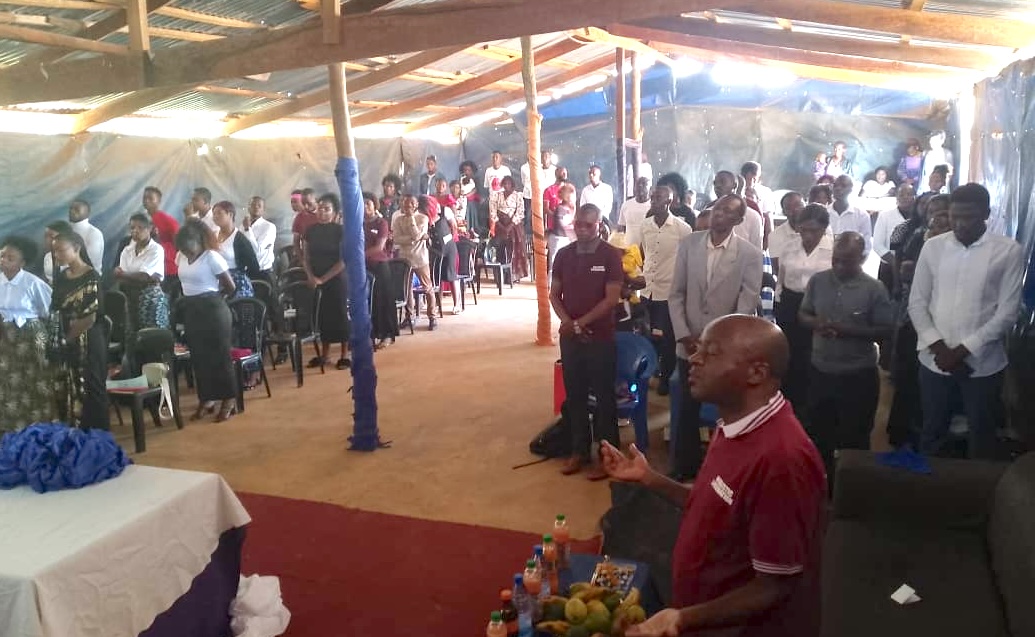
Gracie asks us all how many of us have personally experienced unfair treatment, and have yet to experience justice or some kind of restitution for having been wronged. Nearly every one of this Sunday’s 50 or so congregants raised their hand.  

“When resolution seems unattainable, what happens inside us and how do we react?” asks Gracie.

People talk about how resentment, bitterness and hopeless are common reactions. Others mention extreme stress and upset, leading them to sometimes take justice into their own hands through pay backs, which often include acts of retribution, including gossip, slander, threats and violence. Think of the damage caused by bearing false witness on social media, and how things can escalate.

So, this parable directly speaks to all of us who are in need of justice regarding situations in which we’ve been wronged.

Human justice vs. God’s

Gracie then reads the next verse which describes the judge finally giving the widow justice. The powerful, hard-hearted judge finally gives the powerless widow what she asks for, not because he’s in any way good but because he wants her to stop bothering him. A first level take away from this parable.

Jesus then suddenly flips the script, revealing God as the opposite of a harsh human judge and flawed legal system.

Luke presents Jesus using the title Lord, Kurios—  the Greek equivalent of the divine name YHWH, with his “and the Lord said.” Then Jesus draws attention to the best outcome from a bad system: “Hear what the unrighteous judge said,” preparing us for his pitch about God as our supreme advocate.

First Jesus asks two questions, answering them himself in the clearest possible way, ending with a final question to us all.

Jesus first asks: “Now, will not God bring about justice for his elect who cry to him day and night?”

Who are the elect/chosen?

Here with the mention of the “elect” or “chosen” many immediately disqualify themselves—perhaps us included. Gracie reads 1 Corinthians 1:26-28 about who is chosen.

“For consider your calling, brothers and sisters, that there were not many wise according to the flesh, not many mighty, not many noble; but God has chosen the foolish things of the world to shame the wise, and God has chosen the weak things of the world to shame the things which are strong, and the base things of the world and the despised God has chosen, the things that are not, so that he may nullify the things that are.”

Being foolish, weak, base, or despised doesn’t disqualify you from being chosen/elect. Rather it qualifies you! Everyone mentioned in our examples above (widows, unhoused, victims..) and everyone there at Tierra Nueva is chosen! And there are even some (though few) who are from wise, mighty and noble backgrounds.

Crying out to God day and night

Crying out to God “day and night” is something we are invited to do when we’re truly distressed. Unlike judges whose calendars are booked for weeks or months in advance, God is available 24/7. God hears our cries!  We’re urged elsewhere to “pray without ceasing” (1 Thes 5:17), and to ask so as to receive (Mt 7:7)—but the language here is related more to cries regarding injustice, oppression or unfair treatment.

The Greek verb for “cry” here, boao, means literally to cry out or shout, and is used throughout the Greek Old Testament to describe God’s people crying out for justice against oppressors or injustice.

The voice of Cain’s brother and victim Abel’s blood, cries out to the Lord from the ground (Gn 4:10) is the first mention of this verb in the Greek Old Testament. God’s people cry out from slavery in Egypt (1 Sam 12:8), in repentance (1 Sam 12:10), and from their affliction (2 Sam 22:7; Jonah 2:3). The prophet Habakuk cried out to God for salvation from oppressors (Hab 1:2). In the New Testament the father of the demonized boy (Lk 9:38) and a blind beggar (Lk 18:38) cried out to Jesus for deliverance and sight.

Jesus advocates for the Father

Jesus asks his second question “and will he delay long over them?” (Lk 8:7) in direct opposition to the long-delayed answer from the unrighteous judge (and any possible confusion with God).

Immediately Jesus answers this second question personally and emphatically:

“I tell you” he emphasizes, followed by “that he will bring about justice for them quickly!”

Here Jesus speaks a word of encouragment to anyone in need of justice. Jesus also advocates for God before the elect, who are prone to listening to the Accuser, who presents God as slow to save. 

Jesus aligns here with Paul’s words in Romans 12:19 about God’s commitment to bring about justice for us when are victimized, so we won’t take matters into our hands.

“Never take your own revenge (same verb ekdikeo), beloved, but leave room for the wrath, for it is written, “vengeance is mine, I will repay,” says the Lord.”

Our action consists in “not being overcome by evil, but overcoming evil with good” (Rm 12:21).

To suddenly get clarity that this parable is specifically about asking God for needed justice, and concrete resolution from harm long-endured visibly impacted our community. And why should we be surprised? The Holy Spirit is called the paraclete (mean “calling out from alongside), translated as Advocate, Defender, Helper, Comforter. That Jesus insists that God will answer quickly makes us all want to ask then and there for God to bring justice that we hunger for now.

Let’s ask God for justice

We end with a time of prayer, where Gracie invites us all to bring concrete situations where we (or others) have been wronged, requesting God’s help regarding injustices suffered at the hand of an adversary, trusting God to deliver us and bring about justice.

Gracie mentions the term adversary can include many opponents: the so-called “justice system,” corrupt and unjust national political leaders, a personal enemy (even a family member or former friend), a stranger, or even ourself– because often we judge ourselves unfairly and come into agreement with the Accuser (Rev 12:10). Satan is called the Adversary (1 Pt 5:8), using the same term, antidikos as in this parable. Jesus has already defeated this Adversary, as well as the rulers of this earth (Ps 2) through his victory on the cross.

Now we see injustices committed by national leaders at the highest level of the US government, with little to no push-back from elected leaders whose role is to hold the powerful accountable. May we learn from the widow in this parable, who persisted in her activism for justice until the powerful relented. May we take the deeper step of faith and cry out to God day and night, asking for wrongs to be righted, expectant that God will bring justice and Jesus’ Kingdom will prevail.

Will Jesus find faith when he returns?

We end with a final question that Jesus asks about himself (Son of Man) when he returns.  

“However, when the Son of Man comes, will he find faith on the earth?” (Lk 18:8).  

And what is faith? It is simply choosing to trust, however faintly, that God will actually come to our rescue.  Remember that having a tiny amount of faith, the size of a mustard seed, still counts as faith, even when we know we need much more. “Lord I believe, help my unbelief!”

If you, like us, have fallen prey to a false interpretation of this life-giving parable, we pray that Jesus himself would open the eyes of your heart to the Good News he wants to communicate to you personally.

Check out links to my most podcast “Disciple: Word, Spirit, Justice, Mission” below. Also take note of the new editions of Guerrilla Gospel and Guerrilla Bible Studies, now entitled Liberating Gospel and Liberating Bible Studies, available here.

God answers our cries for justice, so let’s cry out now in these desperate times

08.19.26

Jesus’ parable of the persistent widow in Luke 8:1-8 has always troubled Gracie and I. The description of the unrighteous judge who finally helps the widow get justice against an adversary so she won’t keep bothering him seems to reinforce how how many of us see God. Yet this parable actually states the opposite. At first glance Luke’s introduction seems to prepare us to see the widow’s way as exemplary—with the assumption (we make) that God is then like the slow-to-act judge.

“Now he was telling them a parable to show that at all times they ought to pray and not to lose heart” (Lk 18:1).

“Must we pray without ceasing so God will finally answer?” we wonder, disheartened— our unbelief and fear lurking like persistent predators.

A closer look at this parable caused us to re-think our view of God as judge, inspiring us to new levels of faith-filled intercession. In fact, the very introduction clearly states this parable was told “to show that at all times they ought to pray” so that we would “not lose heart”

Persistent appeals before a human judge

The parable presents a stereotypical judge described as operating out of “a certain city” (your city), “who did not fear God and did not respect people” (Lk 8:1).

I can think of many a judge we’ve sat before in our local courts as we’ve advocated for vulnerable people. Many municipal, county or superior court judges come across as jaded, expecting the worst in people, and showing faith only in the penal system they serve. Many a politician today appears to care only about the political survival, and not about truth and justice.

The next character on the scene is the persistent claimant, a vulnerable victim of an injustice or crime (we are not given details).

“There was a widow in that city, and she kept coming to him, saying, ‘Give me legal protection from my adversary.’”

Widows in the first century represented society’s most vulnerable—a defenseless, single woman before one of the highest male authorities in a patriarchal system that accorded her no rights.

But this widow keeps coming before the judge, asking him for legal protection– or more precisely vindication or retribution before her adversary. The Greek term here, ekdikeo, literally means “to give justice to someone who has been wronged.”

“Who are people like this widow in our society who need justice or protection from more powerful adversaries?” Gracie asks during her sermon yesterday at Tierra Nueva, pointing out that the widow could be synonymous with “vulnerable person,” regardless of age, gender or relationship status.

People mention single mothers whose partners have abandoned them, are in prison, or dead. Victims of crimes or abuse. Voiceless children who have been moved repeatedly from one foster care home to another. Defendants with criminal histories that give them points requiring harsher sentencing, who may not be guilty of their charges but cannot afford a good attorney. Hard-working farmworkers swept up in ICE raids, held for deportation in detention centers. Unhoused addicts struggling with mental health issues or an elderly person with dementia in a care facility, whose family never visits.

The widow in this parable is far from a passive victim, but is presented as demonstrating exemplary activism before the powerful.

Identifying the effects of injustice

Gracie asks us all how many of us have personally experienced unfair treatment, and have yet to experience justice or some kind of restitution for having been wronged. Nearly every one of this Sunday’s 50 or so congregants raised their hand.

“When resolution seems unattainable, what happens inside us and how do we react?” asks Gracie.

People talk about how resentment, bitterness and hopeless are common reactions. Others mention extreme stress and upset, leading them to sometimes take justice into their own hands through pay backs, which often include acts of retribution, including gossip, slander, threats and violence. Think of the damage caused by bearing false witness on social media, and how things can escalate.

So, this parable directly speaks to all of us who are in need of justice regarding situations in which we’ve been wronged.

Human justice vs. God’s

Gracie then reads the next verse which describes the judge finally giving the widow justice. The powerful, hard-hearted judge finally gives the powerless widow what she asks for, not because he’s in any way good but because he wants her to stop bothering him. A first level take away from this parable.

Jesus then suddenly flips the script, revealing God as the opposite of a harsh human judge and flawed legal system.

Luke presents Jesus using the title Lord, Kurios– the Greek equivalent of the divine name YHWH, with his “and the Lord said.” Then Jesus draws attention to the best outcome from a bad system: “Hear what the unrighteous judge said,” preparing us for his pitch about God as our supreme advocate.

First Jesus asks two questions, answering them himself in the clearest possible way, ending with a final question to us all.

Jesus first asks: “Now, will not God bring about justice for his elect who cry to him day and night?”

Who are the elect/chosen?

Here with the mention of the “elect” or “chosen” many immediately disqualify themselves—perhaps us included. Gracie reads 1 Corinthians 1:26-28 about who is chosen.

“For consider your calling, brothers and sisters, that there were not many wise according to the flesh, not many mighty, not many noble; but God has chosen the foolish things of the world to shame the wise, and God has chosen the weak things of the world to shame the things which are strong, and the base things of the world and the despised God has chosen, the things that are not, so that he may nullify the things that are.”

Being foolish, weak, base, or despised doesn’t disqualify you from being chosen/elect. Rather it qualifies you! Everyone mentioned in our examples above (widows, unhoused, victims..) and everyone there at Tierra Nueva is chosen! And there are even some (though few) who are from wise, mighty and noble backgrounds.

Crying out to God day and night

Crying out to God “day and night” is something we are invited to do when we’re truly distressed. Unlike judges whose calendars are booked for weeks or months in advance, God is available 24/7. God hears our cries! We’re urged elsewhere to “pray without ceasing” (1 Thes 5:17), and to ask so as to receive (Mt 7:7)—but the language here is related more to cries regarding injustice, oppression or unfair treatment.

The Greek verb for “cry” here, boao, means literally to cry out or shout, and is used throughout the Greek Old Testament to describe God’s people crying out for justice against oppressors or injustice.

The voice of Cain’s brother and victim Abel’s blood, cries out to the Lord from the ground (Gn 4:10) is the first mention of this verb in the Greek Old Testament. God’s people cry out from slavery in Egypt (1 Sam 12:8), in repentance (1 Sam 12:10), and from their affliction (2 Sam 22:7; Jonah 2:3). The prophet Habakuk cried out to God for salvation from oppressors (Hab 1:2). In the New Testament the father of the demonized boy (Lk 9:38) and a blind beggar (Lk 18:38) cried out to Jesus for deliverance and sight.

Jesus advocates for the Father

Jesus asks his second question “and will he delay long over them?” (Lk 8:7) in direct opposition to the long-delayed answer from the unrighteous judge (and any possible confusion with God).

Immediately Jesus answers this second question personally and emphatically:

“I tell you” he emphasizes, followed by “that he will bring about justice for them quickly!”

Here Jesus speaks a word of encouragment to anyone in need of justice. Jesus also advocates for God before the elect, who are prone to listening to the Accuser, who presents God as slow to save.

Jesus aligns here with Paul’s words in Romans 12:19 about God’s commitment to bring about justice for us when are victimized, so we won’t take matters into our hands.

“Never take your own revenge (same verb ekdikeo), beloved, but leave room for the wrath, for it is written, “vengeance is mine, I will repay,” says the Lord.”

Our action consists in “not being overcome by evil, but overcoming evil with good” (Rm 12:21).

To suddenly get clarity that this parable is specifically about asking God for needed justice, and concrete resolution from harm long-endured visibly impacted our community. And why should we be surprised? The Holy Spirit is called the paraclete (mean “calling out from alongside), translated as Advocate, Defender, Helper, Comforter. That Jesus insists that God will answer quickly makes us all want to ask then and there for God to bring justice that we hunger for now.

Let’s ask God for justice

We end with a time of prayer, where Gracie invites us all to bring concrete situations where we (or others) have been wronged, requesting God’s help regarding injustices suffered at the hand of an adversary, trusting God to deliver us and bring about justice.

Gracie mentions the term adversary can include many opponents: the so-called “justice system,” corrupt and unjust national political leaders, a personal enemy (even a family member or former friend), a stranger, or even ourself– because often we judge ourselves unfairly and come into agreement with the Accuser (Rev 12:10). Satan is called the Adversary (1 Pt 5:8), using the same term, antidikos as in this parable. Jesus has already defeated this Adversary, as well as the rulers of this earth (Ps 2) through his victory on the cross.

Now we see injustices committed by national leaders at the highest level of the US government, with little to no push-back from elected leaders whose role is to hold the powerful accountable. May we learn from the widow in this parable, who persisted in her activism for justice until the powerful relented. May we take the deeper step of faith and cry out to God day and night, asking for wrongs to be righted, expectant that God will bring justice and Jesus’ Kingdom will prevail.

Will Jesus find faith when he returns?

We end with a final question that Jesus asks about himself (Son of Man) when he returns.

“However, when the Son of Man comes, will he find faith on the earth?” (Lk 18:8).

And what is faith? It is simply choosing to trust, however faintly, that God will actually come to our rescue. Remember that having a tiny amount of faith, the size of a mustard seed, still counts as faith, even when we know we need much more. “Lord I believe, help my unbelief!”

If you, like us, have fallen prey to a false interpretation of this life-giving parable, we pray that Jesus himself would open the eyes of your heart to the Good News he wants to communicate to you personally.

Check out links to my most podcast “Disciple: Word, Spirit, Justice, Mission” below. Also take note of the new editions of Guerrilla Gospel and Guerrilla Bible Studies, now entitled Liberating Gospel and Liberating Bible Studies, available here.
Being fruitful and multiplying in Africa and beyond

08.11.26

Over the past six months The People’s Seminary has been able to train more people than ever– due to African trainer teams we’ve been sending out to impoverished communities eager to learn. 

As part of our second teaching session we look closely with course participants at God’s creating of humans in Genesis 1:26-28. We regularly talk about the meaning of the first imperatives addressed to humans: “Be fruitful and multiply, fill the earth and subdue it, rule over…”  It always surprises people to learn that in the Greek Version of these verses, the verbs used for “be fruitful” and “multiply,” auxano and plethuno are not about literal, biological procreation when used in the New Testament.

Auxano (grow, increase) describes the Word of God (Acts 12:24; 19:20), the Gospel (Col 1:6), the knowledge of God (Col 1:10) and the “grace and knowledge of God” (2 Pt 3:18) increasing. Plethuno (increase, multiply) describes the number of disciples (Acts 6:7) churches (Acts 9:31) the Word of God (Acts 12:24) and “seed for sowing” (2 Cor 9:10) “grace and peace” (1 Pt 1:2; 2 Pt 1:2) and mercy, peace and love (Jude 2) increasing. Living in alignment with God’s imperatives in Genesis 1 is not about making babies, but making disciples who can carry to liberating Gospel to the ends of the earth. Everyone can do this, whether they have kids or remain single.

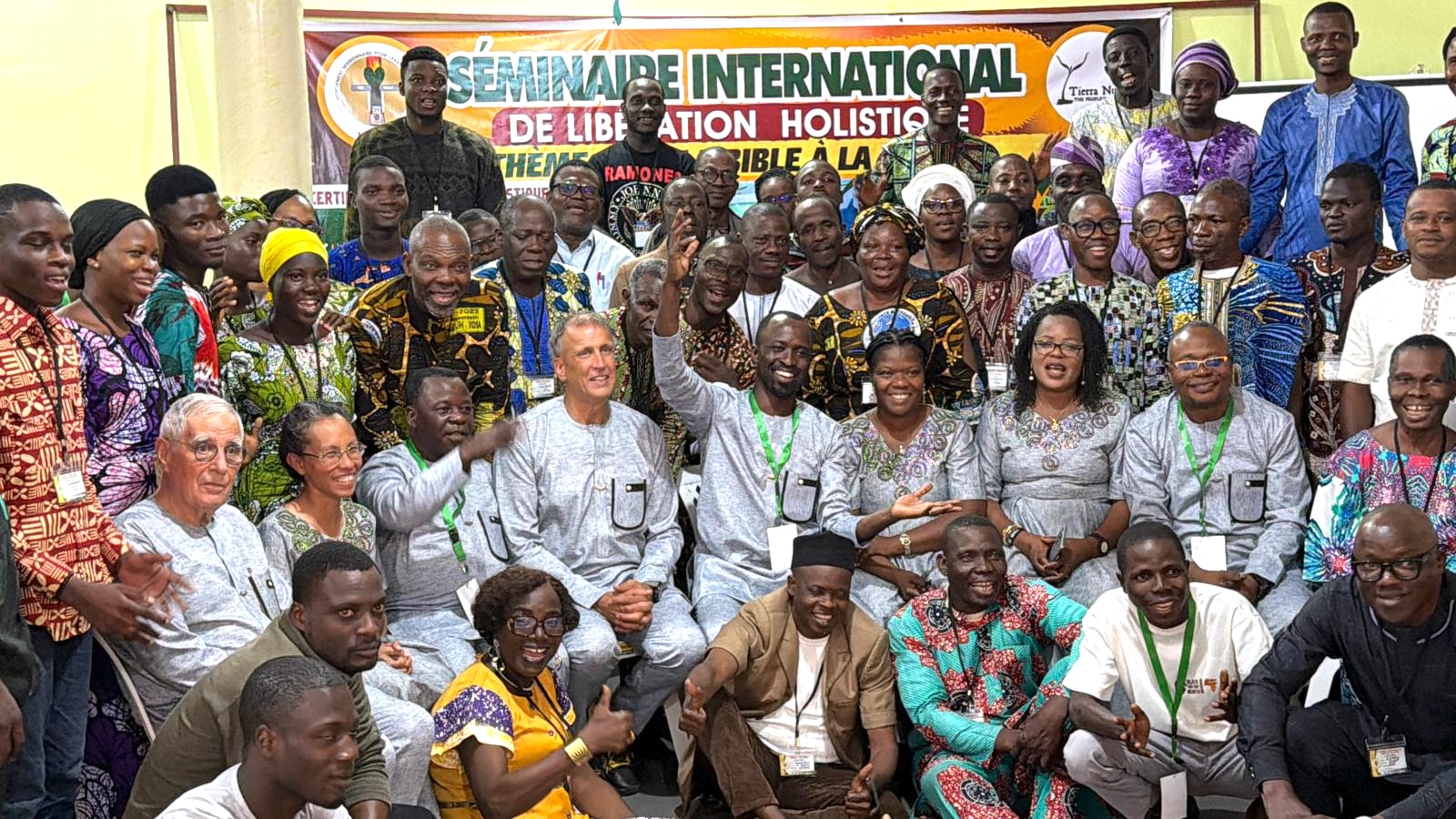
We are seeing an unprecedented multiplication of leaders and CHL trainings– which we’ve now offered in 24 countries. I returned July 31 from two weeks of teaching in Benin, West Africa. There we offered the French version of our full, two-module Certificate in Holistic Liberation (CHL) to 65 pastors and church leaders. 

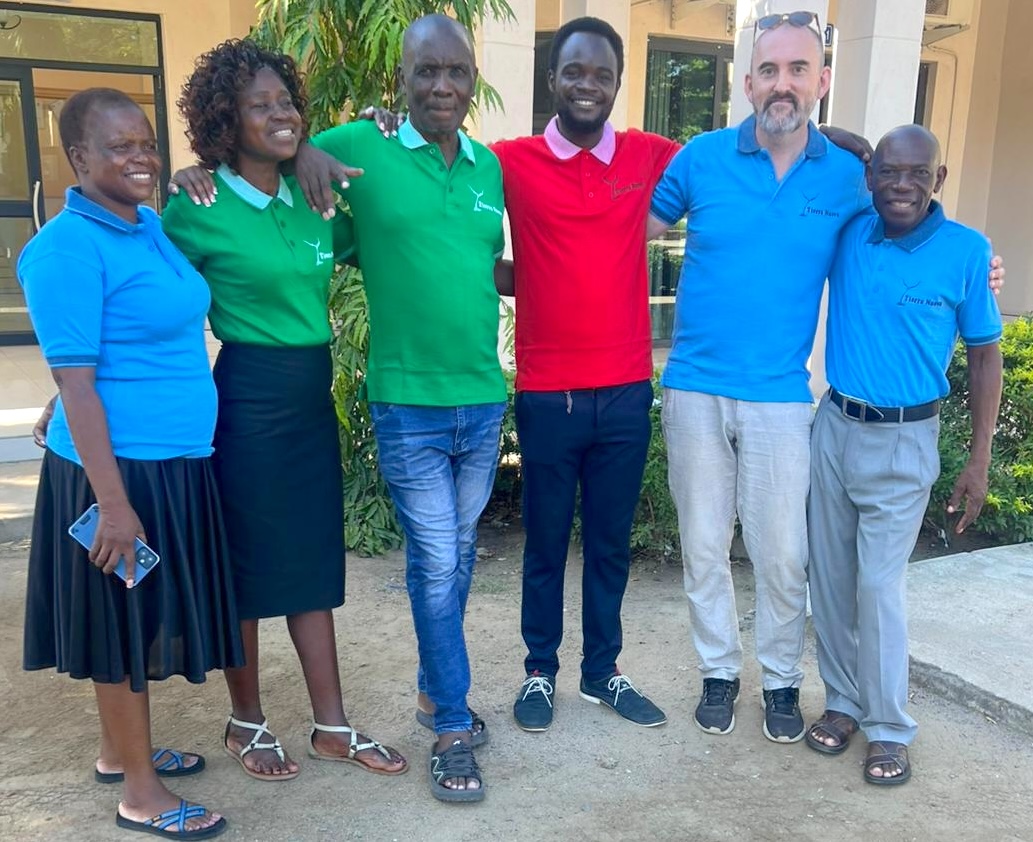
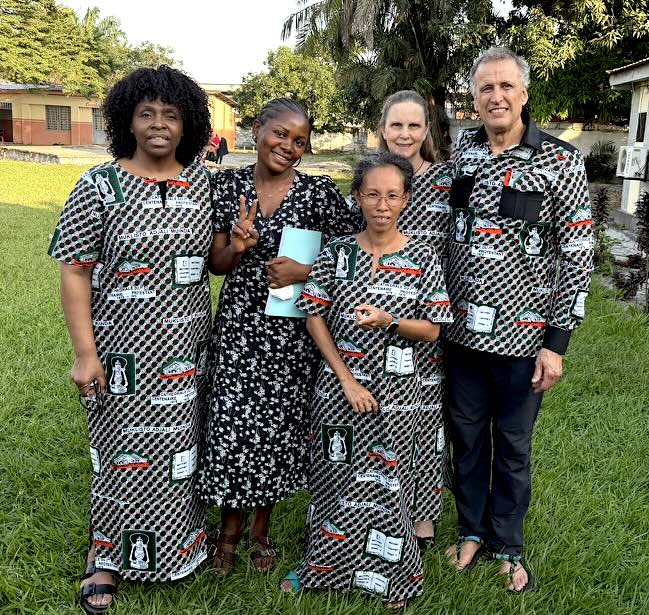
Accompanying me were couples from Benin, Congo, and Gabon, together with Jean from Switzerland, and veteran TPS trainer Viviane from Mauritius (all are pictured above with matching grey outfits). Our objective in teaching with a team of nine was to equip French-speaking trainers so we can offer more Certificates in Francophone Africa.

Segbegnon and Djidjoho Gnonhossou are both professors whom I met when they taught for Seattle Pacific University. Both from Benin, they organized and hosted the CHL, with a deliberate goal of raising up national trainers who can offer the Certificate across Benin and in neighboring counties. 

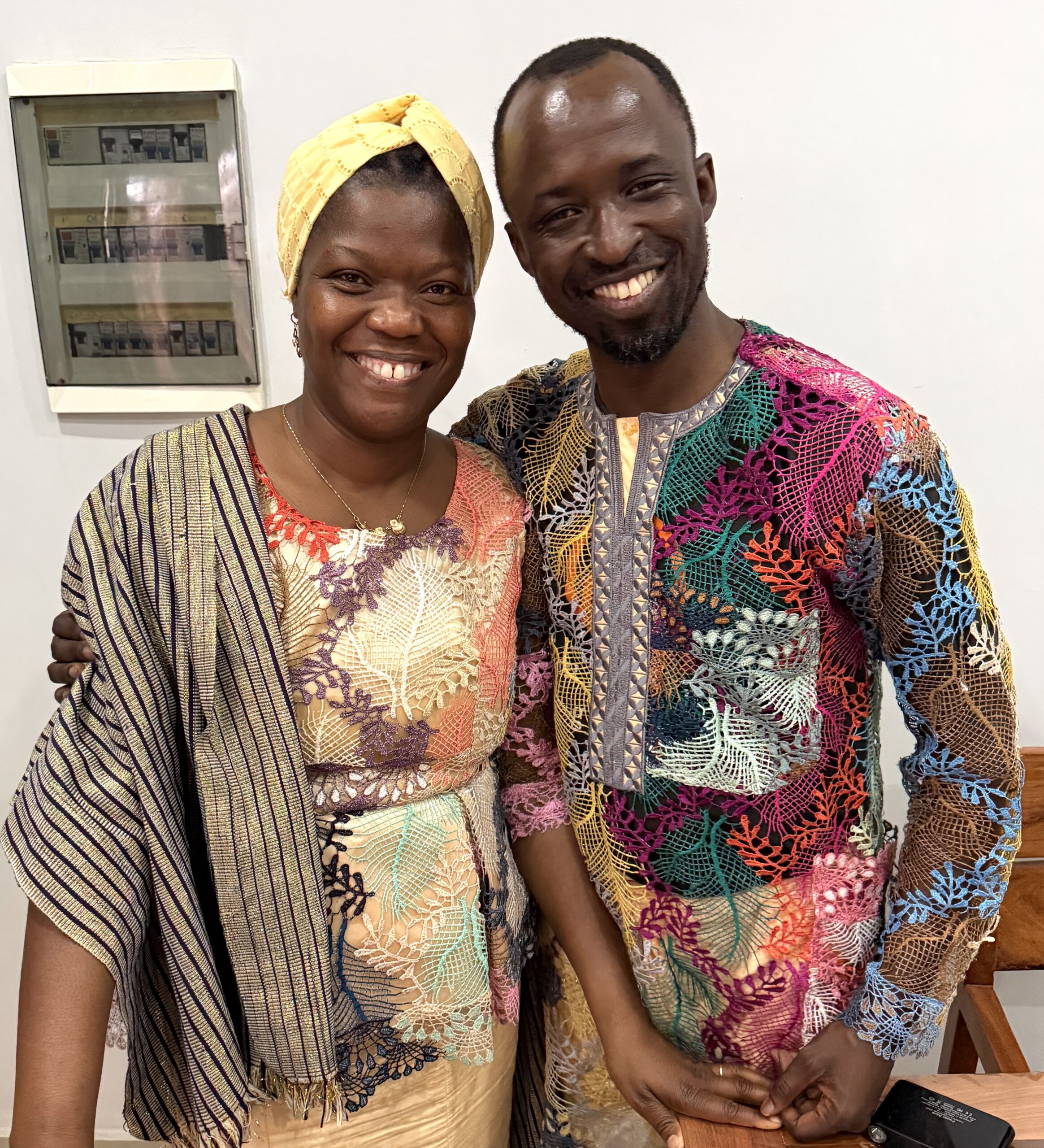
Pastors Oddon and Agathe (pictured below) of the Democratic Republic of Congo (DRC) hosted our CHL in Kinshas in March and June. They are now preparing to offer the training over the next few years in seven sites across the DRC.

Uritta, Elizabeth, Richard, Elias, Makabi, Moses & Kelvin- Malawi team

While our team were teaching in Porto Novo, Benin, our People’s Seminary teaching team from Zimbabwe, Lesotho and Malawi were simultaneously teaching module 1 to 300 pastors and leaders in Lilongwe, Malawi. While we taught module 2 in Cotonou, Benin, this same team was teaching module 1 to 285 pastors in Monkey Bay, Malawi. Finally this past week the team completed module 1 with 150 pastors in Nchalo, Malawi.

I’ve been amazed to hear how seriously the Malawians are taking the training. We heard from our team that many participants walked as far as ten kilometers each day, each way to attend the five-day course. Other came from further away by bycycle. One of our teachers from Zimabawe, Uritta writes of Malawi:

“Participants were receptive to God’s Word and the work of the Holy Spirit and showed hunger for more. They have also shared many encouraging testimonies of what God is doing in their lives through the teachings. One pastor said that in Bible trainings they have attended before, they have never come across such powerful, meaningful, impactful and full-of-God’s-revelation teachings. He went on to say if all the pastors who have received this training are going to apply the teachings to their lives and churches, indeed their area would be transformed and liberated.”

“Another pastor shared that, before attending the training, they had been mixing the worship of God with traditional practices without fully understanding that it was wrong,” writes Uritta. “After receiving the teachings, he said he now understands the importance of resisting idolatry and expressed his commitment to turn away from every ungodly practice and to serve God faithfully because he now knows the truth and has knowledge from Scripture. It was so touching and uplifting to see how many have travelled long distances just to attend, showing great hunger and eagerness to learn God’s Word.”

Uritta teaching

Uritta continues. “Seeing God change lives in Malawi through this training has laid a heavy burden on my heart for the people of my own country. As I witness healings, joy and listen to the testimonies to see the hunger for God’s Word, I’ve found myself praying that many more people back home in Zimbabwe would have the opportunity to receive this biblical training. I believe that many lives, families and communities would experience healing, freedom and transformation if they were exposed to these teachings. I pray that God will open doors for this training to come to my country so that many more people can grow in the knowledge of His Word and walk in truth. It would really soothe my heart if you bring the training to Zimbabwe Dr Bob.”

The People’s Seminary covers our team’s travel and lodging expenses, one meal per day for participants, manuals and modest honorariums. The host community invites the people, provides the venue, worship leading and does all the meal preparation and local transport.

We were suprised to learn that many of the 739 pastors who went through our training in Malawi did not own a Bible in their Chichewa language. 

We are now preparing to offer two new Certificate in Holistic Liberation in Zambia and one in Armenia for Middle-Eastern participants this September. In November we travel to Cameroon to complete a trainng there, and on to Gabon to start a new CHL.

We welcome your partnership in being fruitful and multiplying leaders and trainings in Africa and beyond. Contributions towards course expenses or Bibles can be given online here, or through sending a check to Tierra Nueva (Attn: The People’s Seminary), PO Box 410, Burlington, WA 98233, USA.

UK donations can be given through our account at Stewardship. Click here to set up your sign-in details.

Check out links to my most podcast “Disciple: Word, Spirit, Justice, Mission” below. Also take note of the new editions of Guerrilla Gospel and Guerrilla Bible Studies, now entitled Liberating Gospel and Liberating Bible Studies, available here.

Further adventures in Francophone Africa: Cameroon, Gabon and Congo

06.20.26

We are delighted and somewhat amazed that we are increasingly being invited into French-speaking African countries to offer our Certificate in Holistic Liberation. I offer here a brief history and update.

Gracie and I moved to France for theological studies in the Institut Protestant de Théologie (IPT) in Montpellier in 1988. After six years serving the rural poor in Honduras in the 1980s, we felt a need for a period of deep reflection in a new place where we could find a fresh perspective. The Église Reformée de France’s graduate school drew students from France and also francophone Africa. We met many students from Cameroon, Congo (then called Zaire), Benin, Côte d’Ivoire, Madagascar, Mauritius as well as from previous French colonies in the South Pacific like Tahiti, and Nouvelle-Calédonie. African students were especially hospitable. We certainly had no idea at that time that we would be teaching courses in these countries!

Years later in 2018 a fellow student from the IPT, Bernard Coyault invited us to offer our training to a group of Sub-Sahara African pastors in Rabat, Morocco. Bernard was one of the founding members and the first director of the ecumenical seminary Institut Œcuménique de Théologie Al Mowafaqa. In 2017 he invited us to offer our then three, four-day module Certificate in Holistic Liberation in French to migrant pastors serving in Morocco. We agreed to start the training in the Fall of 2018, and were then curiously invited to offer the same training in Paris. 

Then in July 2018 I was diagnosed with follicular lymphoma, just before launching our first French Certificates in Paris and Morocco in October. My oncologist told me I must cancel all travel plans as chemotherapy was necessary. Then he let me know of a clinical trial drug that I qualified for– which would allow me to take a single pill once a week in lieu of chemotherapy, making my planned trips possible.

Our courses went beautifully, however my follow-up CT scan two months later showed the tumor had grown 18%, prompting my oncologist to urge me to abandon my scheduled courses and start chemo immediately. However since I was still under the 20% limit to allow me continuation on the trial drug, I decided to proceed with our scheduled module 2 trainings in Bristol, Paris and Rabat. My oncologist scheduled a CT scan and needle biopsy for a few days after my return, insisting I prepare for chemotherapy.  

At the end of our training in Morocco the group of 40 or so Sub-Saharan African pastors took me to one of their house churches and prayed for my healing. When I returned home I went in for my CT scan. The next day at my scheduled needle biopsy the radiologist told me that they couldn’t proceed with the biopsy as the CT scan showed the tumor had shrunk by 50%. Over the next four months the tumor continued to shrink until it was mere scar tissue. I’ve been in full metabolic remission since June 2019. We were able to complete the certificates in Bristol, Paris and Morocco. 

Most of the pastors who prayed for me were refugees from war-torn Congo and Cameroon. They shared with me the need for these trainings to be offered in their home countries, and elsewhere in Francophone Africa. I began to explore connections in these countries, but nothing materialized. It was a year or so later that I had the following dream.

In my dream an African man appeared, telling me in French “venez a Gabon!” (come to Gabon!). I awoke and immediately looked up Gabon, which I knew was a country but I didn’t know where it was and had never met anyone from there. 

Over the last five years we have offered our Certificate in other francophone places, including Lausanne, Casa Blanca, Mauritius and Burundi. In each of these places I have asked people about Gabon, but no one has had any connections. I have felt bad, that unlike Paul who responded to a man from Macedonia who appeared to him in a dream, telling him: “come to Macedonia!” which he immediately did, I had not immediately obeyed the voice. I sensed that we needed to first visit Congo and Cameroon, but didn’t have invitations from these countries either, until this year.

In March 2026 Gracie and I joined our two African colleagues Vera and Viviane to offer our Certificate in Kinshasa. It was there where I met one of our hosts, pastor Lucien, to whom I shared my dream about the man from Gabon. I confessed to him my regrets that I hadn’t yet been obedient to the vision.

“You haven’t yet been disobedient,” said Lucien. “You just didn’t ask ‘when’ you were to go.”  

He then shared that one of his closest friends, a medical doctor from Gabon, already knew about the training we were doing in Kinshasa and wanted to make contact with me. The next week we met on WhatsApp and he asked me when I was next in the area. When I told him about my planned trainings in Cameroon and Congo in May/June he said: “But you are right there!” (Vous êtes juste là!)–  Venez a Gabon! (Come to Gabon!).

I told him that my flights were already booked from Cameroon to Congo. But he kept insisting: “Venez a Gabon!”– with the same expression that I remembered from the dream. At this point I asked him to send me a photo of himself– as his voice was identical to the voice in my dream. When he sent me his picture I was shocked. The face was the same as what I’d remembered. 

Just then an email came in from Ethiopian Airways announcing that my flight from Cameroon to Congo had been cancelled. While still on the call with Stanislas I found a flight from Cameroon to Gabon, and on to Congo, which would allow me to spend a free weekend in Gabon. He was thrilled and offered to organize a taster for local pastors. I booked my flight.

The first leg of my journey was a five-day training for pastors and social workers I’d arranged to co-teach with two of our African teachers, Tawanda and Colleen in Limbe, Cameroon. I flew from Switzerland to Ethiopia to Cameroon and was picked up at the airport by our host, pastor Benvictor.

Our time in Cameroon was both distressing and deeply moving.  I hadn’t been aware of the extent of the civil war that’s been ongoing in the English-speaking part of Cameroon for the past ten years. We crossed the heavily militarized line from the French-speaking into the English-speaking province and entered another world. Lush, tropical, mountainous, with umbrella-covered motorcycle taxis wizzing in an out of heavy traffic on heavily potholed roads. 

Our host, Benvictor, is a visionary leader with a heart for the church serving the most vulnerable communities in his country. He has been separated from his wife for 9 years as she had to flee due to political persecution. 

Chaos and neglect were visible in roads worn thin, and garbage strewn everywhere. The French-speaking central government haven’t been repairing roads or paying garbage collectors. Unbeknownst to me the first day of training fell on “ghost Monday,” a regularly scheduled general strike day that meant people were not to show up for work (or even go out of their houses in many places). Otherwise theuy could face “consequences.” Pastors and leaders still showed up for our training, attentive and open, eager for fresh input.

Discussing and worshipping together with our sisters and brothers from Cameroon was deeply encouraging, strengthening my spirit for struggles here in the USA.

Meanwhile the next two stages of my journey were feeling increasingly up in the air. The Ebola pandemic in Eastern Congo was causing alarm. Country after country, including the USA, was urging their citizens to not go to Congo. The Trump Administration made it a requirement for anyone who’d been to Congo in the last 21 days to re-route flights to Washington DC, Atlanta, Houston or Dallas for screening– requiring me to cancel and re-book flights if I were to go– a huge expense.

I didn’t have a visa for Gabon, as Stanislas, had told me not to worry about getting a visa (though I’d started the process). He said he would be personally going to the immigration office and sending me a special entry permission in time for my Friday evening flight.

As the days passed and my flight to Gabon was a day away, I hadn’t heard back from Stanislas, who was on a ministry trip to Ethiopia and hadn’t been responding to my WhatsApp texts. He let me know the day before my flight that he’d been to immigration, submitted everything and been told I’d been approved. However, upon arrival to the airport I still didn’t have a visa or permission letter– and FlyGabon was requiring proof of my visa.

I explained to the airline official that my host in Gabon had assured me that Gabonese immigration had approved my visa. He made some calls while I waited, watching everyone check-in, and head to security. Departure time fast approaching. “Don’t worry!” the FlyGabon agent told me, “It will all work out.” Finally he gave the nod and the agent printed up my boarding pass and checked in my suitcase.

Upon arrival in Gabon I had to show my Yellow Fever vaccination card, and then proceeded to immigration. An immigration officer asked for my visa and I explained that I didn’t have a copy– but that my host had personally been to immigration, and was assured that I’d been approved.

“I cannot admit you into the country without a visa!” she stated strictly.

“Having a friend who talks with immigration and tells you you’re approved is not how it happens in our country. There’s a process. Would I be admitted into the USA that way?” she asked in a severe tone.

“You will be deported back to Cameroon on the first flight in the morning!”

She then told me to wait where I was, turned away and walked briskly into an office. I tried following her, advocating to no avail. An immigration officer ushered me to pick up my suitcase and head to I wasn’t sure where– apparently a jail or airport holding room. When we came out into the arrivals section there was my host Stanislas, who whispered “Ne t’inquite pas” (“Don’t worry), and pointed up making a gesture to pray (which I was).

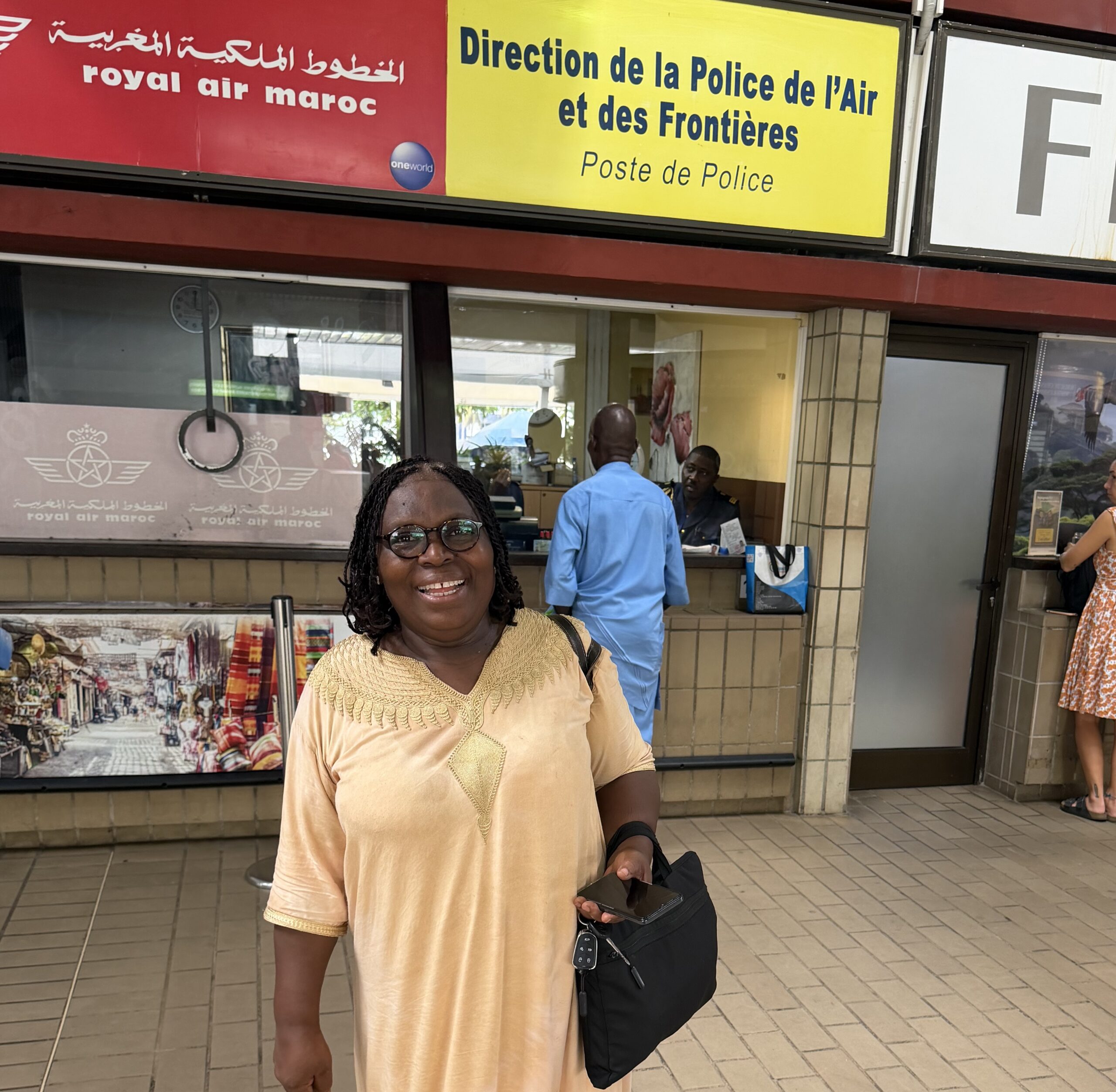
Suddenly the officer accompanying me was called over to the border police window (pictured below behind Stanislas’ wife Perine).

After he had a brief conversation with someone on the other side of the window the official motioned for me to follow him. We walked back past security and baggage claim to the visa section, where I was placed before an official at a window, who said it would just be a minute. The woman had me stand for a photo, filled out a visa and printed it up, pasting it into my passport. A man at another window called me over to make payment, just as someone came and handed a wad of cash to the women. I was given my passport with a 30 day visa, and ushered back out by the officer to arrivals, where Stanislas recounted with delight what he called a miracle.

Stanislas explained how the previous day a captain at the immigration office had called him to tell him my visa had been approved. There at 11pm as the woman was insisting to him that I was being refused entry he remembered the number of the captain was on his phone and he called him. There from his home the captain answered his call, and after hearing about the situation asked to speak with the woman who was refusing me entry, who was then forced to reverse her decision.

That night I learned that my colleague from Mauritius scheduled to teach with me in Congo still hadn’t received her visa– and her country was prohibiting citizens from going to Congo. Our host in Congo, Pastor Oddon told me for $700 he could set up a strong enough internet connection and big screen TV so we could offer our training in Kinshasa via Zoom. It turned out he’d been a specialist in digital communication before he became a pastor! I booked a flight back to Geneva for Monday at noon.

The next day I taught a group of pastors, followed by a attending an open-air outreach in an impoverished neighborhood of the city. The next day I preached in a local church made up largely of street kids who’d been taken in by pastor Claude. We spent the afternoon on the most colorful beach i’ve ever seen. Pastors Stanislas, Perine and Claude are eager to host our Certificate in Gabon beginning later in this year.

The next morning before my flight I was able to teach the first session of the Certificate via Zoom from my hotel. While I was checking into my flight Viviane offered the second session. I gave the third session from the airport lounge. Viviane taught the last two sessions of the day from Mauritius as I flew to Geneva.

A close friend picked me up at the airport in Geneva and took me to her home in France, stopping for pan au chocolats and croissants on the way. She set me up to teach all day from her house, which worked beautifully. I was able to teach in coordination with Viviane the rest of the week from France. 110 pastors and church leaders graduated Friday evening in Kinshasa, Congo (photo below).

I am thrilled to experience God’s faithful support as we move forward with the trainings, despite all the complications. July 15 I head back to Europe and on to Benin, joined by Viviane, Oddon and his wife Lukelu from Congo, Stanislas from Gabon, and our host Dr. Segbegnon to offer the full 42 session Certificate in Porto Novo and Cotonou to 150 pastors and leaders. In this way our Congolese partners will be equipped to offer the trainings in seven cities where we’ve received invites, and Stanislas will have experienced the course firsthand.

America’s Pharaohs are on the losing side of sacred history

06.11.26

On June 6th I was horrified to hear US Defense Secretary Pete Hegseth’s anti-immigrant tirade from the shores of France. This is a highly disturbing alert to the dangers the world faces from America’s Pharaonic ideologues.

I had just returned to France after teaching our Certificate in Holistic Liberation in Cameroon, followed by trainings in Libreville, Gabon. Originally I planned to travel next to Kinshasa, Congo. But due to Ebola-related return travel restrictions imposed by the Trump Administration I had to cancel my trip. Happily, we were able to find a way to teach our five-day course in Congo from France.

It was just after these virtual teaching sessions, June 6, that I heard a fellow American, US Defense Secretary Pete Hegseth, who identifies as Christian, give a hate-infused speech that sounded like Hitler and his earlier genocidal manifestation in Egypt’s Pharaoh. There on the beaches of Normandy in his D-day speech Hegseth said that “different European beaches ae stormed by different, dangerous ideologies… When will European capitals do something about the invasion, or is it to late?”

D-day commemorations were ironically celebrating US and British troops storming the beaches of France during World War 2, to fight and eventually overcome the Nazi, whose ideology involved “racial purification” through systematic eradication of Jews and other “undesirables” in the infamous death camps.

The beach-stormers Hegseth was referring to were not himself and his Trump Administration colleagues, but vulnerable refugees from US wars in the Middle East, and now African migrants who make the precarious journey across the Mediterranean from Morocco or Lybia, fleeing poverty in war in places like Sudan, Niger, Cameroon and Congo.

Gracie and I made four trips to Morocco in past years, where we offered our Holistic Liberation course to Sub-Saharan migrants from war-torn and poverty-stricken places like Congo and Cameroon. The people we served had settled in Morocco to start house churches which served migrants, many of whom are Christians on their way to Europe. A lot of Jesus-following migrants are actually now revitalizing oft-dying European churches, bringing a vibrant faith desperately needed in post-Christian Europe and the UK.

Ironically, US Defense Secretary Hegseth’s presence and words on the beaches of Normandy represent the most dangerous of ideologies, similar to the racial-purifying Nazi ideology allied troops came to combat back in 1944. Hegseth echoed statements US Vice President JD Vance regularly makes reproaching Europeans for welcoming migrants who he accuses of threatening “civilization erasure,” which he claims dilutes European racial and cultural purity with people of color and their cultures from the Global South and Middle East.

These leaders and other far right-wing thought influencers in the US are allying themselves with British and European nationalists and fascists to call for racial purification—elevating the Trump Administration’s immigration crackdown. 

This crackdown involves the establishments of concentration-camp-like internment centers to hold and deport undocumented immigrants in ways that alarmingly evoke oppressive systems of civilization erasure the Nazis mastered. May we all refuse this growing invasion of dangerous ideologies from Christian nationalists from the US and UK, which comes out of arrogance, blind superiority and historic amnesia. I’m reminded of the book of Exodus’ description of Pharaoh.

“Now a new king arose over Egypt, who did not know Joseph” (Exodus 1:8).

Joseph, Jacob’s beloved son who was sold by his brothers into slavery in Egypt, was a catalyst for God’s project to bless Egypt though a brilliant campaign to increase and effectively store agricultural production for coming times of scarcity. Joseph’s brothers and father later migrated to Egypt in search of famine relief, where they established themselves and multiplied, much like migrants in North America and Europe.

Hegseth and JD Vance most certainly never knew or conveniently “forgot” their own immigrant origins, showing no appreciation for the hard labor that benefits US and European agricultural production now. They also deny the US’s many destructive post-WWII invasions of nations the world over. 

Rather, current Trump Administration leaders behave like the forgetful Pharaoh, who reacted with alarm, threatened by the fruitfulness of the migrant labor force who benefitted from divine favor– now engaging in still more oppressive, refugee-producing invasions in the Middle East and beyond.

The Egyptian head of state said to his people, “Behold, the people of the sons of Israel are more and mightier than we. “Come, let us deal wisely with them, or else they will multiply and in the event of war, they will also join themselves to those who hate us, and fight against us and depart from the land.” So they appointed taskmasters over them to afflict them with hard labor” (Ex 1:9-11).

The rich and powerful then and now scapegoat society’s most vulnerable, especially when they see those who they have been exploiting becoming more numerous. Migrants and refugees in United States and Europe find it increasingly difficult to cope due to low wages, the rising cost of living and immigration crackdowns.

“But the more they afflicted them, the more they multiplied and the more they spread out, so that they were in dread of the sons of Israel. The Egyptians compelled the sons of Israel to labor rigorously; and they made their lives bitter with hard labor in mortar and bricks and at all kinds of labor in the field, all their labors which they rigorously imposed on them” (Ex 1:12-14).

Pharaoh orders the Hebrew midwives (public health care workers) to kill new-born baby boys. When they refuse to comply, he orders his people to throw them in the Nile River. Contemporary equivalents of these actions include Immigration and Customs Enforcement (ICE) agents’ increasing separation of immigrant children from their parents, incarceration, deportation—but also the refusal of adequate health care.

God is consistently on the side of the poor and oppressed. He raises up a liberator from among the targeted immigrant community– and even Pharaoh’s very own daughter collaborates. God tells Moses what is still true today:

“I have surely seen the affliction of my people who are in Egypt, and have given heed to their cry because of their taskmasters, for I am aware of their sufferings. “So I have come down to deliver them from the power of the Egyptians, and to bring them up from that land to a good and spacious land, to a land flowing with milk and honey” (Ex 3:7-8).

God announces plagues against Egypt, which wreaked havoc on the Egyptian economy and people— a strong warning to US and European elites today. God showed his commitment to the oppressed workers in acts of divinely-orchestrated sabotage. Finally, Pharaoh and his chariots were compelled by a mightier hand. They were overcome by the God of life, destroyed in the waters of the sea that opened up before the fleeing immigrant community– closing over them.

This story serves as a prophetic warning for Western nations today, where Hegseth, JD Vance and President Trump most clearly resemble Pharaoh and his officials, and MAGA supporters represent the Egyptian people– who are on the losing side of sacred history. 

May we heed this warning, disassociating ourselves from today’s Pharaohs and Egypt, joining today’s Moses equivalents and the company of God’s people to actively resist and reject identification with the dominant nations, economic systems and ideologies in pursuit of the Kingdom of God.  

Take a look at my book God’s Radical Recruiting, which highlights God’s call of Moses and other agents of liberation through Scripture.

Strength through Weakness

05.17.26

Peace through strength is a foreign policy doctrine that calls for military superiority to deter aggression. It was famously championed by President Ronald Reagan in the 1980s, but has been taken to new extremes by the Trump Administration’s words and actions— now brazenly proclaimed using the most hostile, threatening rhetoric by leaders loudly self-defining as Christian. Let us lift up Jesus, and his words and actions in the face of threats of violence and acts of war.

Jesus himself proclaimed and modeled peace through what looks like weakness, which is stated most clearly in his response to his disciple’s own attempts to grab power.

“You know that the rulers of the nations lord it over them, and their great men exercise authority over them. “It is not this way among you, but whoever wishes to become great among you shall be your servant, and whoever wishes to be first among you shall be your slave; just as the Son of Man did not come to be served, but to serve, and to give his life a ransom for many” (Mt 20:25-28).

Yet many self-proclaimed Christians today openly espouse the Seven Mountain Mandate, which advocates for Christians to actively take and rule over seven identified spheres of influence in society (religion, family, government, education, media, arts/entertainment, and business). See Matthew D. Taylor’s excellent The Violent Take it By Force: The Christian Nationalist Movement that is Threatening our Democracy for a detailed description.

On Wednesday at Tierra Nueva I led a Bible study with men and women in recovery about Jesus’ way of peace through weakness. We started by discussing how Jesus proclaimed a kingdom “not of this world,” identifying the underdogs as primary beneficiaries. “Blessed are the poor in spirit, for theirs is the kingdom of heaven,” he promised. “Blessed are the meek, for they shall inherit the earth,” he announced. This delighted our people.

The Apostle Paul lifts up Jesus’ self-emptying love- to the point of death on a cross, as the way he defeats evil, announcing the eventual destruction by Jesus of the principalities and powers—and finally death itself as the last enemy (1 Cor 15:26). Wow would this be welcome!

We read together how Jesus calls his followers (“you who hear”), saying: “love your enemies, do good to those who hate you, bless those who curse you, pray for those who mistreat you” (Lk 6:27-28).

We discussed how Secretary of War Pete Hegseth recently prayed the opposite actions in one of his public worship services: “Let every round find its mark against the enemies of righteousness and our great nation.” “Give… overwhelming violence of action against those who deserve no mercy.” 

Hegseth justifies his violence with the help of pastors and theologians from his church, Christ Kirk DC, the Washington DC branch of the Communion of Reformed Evangelical Churches, where a pastor recently preached a sermon on “biblically-informed hatred” (see this article). In this sermon the pastor did not appear to carefully distinguish between hating the sin and loving the person.

While hating what is evil is called for (Rom 12:9), Jesus consistently distinguishes between people, including enemies, who he calls us to love, and predatory evil (unclean spirits, powers and principalities, sin), which he calls us to cast out or resist. This message is welcomed by anyone who has suffered physically for their addictions and crimes through homelessness, incarceration, deportation, and every manner of loss.

In Ephesians 2, Paul writes how Jesus himself is our peace, breaking down the dividing wall, and abolishing in his flesh the hostility itself, and laws and commandments contained in ordinances, reconciling us through the cross by putting to death the hostility (Eph 2:14-18). Any violence attributable to Jesus is against non-human powers like walls, laws and commandments and hostility itself– never against people.

Followers of Jesus who still use Old Testament texts to justify violence against people and pray cursing Psalms against flesh and blood enemies must be helped to see they are going directly against the teachings of Jesus—with devastating consequences.

Since September 2025 Pete Hegseth has ordered over 58 strikes on boats in the Caribbean Sea and Eastern Pacific allegedly trafficking drugs, killing over 194 people from poor backgrounds (see this article and this response), with no proof offered that they were trafficking drugs. 

The people at Tierra Nueva’s Bible study were outraged by the US Military’s killing of alleged drug traffickers– with no proof, no trial, no warning. We all know people who have turned away from drug dealing to become followers of Jesus!

In a country where people on the margins pay for their every crime, it doesn’t escape our people’s notice that the crimes of the rich and powerful often go unaddressed or are pardoned. There has been no formal acknowledgment let alone apology for the US bombing under Hegseth’s command of the Shajareh Tayyebeh girls’ school in Minab, Iran that killed 156 to 168 children.  

Hegseth’s hateful rhetoric and actions follow the US President’s lead, who since then has threatened to “blow Iran off the face of the earth” and bomb it “back to the Stone Age.

The other day I was deeply disturbed to learn about a Christian nationalist event, “The Rise of the Statesmen” featuring all-White speakers, most of whom are pastors, organized here in Washington State on Juneteenth and Father’s Day weekend. This event appears to promote and even celebrate patriotism, and peace through threats of violence—on a day when they should be celebrating the emancipation of enslaved African Americans in the United States. That this is happening at a time when Black Americans and other people of color are being stripped of their voice and vote through Supreme Court-empowered gerrymandering, only deepens a growing offense.

This Sunday’s (May 17) Christian nationalist worship service at the National Mall in Washington DC, Rededicate 250: A National Jubilee of Prayer Praise and Thanksgiving, which features Hegseth and other Trump Administration official speakers, shows that the escalation of colonial Christendom is highly organized and well-funded. Sitting back in despair or thinking our democracy will survive and all this will somehow go away is at best dangerous denialism and at worst complicity with evil.

In the face of ascendant co-opting of the name of Jesus at the service of anti-Christ agendas, now is the time to realign ourselves with Jesus and his peace through weakness (meekness).

The word of the cross subverts the powers

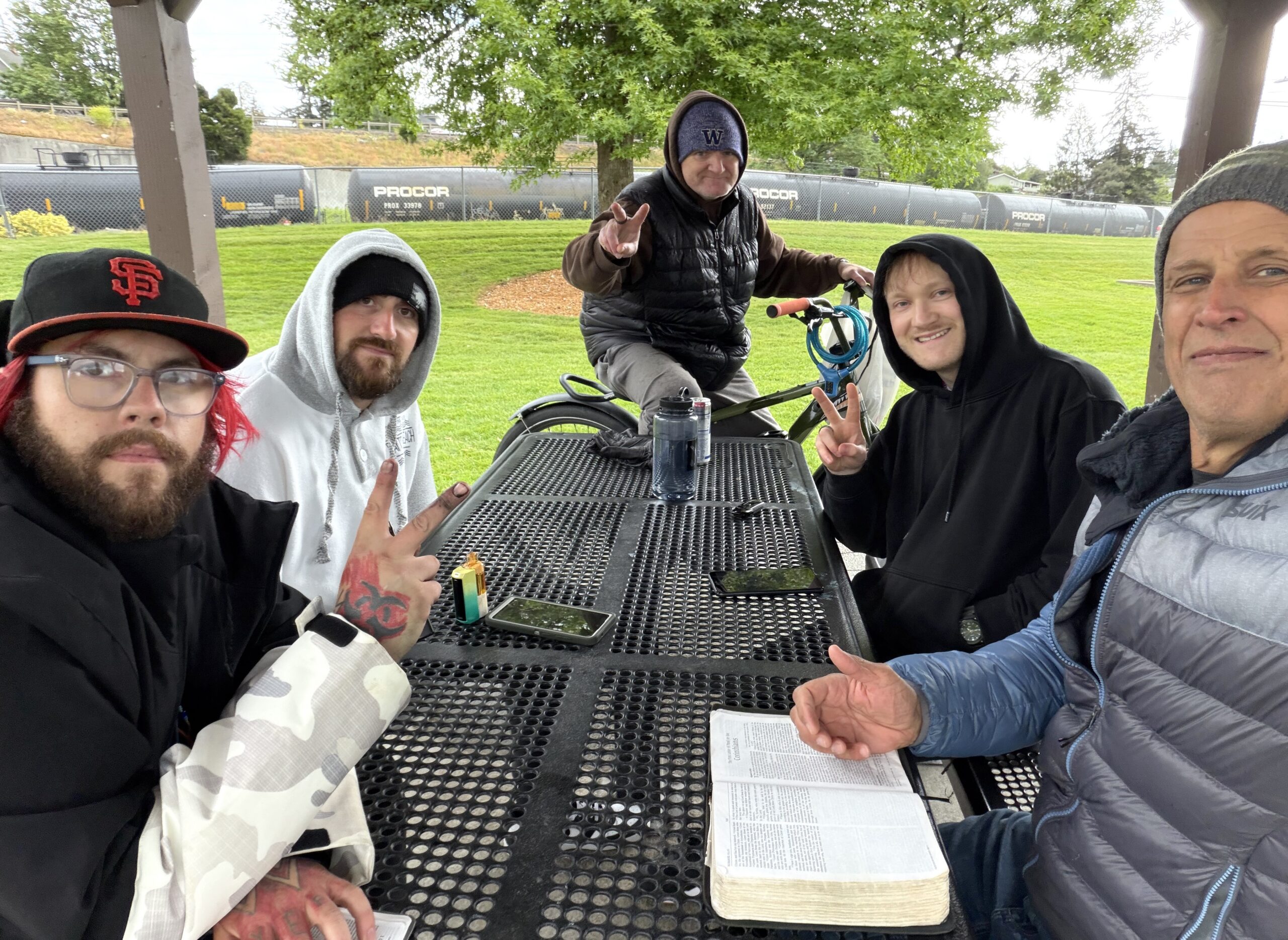
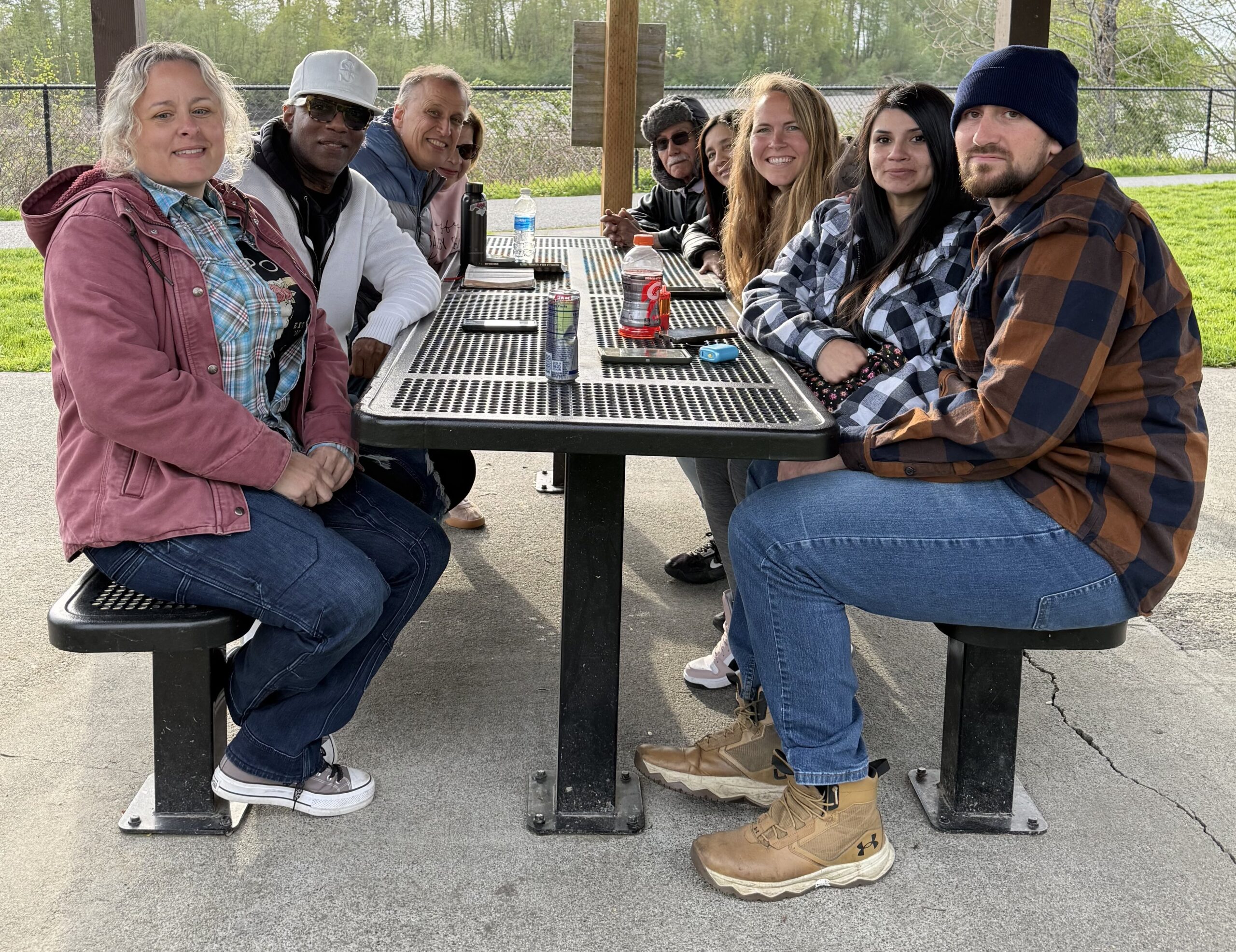
On Friday afternoon at Lyon’s Park in Mount Vernon, Washington I led Bible studies with four men we’d originally met on the streets who are now in recovery. We talked about Jesus’ way of peace through weakness. We read and discussed together sections of 1 Corinthians, where the Apostle Paul writes compellingly about peace through weakness—which he calls the word or message of the cross.

“We preach Christ crucified, to Jews a stumbling block and to Gentiles foolishness, but to those who are the called, both Jews and Greeks, Christ the power of God and the wisdom of God. Because the foolishness of God is wiser than men, and the weakness of God is stronger than men” (1 Cor 1:23-25).

“What do you think of this?” I ask the men under a covered picnic table. 

“It’s super cool,” said Jordan (pictured left above), who himself has survived some 16 overdose deaths from fentanyl.  

“Jesus gave his life for us, to save us from our sins,” he said.

We discuss together how Paul understood clearly that this message of Jesus defeating sin and death through himself submitting to human execution looks foolish. But Paul’s explanation flips the script in a way that invites us to make a choice—are we in with Jesus or not?

“I’m in,” said Jordan– and Rich, Spencer and Gino agreed.

“For the word of the cross is foolishness to those who are perishing, but to us who are being saved it is the power of God” (1 Cor 1:18).

When anyone claiming to be Christian and their political allies refuse the word of the cross as foolishness, justifying instead violence or the more rational sounding “peace through strength”—they are self-identifying as among “those who are perishing.” In contrast, Jesus’ weak-looking way of suffering love is the power of God “for all who are being saved.”

According to the Apostle Paul, God opposes this “wisdom of the wise” as doomed-to-death, and declares that the spokespersons for the world’s wisdom will be shown to be foolish.

“For it is written, “I will destroy the wisdom of the wise, and the cleverness of the clever I will set aside.”  Where is the wise person? Where is the scribe? Where is the debater of this age? Has not God made foolish the wisdom of the world?” (1 Cor 1:19-20).

As we look at political and economic power amassing on one side of the political divide, authoritarianism, threats of violence and war against enemies, White supremacy, harsh immigration policy and so many dark forces seemingly winning, we do not yet see this prophesied demise. But we must remember to strengthen ourselves in the preaching of the foolishness of the cross—which has the power to save as we choose to actively believe (1 Cor 1:21).

There between Interstate 5 and the Skagit River around a picnic table we read the next verses that describe the stronger way of the foolishness of God, which people found delightful.

“To those who are the called, both Jews and Greeks, Christ the power of God and the wisdom of God. Because the foolishness of God is wiser than men, and the weakness of God is stronger than men” (1 Cor 1:24-25).

The final verses of our Bible study helped us all see the alternative community of those Jesus chooses, which gives hope in the face unity over and against a common enemy.

“For consider your calling, brothers and sisters, that there were not many wise according to the flesh, not many mighty, not many noble; but God has chosen the foolish things of the world to shame the wise, and God has chosen the weak things of the world to shame the things which are strong, and the base things of the world and the despised God has chosen, the things that are not, so that he may nullify the things that are, so that no one may boast before God” (1 Cor 1:26-28).

Everyone in our two Tierra Nueva groups could identify themselves as included among the called and chosen here. They found this deeply encouraging as they’ve been excluded from so many other circles. May you find your place in humble Jesus’ company of called and chosen ones, so you can journey with greater hope through these distressing times.

Cultivating Critical Consciousness

04.29.26

We are seeing a rising hunger for deeper engagement with the Bible and the hard issues faced in daily life in African settings among the poor– but also right here in Skagit County. We all need clearer discernment so we can face growing societal turmoil and spiritual confusion. 

Paulo Freire’s insights in Education for Critical Consciousness marked us during our years in Honduras in the 1980s. Freire pursued teaching methods that helped the common person develop a more critical consciousness. He challenged the passive education system that was dominant then (and now!). He taught critical thinking skills among the illiterate and semi-literate– so people could engage in well-informed praxis (action).

Freire contrasted critical consciousness with what he called “banking education”– wherein people are fed and take in information like money deposited in a bank.This makes us passive, dependent, easily led astray by influencers, authoritarians, false prophets. Brainwashing is rampant today– often fueling the divides between us.

In today’s media-saturated, AI-informed environment we are bombarded with information and analysis which impacts us faster than we can thoughtfully evaluate. This kind of “education” can easily become indoctrination as we accept things to be “true” without taking the time to carefully investigate and discern. Social influencers assail us through YouTube, podcasts, TikTok, Instagram and so many others media formats– and many of us uncritically consume media and pass it on– disseminating mixed messaging often full of falsehood.

Pastors and church leaders in Africa, like here, are often informed more by social media than by their own personal study and reflection. Views about God, current events and social issues get passed along through preaching. Being preached to by the “man of God” (or any demigod) reinforces authoritarian mindsets, passivity and dependency. 

In our People’s Seminary courses and Bible studies here in the Skagit Valley, we deliberately coach people how to carefully read Scripture in direct rapport with their lives and larger world. 

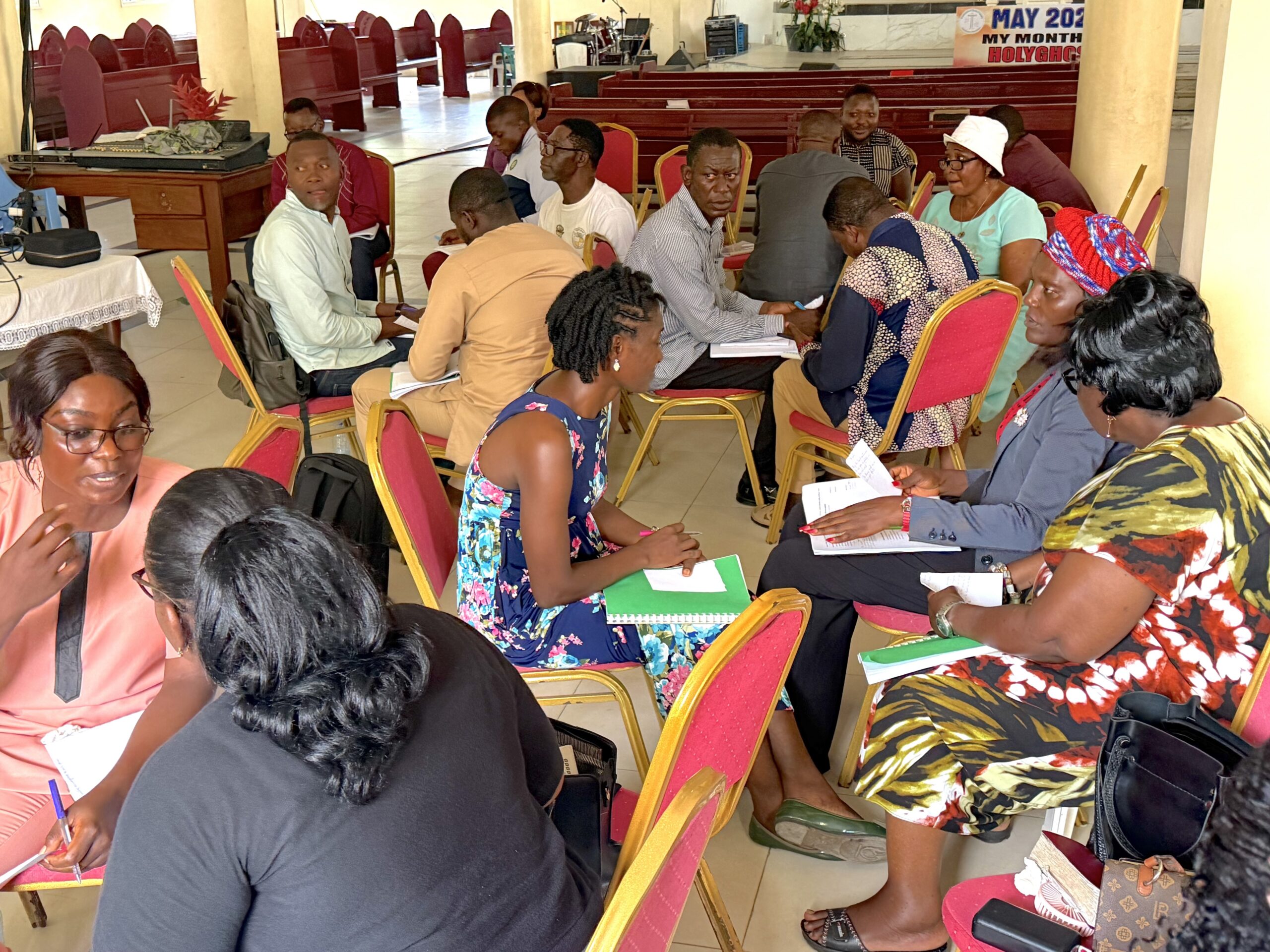
We use bibliodramas, small group breakout sessions, questions that invite deeper reflection, and conversational teaching to help people think critically and discover for themselves the liberating Message. It is exciting to see people’s growing enthusiasm for learning over the course of the 42 sessions of our two five-day courses that make up a Certificate in Holistic Liberation.

Our team of African teachers (and a Swede) just finished two trainings in rural Mozambique and Malawi to groups of 140-200 church leaders and pastors.

Freire’s pedagogy focused on helping people develop a critical consciousness around social class divisions, economic exploitation and political oppression. 

Critical consciousness is also needed as we approach the Bible and theology. Awareness-raising that enhances people’s spiritual discernment is also urgent, so we can identify and critique issues like nationalism, other idolatries and false prophesy.

Most church leaders and pastors in poor settings in Africa and throughout the world have not had the opportunity to receive teaching that equips them for their unique challenges. We are deeply moved by people’s eagerness for learning, visible in the attendance at our trainings, people’s impressive attention spans (8 hours-plus per day), and new requests for courses.

Mozambican worship

Here in North America and throughout the world there is a need for a new movement of in-person contextual Bible study which cultivates critical consciousness and Spirit-inspired action. We are seeing people grow before your eyes here at Tierra Nueva, and are excited to have returned to our outdoor Bible studies.

Tierra Nueva Bible study in a local park (April 23, 2026)

Graduation in Mozambique (April 16, 2026)

Please consider contributing much-needed funding for upcoming trainings in Cameroon and Gabon (May), DRC (June) and Benin (July). You can give online here, or through sending a check to Tierra Nueva (Attn: The People’s Seminary), PO Box 410, Burlington, WA 98233, USA. 

UK donations can be given through our account at Stewardship. Click here to set up your sign-in details.

We are currently in need of $40,000 to complete these courses, and $2500 to provide Bibles in people’s indigenous languages.

Consider using some of my Guerrilla Bible studies to start your own group.

Order Guerrilla Bible studies volumes here

Malawian prisoners holding up soap given out at TPS Bible study

Resurrection Hope at the End of History

04.05.26

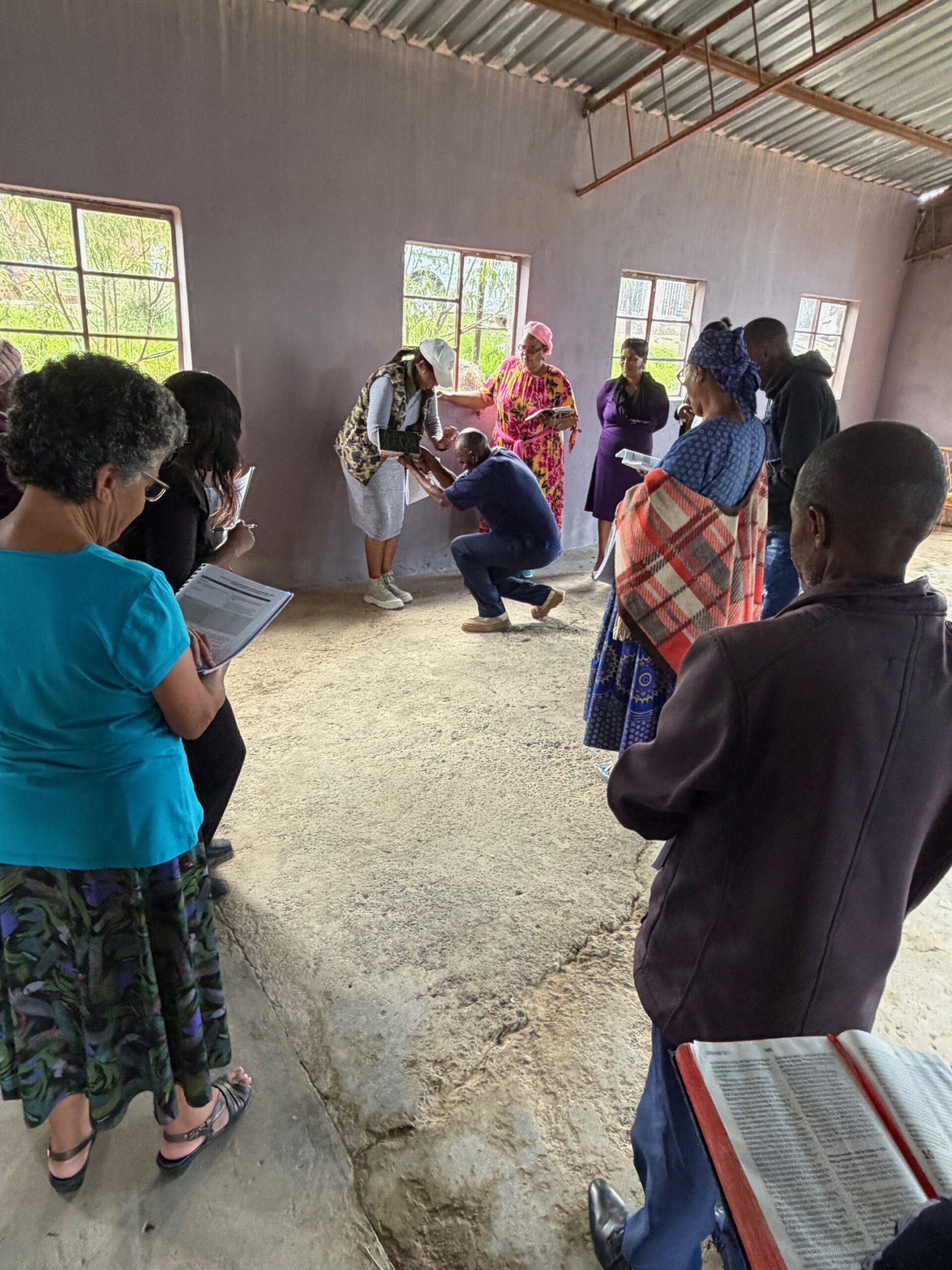
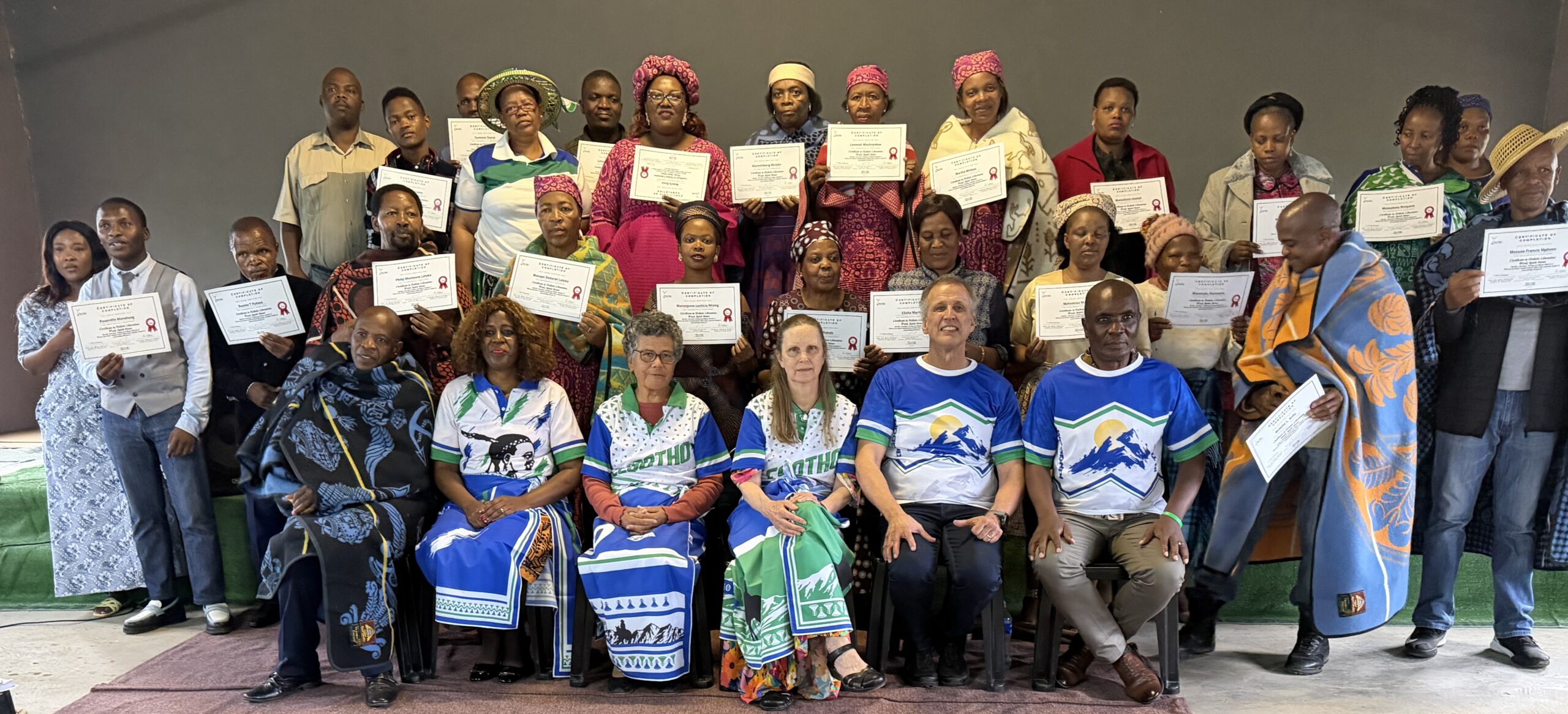
The Kingdom of Lesotho is a high, mountains country surrounded by the country of South Africa. Last Sunday we returned from teaching our Certificate in Holistic Liberation to a group of 30 African pastors and church leaders there. What a joy to participate in strengthening people called to make disciples of Jesus!

The clean air and cool weather were a welcome respite from the sweltering heat of the Democratic Republic of Congo (DRC) the week before. People’s eagerness to learn was visible in their lively discussion and seemingly untirable attention span.

Our five-day course was called “Word on the Street: transformational Bible study, prophetic mission & peacemaking.” Much of the course involved carefully studying Scriptures often read to justify violence– in the light of Jesus’ redemptive suffering and overcoming of evil and death on the cross.

Together we sought to better understand difficult stories like death of the firstborn (Exodus 12), the destruction of Sodom and Gomorrah (Genesis 18-19), the stoning of Achan (Joshua 7), the sacrifice of Jephthah’s daughter (Judges 11) and the rape of Tamar (2 Sam 13). We read these stories with Jesus as our teacher (“on-the-Road-to- Emmaus” style). We asked:

“How do these Old Testament stories from the Law and the Prophets bear witness to Jesus’ suffering as the Christ (Israel’s Messiah) (Lk 24:26)?

Reading about the death of firstborn of Egypt and on the eve of the Israelite slaves’ departure from Egypt was especially moving. Exodus 12 describes the first Passover, not as a sacrifice of a lamb to God, but as food to be eaten for the liberation journey.

Each household was to slaughter a lamb, roasting and eating it along with unleavened bread. They were instructed to eat the Passover dressed and ready to flee slavery—staff in hand, sandals on, and bags packed.

We acted out the Passover story—which always helps people see things differently.

One of the pastors playing an Israelite slave in Egypt, slaughtered and cooked up an imaginary lamb, and then applied imaginary blood to the sides and top of a wooden pallet which we’d placed upright to represent the family’s front door. Other volunteers playing his wife and children gathered around him inside the house.

We noted that the lamb’s blood was not to be poured out on an altar to God—but applied to the door posts and header over the door—to cover the family so the destroyer would “pass over.”

We read from Exodus 13 how the lamb was also God’s provision to redeem the firstborn of each household. In Israel’s ancient sacrificial system, the first of the harvest, and firstborn animals were devoted to the Lord in recognition that the earth and everything is it belongs to the Creator (Ps 24), who we need to protect and liberate us.

The death of Egypt’s firstborn results from the Egyptian’s failure to recognize this, and from their gods’ inability to save them. And the death of only the firstborn, suggests God’s claim on all Egypt (and the whole world). The “great cry” of the Egyptian oppressors (Ex 12:30) echoed the cry of their enslaved (Ex 3:7,9)—pushing them to release their captives, God’s people– showing God’s commitment to justice and liberation.

We looked together how on the night of Jesus’ betrayal and arrest he celebrated Passover as God’s lamb– and also God’s firstborn son. We noted that Jesus didn’t offer himself to God, because God didn’t need a sacrifice. Jesus freely offered himself to us: “Take and eat, this is my body” (or Luke’s version: “This is my body which is given for you). Jesus offers his disciples the cup, Jesus says: “Drink from it, all of you; for this is my blood of the covenant, which is poured out for many [not for God] for forgiveness of sins” (Mt 26:27-28).

Jesus had prepared his disciples (and us) for this. On two occasions he’d told them:

“Behold, we are going up to Jerusalem; and the Son of Man will be delivered to the chief priests and scribes, and they will condemn him to death, and will hand him over to the Gentiles to mock and scourge and crucify him, and on the third day he will be raised up” (Mt 20:18-19).

Nowhere does Jesus describe himself a a sacrifice to God in the Gospel accounts– contrary to common assumptions. God didn’t need his Son to die for human sins. Humans did. Judas “delivers” Jesus to the chief priests and scribes. They in turn “hand him over” to the Gentiles—the Roman colonizers, who “mock, scourge and crucify.” The only positive action is God’s: “and on the third day he will be raised up” [by God]. But Jesus has already given himself to his disciples—stand-ins for us all.

Actually, the disciples, the Jewish chief priests and scribes, and the Gentile Roman colonizers together “sacrifice” Israel’s Messiah unknowingly to themselves (and to us)— Jews and non-Jews alike. The Jewish religious leaders unknowingly give their Messiah to the nations– for our and their salvation! It is God himself “who so loved the world that he gave his only begotten Son”—to us! And Jesus knowingly and willingly gave himself up to us. It is we, not God who need God’s lamb, Jesus for our salvation! This revelation deeply impacted us all.

Reading Matthew’s Gospel account of the crucifixion and resurrection this weekend gives me a burst of hope. After the worst has happened to Jesus, his dead body was buried in a cave, sealed by the Romans—who stationed soldiers to guard it. As a deliberate tactic to undermine faith, the Jewish religious leaders started a rumor that his disciples had taken his body away. But then came an earthquake, and Jesus was raised!

Jesus meets his disciples back in Galilee where it all began. Though some worshipped him and other doubted, he sent them with the commission to make disciples, baptizing them in the name of the Father, Son and Holy Spirit. They were commissioned to teach new believers throughout the world to observe everything Jesus commanded. Doing this very thing is the purpose of life according to Jesus’ final words!

The people in Lesotho were delighted by this study, and grew from day to day in their interest in reading the Bible carefully, expecting “Good News.” Out of this group we identified five future trainers—one of whom joined our team this past week to teach the final five-day training in Solwezi, Zambia (near the border with DRC).

Teaching humble, eager learners in the DRC and Lesotho, and then hearing reports from our African team who taught 140 pastors and church leaders in Zambia last week brings us hope and joy—an essential antidote to the helplessness and despair before all the current bad news of Israel and Trump’s war against Iran and Lebanon, ICE raids of immigrant communities across the USA and other horrible events.

Jesus’ answer to the disciple’s question before his ascension is a needed reminder of what our priorities must be in these threatening, “end of history” times. In the face of rising authoritarianism, threats of nuclear war and economic uncertainty Jesus’ words invite us to re-set our priorities.

“It is not for you to know times or epochs which the Father has fixed by His own authority; but you will receive power when the Holy Spirit has come upon you; and you shall be my witnesses both in Jerusalem, and in all Judea and Samaria, and even to the remotest part of the earth” (Acts 1:7-8).

“As you go, make disciples…” says Jesus, in his final words in Matthew’s Gospel.

If you would like to contribute to upcoming trainings in Malawi, Mozambique (April), Cameroon, Gabon and DRC (May) and Benin (July) we welcome (and need) you can give online here, or through sending a check to Tierra Nueva (Attn: The People’s Seminary), PO Box 410, Burlington, WA 98233, USA.

UK donations can be given through our account at Stewardship. Click here to set up your sign-in details.

Check out my podcast: Disciple: Word, Spirit, Justice, Witness on Spotify or Apple

Some good news from Africa: Experiencing Jesus’ Kingdom in the DRC

03.25.26

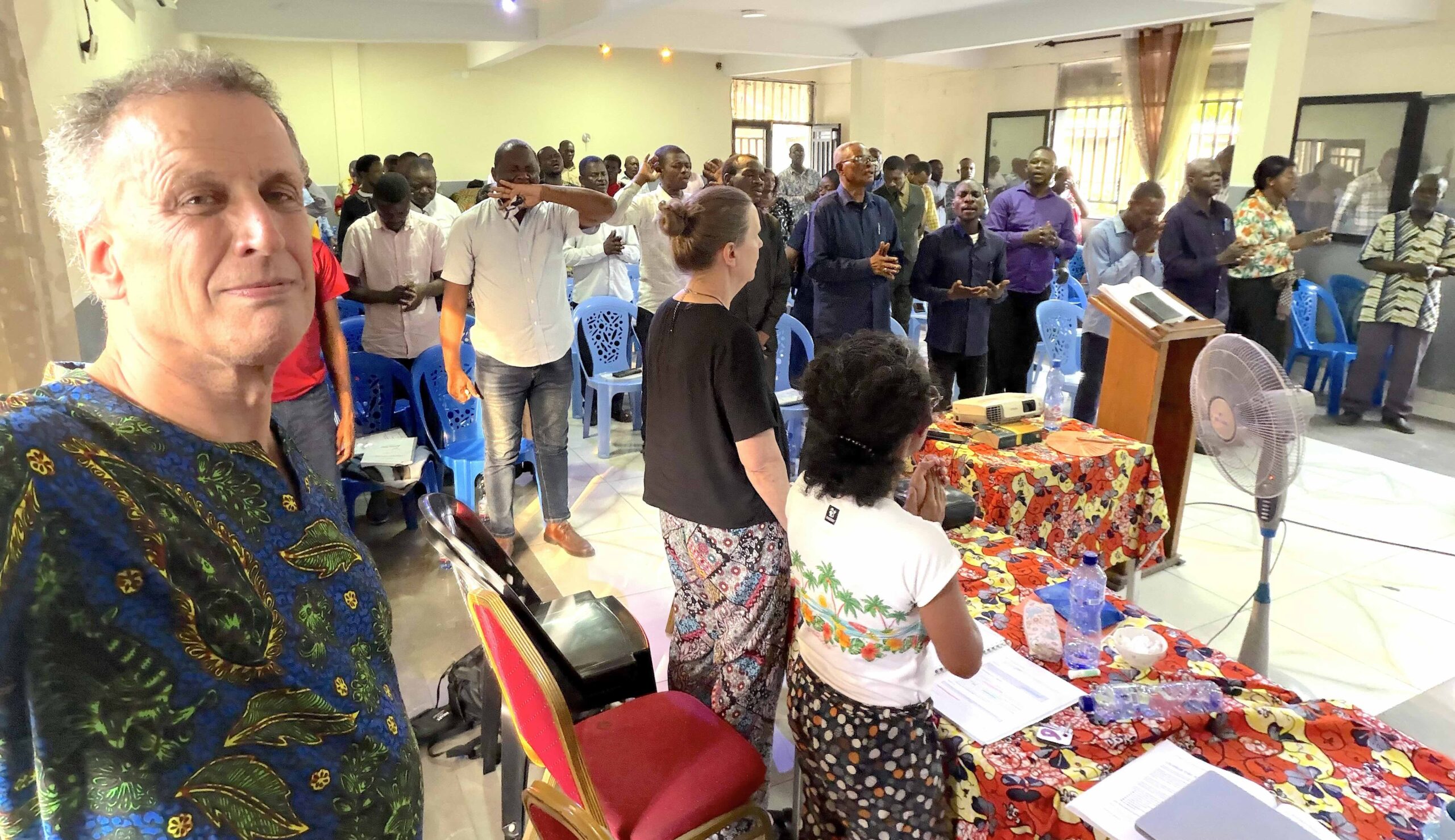
In the midst of daily bombardments in the Middle East and devastating news reports, we’re finding reasons to hope in some hard places in Africa. Gracie and I just completed the first of two five-day trainings here in Kinshasa, DRC (Democratic Republic of Congo). We felt called here for many years– but the connections were never quite right until now. 
 
Our first impressions were that things are quite grim and dire. Right away we were struck by the heat– 92 degrees F (33 C)- with 80% humidity– and then there’s the air pollution from so many vehicles ground to a near halt plus heaps of burning plastics and toxic garbage.
 
Right away, we experienced the famous “embouteillages” (traffic jams)– which are like nothing we’ve seen anywhere. It makes Seattle bumper-to-bumper rush hour look like paradise (well not quite). 
 
Here there are masses of people, walking, carrying loads, on motorcycles piled with people squeezing between big trucks and every manner of dented and battered vehicle. You’d never see even one car in the US or Western Europe like most every car or truck in the DRC. There are 18.5 million people living in Kinshasa– and the DRC has a total of around 200 million.
 
The infrastructure is so messed up– due in part to the fact that there is a war going on in the eastern Congo. It took us over three hours to travel from the airport to the site of our training– which with normal traffic would only take 20 minutes. 
 
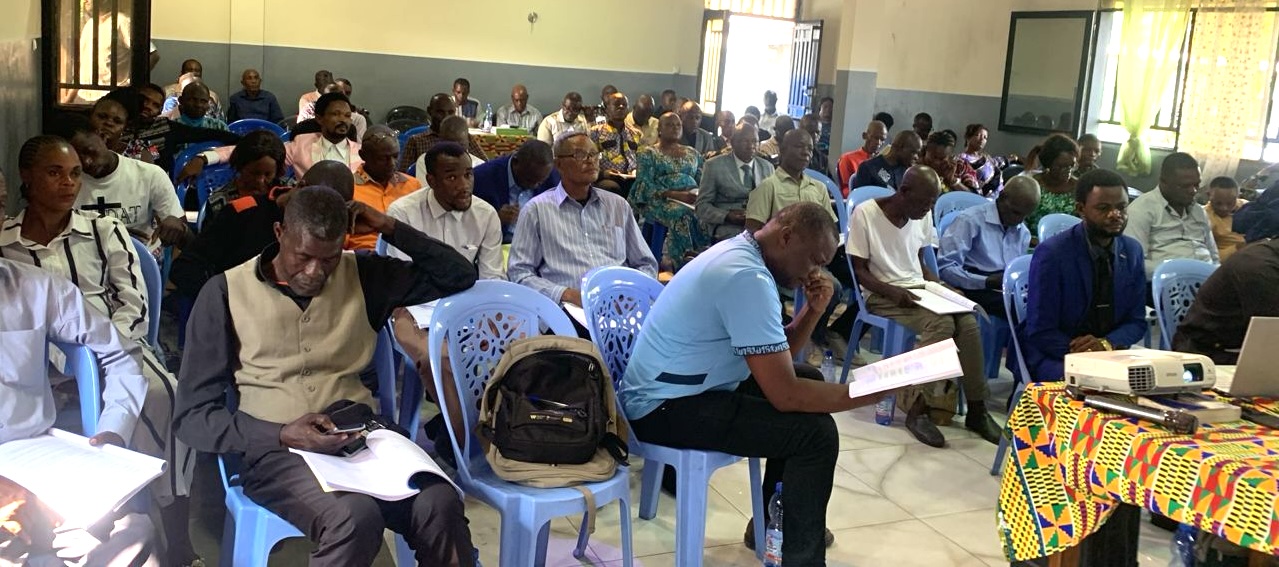
We learned from our hosts that a bus driver’s strike was scheduled to begin the first day of our training, which meant than instead of the 150-200 who’d signed up, only 60 were able to attend the entire five days. Most of those 60 people walked (some of them for two to three hours) to the Course—in the sweltering heat.
 
The particants traveled in the sweltering heat by foot (some of them for two to three hours), on the back of motorcycle taxis, or in three-wheeled vehicles called bajajis or tuk-tuks. They came eager to learn, expressing their enthusiasm through lots of comments and questions and vibrant acapella worship (see video below). 
 
Our teaching was done in French, by our team including Gracie and I, Vera, who grew up in France, but whose family is from Cameroon and Nigeria, and Viviane, who is from Mauritius.

Contextual Bible study is core to our trainings. In settings where people are used to listening to preachers and teachers but are rarely invited  to share their own ideas or questions, we seek to model a way of teaching that engages people’s participation and empowers them to discover for themselves the liberating messages in Scripture. Bibliodramas are especially effective at helping people see and experience the meaning of Biblical texts.

In the story of Jesus crossing to the other side of the Sea of Galilee with his disciples (Mark 4:35-41), we discover a shocking contrast between disciples and the demoniac whom they encounter on “the other side.”

I invite twelve people to come forward to represent Jesus’ disciples- and ask for a volunteer to play Jesus and another the Gerasene demoniac. I have the twelve disciples form two lines of six, and to face each other, then ask people to imagine they are the boat and the floor at the front is the sea. I place a chair between the two lines of six people and ask the man playing Jesus to take a seat in the boat.

We read the text about how as they cross the sea, a storm arises, and strong wind and waves threaten to capsize the boat—while Jesus remains fast asleep. Gracie waves a big scarf over the boat and makes sounds of wind. As we read on, I ask one of the disciples to speak out: “Master, don’t you care that we are perishing?” As we read on, the guy playing Jesus stands and asks:

“Why are you afraid? Do you still have no faith?”  

“Why am I?” I ask myself.

He then rebukes the wind and the waves, modeling a kind of authority that is foreign to us—and Gracie stops waving the scarf and making wind sounds. As we read on, the people playing the disciples look astonished and one of them reads:

“Who is this, that even the wind and waves obey him?”

I ask the audience how the disciples see Jesus. What image do they have of him? We notice together that they call him “teacher,” and they are not sure if he cares whether they drown. Once he calms the storm they still don’t know who he is, asking “who is this?”

“Would pastors here in Congo baptize people like Jesus’ unbelieving disciples?” I ask.  

“Would you baptize people who only saw Jesus as a teacher, and didn’t know who he is (God’s Son, the Christ, God in human flesh)?”

Some of the people looked shocked and others laughed and shook their heads– realizing Jesus has chosen people who are full of fear when adversity comes. He even describes them as having “no faith.”

I’d asked Viviane, one of our teachers from Mauritius to play the tormented demoniac living in the tombs. She was sitting in the corner to the right, and was now ready to spring into action. I had a volunteer read Mark 5:1 and invited the disciples and Jesus to move across the sea towards the “shore” on the right side of the room. Once they land, Viviane jumps out of her chair and runs towards Jesus, bowing before him and crying out:

“What business do we have with each other, Jesus, Son of the Most High God? I implore you by God, do not torment me!”

We look together at how this man who’d been living in the tombs, who no one could restrain, who was self-harming and crying out night and day, knew Jesus’ identity and showed his allegiance far more than the disciples—but he still needed liberation.

After I taught about how the people were colonized by the Roman Empire, and how the demons are named “Legion” (referring to a Roman military unit), I asked whether there are people in the DRC who were oppressed by evil spirits associated with colonization. Seeing past Belgian colonizers and current mineral extraction by modern-day equivalents to Legion seemed to visibly bolster people’s confidence in the relevance of Scripture for now.

The man tells Jesus to stop tormenting him because Jesus was telling the evil spirits to leave him. We realized together how painful it is for people to be freed from the deep spiritual oppression from colonialism- contributing to self-hatred, violence, passivity, poverty, dependency. 

That Jesus casts the colonizing spirits into pigs shows he’s willing to commit an act of sabotage against a parasitic war economy to save even one man, inviting further reflection on what that means for us now.

We were deeply encouraged by people’s heartfelt appreciation for our teaching and are receiving more and more invites. We are currently in Lesotho, and preparing to send two teams to teach all next week in Solwezi, Zambia and in Malawi and Mozambique in April.

We’ve been preparing to offer more trainings in Francophone Africa,where grass-roots church leaders often lack theological/ministry formation. We now have six French-speaking teachers involved and have already completed trainings in Paris, Switzerland, Morocco, Burundi and Benin with hopes of training more trainers so can we expand our reach. 

I shared with one of our hosts, Lucien, the director of the Campus Pour Christ in DRC, a dream I had about six years back. In the dream, an African man came to me and said: “Venez à Gabon!” (Come to Gabon). I told him I was sad to say that I’d never responded to this dream. He told me that maybe I never asked God “when?”

“I have a close colleague who leads a ministry in Gabon who I’m sure would want to host this training,” he said. “I will connect you!”

Over the next few days Lucien connected me with ministry leaders who want to host our Certificate in Holistic Liberation in Gabon, Chad and Cameroon. 

Meanwhile our previous hosts in Burundi have invited us to offer our training in anew area of Burundi, and to include a “trainer of trainers” course to equip more teachers. We are also scheduled to offer back-to-back modules in Benin the last two weeks of July.

We are in serious need of around $30,000 to offer nine five-day trainings to over 1500 participants. We welcome contributions towards course expenses online here, or through sending a check to Tierra Nueva (Attn: The People’s Seminary), PO Box 410, Burlington, WA 98233, USA.

UK donations can be given through our account at Stewardship. Click here to set up your sign-in details.

Please hold us and our African trainers and the course participants in your prayers this next week as we complete our final course in Lesotho, as people travel long distances daily and teach in Solwezi, Zambia. Check out the video below to experience the joy of worship in the DRC.

Check out my podcast: Disciple: Word, Spirit, Justice, Witness on Spotify or Apple

Una clave sorprendente para la intercesión: Primero, recibir de Jesús– Roberto Ekblad

03.10.26

Este miércoles, en nuestro estudio bíblico semanal de Tierra Nueva, experimentamos una sorprendente nueva comprensión de Marcos 7:24-30. En esta difícil historia, Jesús da una respuesta impactante a la mujer sirofenicia, quien le pide que expulse un espíritu inmundo de su hija.

Primero, Jesús se dirige a la región de Tiro, en el actual Líbano, a 19 kilómetros de la frontera con Israel, una ciudad que recientemente ha sido blanco de ataques aéreos israelíes. Jesús entró en una casa allí para alejarse de la multitud. Marcos especifica que «no quería que nadie lo supiera; sin embargo, no pudo pasar desapercibido» (Mc 7:24).

Una mujer cuya hija pequeña tenía un espíritu inmundo, de alguna manera, se entera de su presencia y «al instante vino y se postró a sus pies» (Mc 7:25).

Marcos especifica que esta mujer era gentil de raza sirofenicia. Por lo tanto, no era considerada parte del pueblo de Dios —los hijos de Israel—, sino más bien una forastera religiosa y social, e impura. Su hija tenía un espíritu inmundo.

Aunque el primer milagro de Jesús en este Evangelio es expulsar un espíritu inmundo (Mc 1:23-26), el beneficiario es un asistente a una sinagoga judía. Más tarde, Jesús envía a sus discípulos a expulsar espíritus inmundos en las aldeas de Galilea (Mc 6:6-7), pero no se menciona que este ministerio fuera solo para judíos.

A sus pies, la mujer gentil “le pedía constantemente a Jesús que expulsara al demonio de su hija” (Mc 7:26). Entonces, ¿por qué Jesús no respondió de inmediato y liberó a su hija?

Como padre, puedo identificarme con la desesperación de esta mujer por ver a su hija liberada. Todos los padres presentes en nuestro estudio bíblico hemos vivido momentos de desesperación, en los que habíamos orado continuamente por nuestros hijos. Estaríamos dispuestos a hacer cualquier cosa, incluso postrarnos a los pies de Jesús si él estuviera aquí. Al leer juntos la respuesta de Jesús, nos sentimos perdidos, incapaces de comprender, durante mucho tiempo.

“Le dijo: “Deja que los hijos se sacien primero, porque no está bien quitarles el pan a los hijos y echárselo a los perros”.

¿Por qué Jesús se muestra tan cruel con esta pobre mujer desesperada? Como personas involucradas en un ministerio que aboga y ora por muchas personas desesperadas, nos sentimos deseosos de salir en su defensa, de desafiar a Jesús. Me encuentro deseando defender a esta mujer y a su hija, convencido de que tienen derecho a la ayuda de Jesús.

Después de todo, Jesús vino como luz para quienes estaban en tinieblas, incluyendo a los de la “Galilea de los gentiles” (Mt 4:12-16). Vino a predicar el Evangelio a los pobres, a proclamar la libertad a los cautivos (Lc 4:18). ¡Ella y su hija ciertamente están incluidas en estas categorías! Entonces, ¿por qué Jesús las excluye y se refiere a ellas como “perros”?

Omi, quien supervisa una casa de recuperación para hombres, menciona que cree que “los perros eran una categoría de personas consideradas impuras por los judíos religiosos porque no profesaban la fe”. Hoy en día, las personas que luchan contra las adicciones se identifican literalmente como “limpias” o “sucias” según si están en recuperación activa o no.

Carol, una mujer blanca de unos 80 años, que perdió a una niña de 10 años y medio y a un niño de 13 años y medio con 18 meses de diferencia a causa de una enfermedad nerviosa degenerativa (NLD), levanta la vista de su Biblia y comenta: “Parece importante que llame a Jesús Señor”.

Emmanual, un hombre que ha asistido a Tierra Nueva durante veinte años, de repente dice: “¡Lo tengo!”. Como hombre negro del centro de Chicago, veterano de la guerra de Irak y alcohólico recuperado, su fe vibrante, nacida de un sufrimiento indescriptible, le otorga una perspectiva única sobre las Escrituras y una autoridad especial, así que todos escuchamos mientras explica.

“Esta mujer dice: “¡Sí, Señor!”. ¡¿Verdad?! Se dirige a él como Dios, lo que de repente la convierte en una de las niñas que recibe el pan primero.

Carol, examinando las notas de su Biblia de estudio a través de sus gafas, nos cuenta que esta es la única vez en el Evangelio de Marcos donde alguien se dirige a Jesús como “Señor” (kurios, la traducción griega del nombre de Dios en el Antiguo Testamento). ¡Más tarde confirmo que es así!

La intuición de Emmanuel y el descubrimiento de Carol cambian repentinamente la conversación, y nos emocionamos. Mientras la mujer abogaba por su hija, Jesús quiere darle algo. Quiere una relación con ella, ¡y con nosotros! Si bien su presencia intercediendo a sus pies por su hija afligida finalmente sería atendida, el hecho de que ella vea a Jesús tal como es, allí en la casa donde intenta esconderse, capta su atención.

Y sus siguientes palabras a Jesús me llaman la atención: “Hasta los perros comen debajo de la mesa las migajas de los hijos” (Mc 7:28).

No hay atisbo de derecho en la respuesta de esta mujer gentil. Más bien, está de acuerdo con Jesús, a pesar de mis protestas, y se humilla sin resistencia, comparándose con un perro que come las migajas de los niños que han caído debajo de la mesa.

Filemón de Gaza escribe hermosamente sobre la humildad de esta mujer en su comentario al Evangelio de Marcos.

“Humillada, aceptó el insulto con gran humildad, tan grande que se consideró más honrada que humillada”

  • 1
  • 2
  • 3
  • …
  • 26
  • Next Page »
TwitterFacebook

Bob Ekblad P.O. Box 410 Burlington, WA 98233 | (360) 755-5299

Website Built and Hosted by Koinonos

Bob and Gracie Ekblad