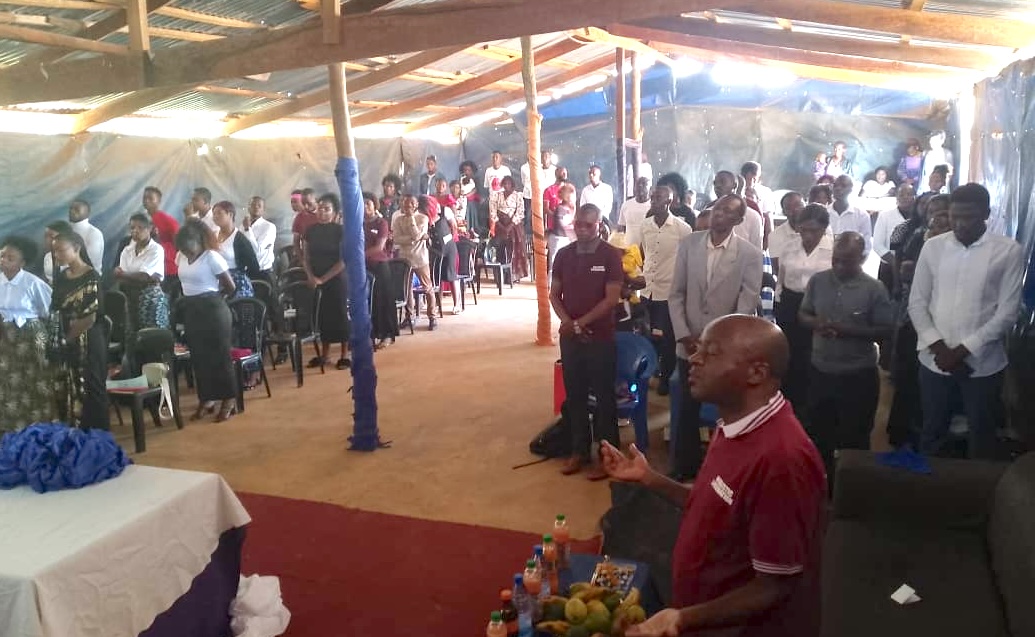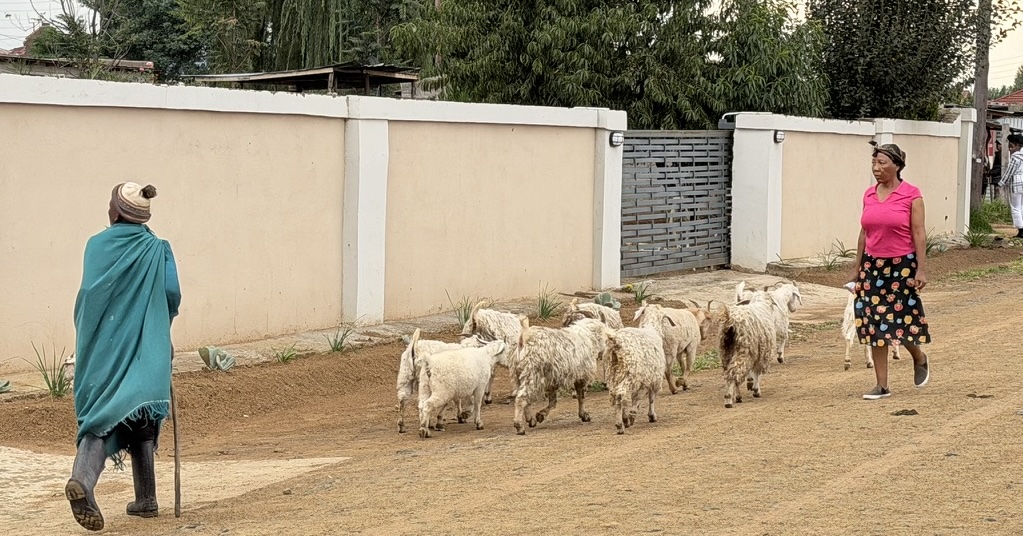
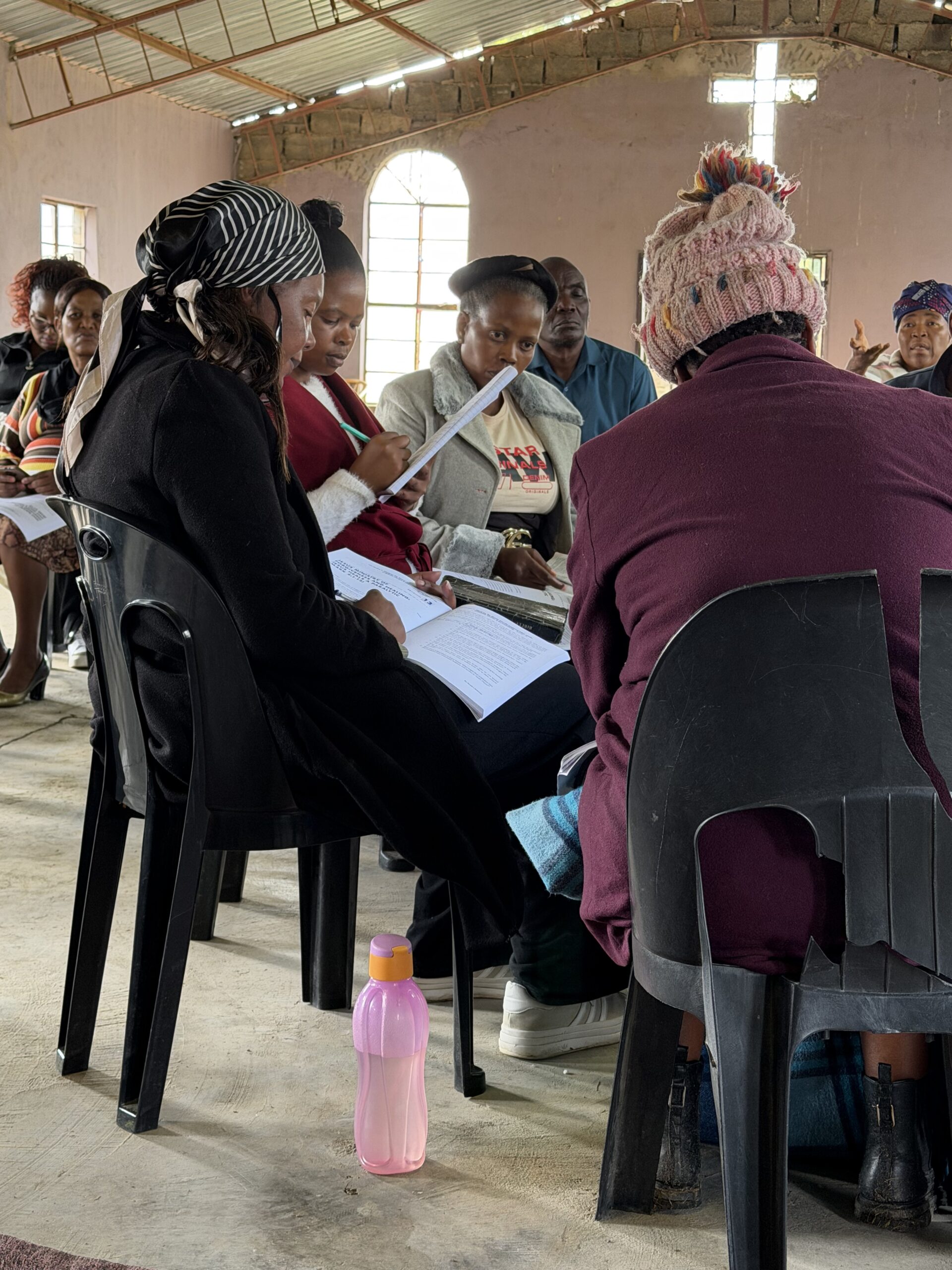
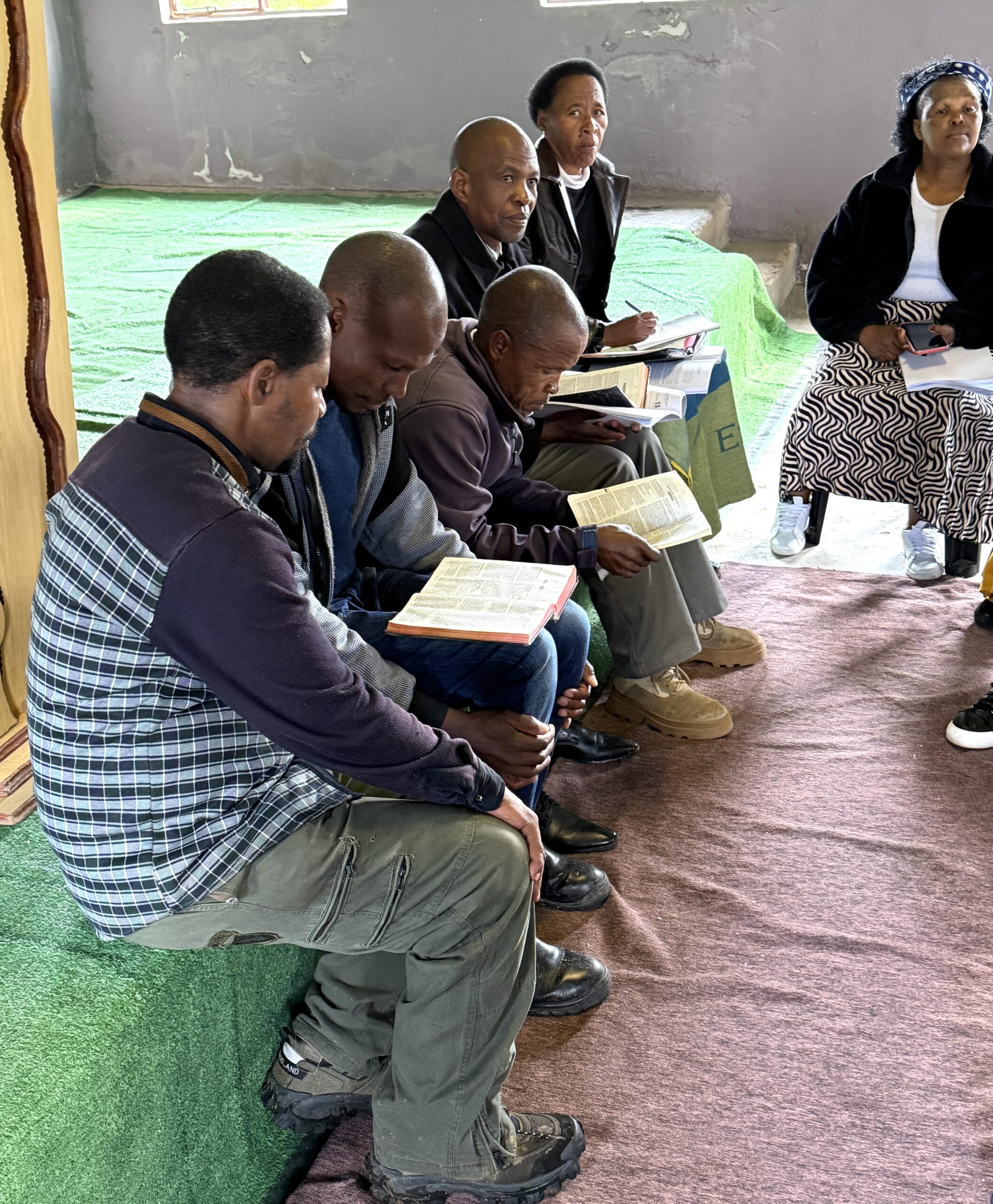
The Kingdom of Lesotho is a high, mountains country surrounded by the country of South Africa. Last Sunday we returned from teaching our Certificate in Holistic Liberation to a group of 30 African pastors and church leaders there. What a joy to participate in strengthening people called to make disciples of Jesus!
The clean air and cool weather were a welcome respite from the sweltering heat of the Democratic Republic of Congo (DRC) the week before. People’s eagerness to learn was visible in their lively discussion and seemingly untirable attention span.
Our five-day course was called “Word on the Street: transformational Bible study, prophetic mission & peacemaking.” Much of the course involved carefully studying Scriptures often read to justify violence– in the light of Jesus’ redemptive suffering and overcoming of evil and death on the cross.
Together we sought to better understand difficult stories like death of the firstborn (Exodus 12), the destruction of Sodom and Gomorrah (Genesis 18-19), the stoning of Achan (Joshua 7), the sacrifice of Jephthah’s daughter (Judges 11) and the rape of Tamar (2 Sam 13). We read these stories with Jesus as our teacher (“on-the-Road-to- Emmaus” style). We asked:
“How do these Old Testament stories from the Law and the Prophets bear witness to Jesus’ suffering as the Christ (Israel’s Messiah) (Lk 24:26)?
Reading about the death of firstborn of Egypt and on the eve of the Israelite slaves’ departure from Egypt was especially moving. Exodus 12 describes the first Passover, not as a sacrifice of a lamb to God, but as food to be eaten for the liberation journey.
Each household was to slaughter a lamb, roasting and eating it along with unleavened bread. They were instructed to eat the Passover dressed and ready to flee slavery—staff in hand, sandals on, and bags packed.
We acted out the Passover story—which always helps people see things differently.
One of the pastors playing an Israelite slave in Egypt, slaughtered and cooked up an imaginary lamb, and then applied imaginary blood to the sides and top of a wooden pallet which we’d placed upright to represent the family’s front door. Other volunteers playing his wife and children gathered around him inside the house.
We noted that the lamb’s blood was not to be poured out on an altar to God—but applied to the door posts and header over the door—to cover the family so the destroyer would “pass over.”
We read from Exodus 13 how the lamb was also God’s provision to redeem the firstborn of each household. In Israel’s ancient sacrificial system, the first of the harvest, and firstborn animals were devoted to the Lord in recognition that the earth and everything is it belongs to the Creator (Ps 24), who we need to protect and liberate us.
The death of Egypt’s firstborn results from the Egyptian’s failure to recognize this, and from their gods’ inability to save them. And the death of only the firstborn, suggests God’s claim on all Egypt (and the whole world). The “great cry” of the Egyptian oppressors (Ex 12:30) echoed the cry of their enslaved (Ex 3:7,9)—pushing them to release their captives, God’s people– showing God’s commitment to justice and liberation.
We looked together how on the night of Jesus’ betrayal and arrest he celebrated Passover as God’s lamb– and also God’s firstborn son. We noted that Jesus didn’t offer himself to God, because God didn’t need a sacrifice. Jesus freely offered himself to us: “Take and eat, this is my body” (or Luke’s version: “This is my body which is given for you). Jesus offers his disciples the cup, Jesus says: “Drink from it, all of you; for this is my blood of the covenant, which is poured out for many [not for God] for forgiveness of sins” (Mt 26:27-28).
Jesus had prepared his disciples (and us) for this. On two occasions he’d told them:
“Behold, we are going up to Jerusalem; and the Son of Man will be delivered to the chief priests and scribes, and they will condemn him to death, and will hand him over to the Gentiles to mock and scourge and crucify him, and on the third day he will be raised up” (Mt 20:18-19).
Nowhere does Jesus describe himself a a sacrifice to God in the Gospel accounts– contrary to common assumptions. God didn’t need his Son to die for human sins. Humans did. Judas “delivers” Jesus to the chief priests and scribes. They in turn “hand him over” to the Gentiles—the Roman colonizers, who “mock, scourge and crucify.” The only positive action is God’s: “and on the third day he will be raised up” [by God]. But Jesus has already given himself to his disciples—stand-ins for us all.
Actually, the disciples, the Jewish chief priests and scribes, and the Gentile Roman colonizers together “sacrifice” Israel’s Messiah unknowingly to themselves (and to us)— Jews and non-Jews alike. The Jewish religious leaders unknowingly give their Messiah to the nations– for our and their salvation! It is God himself “who so loved the world that he gave his only begotten Son”—to us! And Jesus knowingly and willingly gave himself up to us. It is we, not God who need God’s lamb, Jesus for our salvation! This revelation deeply impacted us all.
Reading Matthew’s Gospel account of the crucifixion and resurrection this weekend gives me a burst of hope. After the worst has happened to Jesus, his dead body was buried in a cave, sealed by the Romans—who stationed soldiers to guard it. As a deliberate tactic to undermine faith, the Jewish religious leaders started a rumor that his disciples had taken his body away. But then came an earthquake, and Jesus was raised!
Jesus meets his disciples back in Galilee where it all began. Though some worshipped him and other doubted, he sent them with the commission to make disciples, baptizing them in the name of the Father, Son and Holy Spirit. They were commissioned to teach new believers throughout the world to observe everything Jesus commanded. Doing this very thing is the purpose of life according to Jesus’ final words!
The people in Lesotho were delighted by this study, and grew from day to day in their interest in reading the Bible carefully, expecting “Good News.” Out of this group we identified five future trainers—one of whom joined our team this past week to teach the final five-day training in Solwezi, Zambia (near the border with DRC).
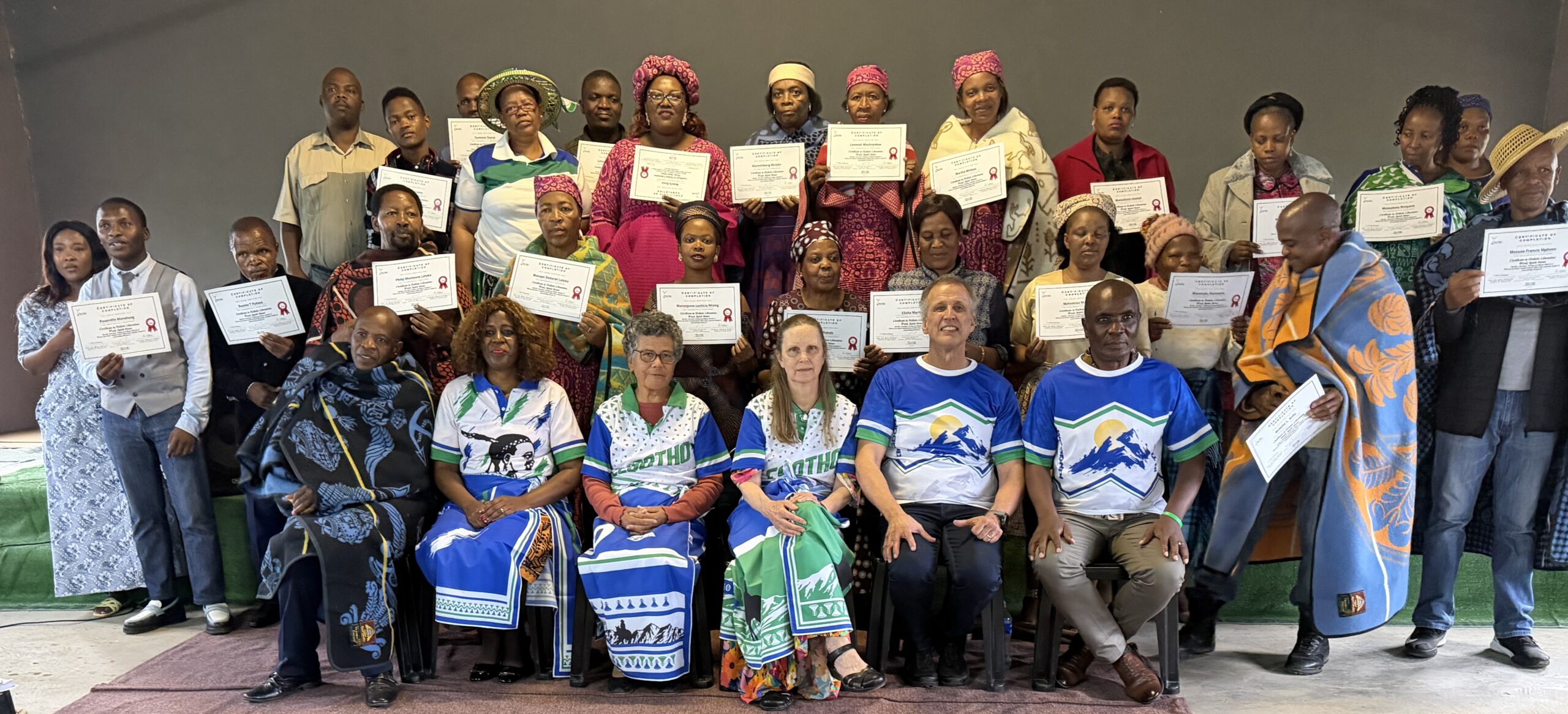
Teaching humble, eager learners in the DRC and Lesotho, and then hearing reports from our African team who taught 140 pastors and church leaders in Zambia last week brings us hope and joy—an essential antidote to the helplessness and despair before all the current bad news of Israel and Trump’s war against Iran and Lebanon, ICE raids of immigrant communities across the USA and other horrible events.
Jesus’ answer to the disciple’s question before his ascension is a needed reminder of what our priorities must be in these threatening, “end of history” times. In the face of rising authoritarianism, threats of nuclear war and economic uncertainty Jesus’ words invite us to re-set our priorities.
“It is not for you to know times or epochs which the Father has fixed by His own authority; but you will receive power when the Holy Spirit has come upon you; and you shall be my witnesses both in Jerusalem, and in all Judea and Samaria, and even to the remotest part of the earth” (Acts 1:7-8).
“As you go, make disciples…” says Jesus, in his final words in Matthew’s Gospel.
If you would like to contribute to upcoming trainings in Malawi, Mozambique (April), Cameroon, Gabon and DRC (May) and Benin (July) we welcome (and need) you can give online here, or through sending a check to Tierra Nueva (Attn: The People’s Seminary), PO Box 410, Burlington, WA 98233, USA.
UK donations can be given through our account at Stewardship. Click here to set up your sign-in details.
Check out my podcast: Disciple: Word, Spirit, Justice, Witness on Spotify or Apple