Bob & Gracie Ekblad

  • About
    • Schedule
  • Ministries
    • Tierra Nueva – New Earth
    • The People’s Seminary
    • Teaching
      • Speaking Topics
    • New Earth Refuge
  • Blog
    • Blog en Español
    • Blog en Français
  • Podcasts
    • Podcast in English
    • Podcast en Español
    • Podcast in Persian
  • Resources
    • Books and Articles
    • Talks & Lectures
    • Articles
    • Ekblad Updates
    • Bob and Gracie Ekblad’s news
  • Get Involved
    • Links
  • Contact
  • Store

Lifting our eyes to the One enthroned in the heavens: Reflections on Psalm 123

09.18.25


Gracie and I just returned from a month outside of the United States. In many ways it was refreshing to get out of our normal routines. While we followed the news back home fairly closely, our attention was more focussed on the people attending the spiritual retreat where we were speaking in France and the Certificate in Holistic Liberation we taught in Benin, West Africa. We also enjoyed some needed vacation. 

Since our re-entry into the United States twelve days ago we’ve found it hard to not be overwhelmed by despair as it seems like during the month we were away division, hatred and apparent “success” of the dominant powers in our country have increased dramatically and seem unstoppable.

Last night I felt a call to not let the apparent successes of the current Administration take up my attention, usurping the place of God. I awoke and came upon Psalm 123, which inspires me to not be overcome by political leaders, parties and the billionaires who run the world. Rather the Psalmist inspires me to focus my attention on the Creator of the universe, the highest being who is the God of grace, and his son Jesus, the Savior of the world.

“To you I lift up my eyes, O you who are enthroned in the heavens!” I affirm with the Psalmist. 

Lifting up our eyes to God involves deliberately shifting our focus from looking down or around at personal, social and global problems or political figures that inspire outrage, anger, fear or despair. 

Lifting up our eyes to the One enthroned in the heavens contrasts with looking to the president, congress, the rich and powerful, or any human being or institution. This requires not letting our media sources, (however reliable and varied) become our primary informers.

Jesus states clearly of himself that “the one who comes from above is above all.” In contrast, “the one who is of the earth is from the earth and speaks of the earth” (Jn. 3:31). 

Being informed from above can only happen as we deliberately “keep seeking the things above, where Christ is, seated at the right hand of God.” And “set your mind on the things above, not on the things that are on earth” (Col 3:1-2).

The Psalmist here invites us to identify with (and learn from) humble, even powerless people– servants. 

“Behold, as the eyes of servants look to the hand of their master, as the eyes of a female servant look to the hand of her mistress, so our eyes look to the Lord our God, until he is gracious to us” (vs. 2).

Imagining myself as a servant looking to the hand of a master requires an effort, since servants would have no one else to look to. I must choose to see myself as completely dependent on God and choose to put all my trust and hope on God being gracious to me and to those for whom I intercede. The Psalmist invites me to look to God with my physical (and spiritual) eyes as the One in the highest place, who I can be in relationship with, and from whom I must wait “until he is gracious” to me.

I hear the Psalmist inviting us to follow in a complete re-orientation of our attention as the only way out of the despair or our current situation.

“Be gracious to us, O Lord, be gracious to us, for we are greatly filled with contempt. Our soul is greatly filled with the scoffing of those who are at ease, and with the contempt of the proud.”

Since returning home I can say I have personally experienced being “greatly filled with contempt,” and “filled with scoffing” in ways that are directly related to the “contempt of the proud,” which I tune into in some way nearly every day.

Here are a few examples that have especially affected me, and they directly harm people we know and love. 

The current US President has used politically-charged executive orders and policies to cancel vulnerable people’s Temporary Protective Status, deport individuals to prison colonies in third countries (El Salvador, S. Sudan) to Guantanamo Bay, and more recently to allow Immigration and Customs Enforcement (ICE) to arrest brown-skinned people who fit a certain profile of an undocumented immigrant. 

After the lower courts declared these orders and policies illegal, the Administration appealed to the Supreme Court (made up of a majority of Trump appointees), who then allowed Trump’s executive orders to remain in effect until there’s a hearing at a later date. Now ICE agents are stopping, arresting and interrogating and deporting people based on their racial/ethnic profile, an allowance that increases fear and insecurity among the farmworkers and other immigrants in our area and throughout the country– and despair amongst their advocates.

These cold power moves, supported by the highest courts, can make advocates who have fought hard to see laws implemented that protect society’s most vulnerable conclude that their (our) efforts are in vain, and that the rich and powerful can get away with whatever they want. This is in fact a widespread feeling linked to numerous other policy decisions that reward the rich and harm the poor, that go largely unchallenged by elected officials.

The Psalmist’s remedy for despair is to invite us to direct our gaze to the highest authority, before whom we intercede– putting our total hope in the One who hears the cries of the oppressed, the groans of prisoners, and intervenes to bring liberation. 

Psalm 34 powerfully invites a similar re-orientation of our attention.  Check out the first eight verses.

“I will bless the Lord at all times; His praise shall continually be in my mouth. My soul will make its boast in the Lord; The humble will hear it and rejoice. O magnify the Lord with me, And let us exalt his name together. I sought the Lord, and he answered me, and delivered me from all my fears. They looked to him and were radiant, and their faces will never be ashamed. This poor man cried, and the Lord heard him and saved him out of all his troubles. The angel of the Lord encamps around those who fear him, and rescues them. O taste and see that the Lord is good; how blessed is the person who takes refuge in him!”

We recently experienced times of strengthening while offering our Certificate to 70 church leaders in Benin. In a setting marked by poverty and very minimal hope for political solutions, we were deeply impacted by the heartfelt worship and contagious joy amongst the people.

As you deliberately look to the One enthroned in the heavens, putting our trust in his grace and love, may you be strengthened and re-oriented to resist afresh– informed and empowered from above for the struggle here below.

Consider signing up for a self-paced Certificate in Holistic Liberation, which involves watching weekly videos, following a manual and meeting online on the first Monday of each month (10:00-11:30am PST) with participants from around the world (scholarships available). Check it out and sign up here.

Trusting in the victory of lovingkindness and truth in the face of unbridled deception: Reflections on Psalm 52

08.03.25

Psalm 52 is highly relevant in these troubling times as we hear daily how power-hungry leaders deny truth, tell outright lies, brag about things they claim to have accomplished, and make false accusations against their opponents.

The Psalm is a prophetic critique of deceptive speech aimed at gaining political power. It is rooted in the story of Doeg the Edomite, who witnessed David’s humble request for help from Ahimelech. This priest from Nob, who offered David and his hungry men consecrated bread, and gave him Goliath’s sword—with no awareness that he was fleeing from king Saul, who was out to kill him (1 Sm 21). 

Later Doeg, trying to please Saul, falsely accused Ahimelech and David of conspiring against him. Saul then summoned Ahimelech, commanding Doeg to execute him and all 85 of God’s priests. “And he struck Nob the city of the priests with the edge of the sword, both men and women, children and infants; also oxen, donkeys, and sheep he struck with the edge of the sword” (2 Sm 22:19). 

Jesus associates himself and his disciples directly with David and his men in this story as he’s accused by the Pharisees (Mk 3:23-28), who then conspire to kill him. The Psalm continues to speak truth today.

“Why do you boast in evil, O mighty man?” asks the Psalmist—and no answer is given. We know that such boasting intimidates, threatens, humiliates and subjugates—giving the impression that the speaker is successful, in control, dominant, and even all-powerful.

In contrast the Psalmist presents only “the lovingkindness of God” as permanent (“enduring all day long”).

The Psalmist speaks with prophetic directness to powerful people who boast:  “Your tongue devises destruction, like a sharp razor, O worker of deceit. You love evil more than good, falsehood more than speaking what is right” (vs. 2-3).  

Next the Psalmist highlights the powerful person’s tongue—signifying his/her communication system. This exposes and denounces that the mighty person designs sharp, effective messages to deceive or threaten hearers, intimidating and silencing opponents, while flattering allies with false praise.

We see this happening now in the USA through Truth Social, the White House press secretary, X, Fox News and myriads of other mediums that manipulate public opinion—distracting, deflecting, bluffing, humiliating. Negligence and gullibility make too many people easy prey.

The Psalmist then speaks directly to the tongue (media), exposing it as a deceitful, consuming power: “O deceitful tongue, you love all words that devour” (v. 4).

Later in the New Testament, James talks about the tongue this way, comparing it to a consuming fire.  

“And the tongue is a fire! The tongue represents the world of wrongdoing among the parts of our bodies. It pollutes the entire body and sets fire to the course of human existence—and is set on fire by hell” (Jas 3:6).

Suddenly, the Psalmist turns the tables, announcing that this tongue and all channels of deception will be destroyed and eternally doomed by God:
    
“But God will break you down forever; he will snatch you up and tear you away from your tent, and uproot you from the land of the living. Selah” (v. 5).

Here God distinguishes the tongue, that is the means of communication, from the powerful person who is speaking or in any way communicating. God will snatch and tear out the tongue from its tent—a metaphor for the mouth (all messaging, tweets, posts, adds…) of the powerful person. The non-human systems with which we struggle which deceive and take over (consume) will be destroyed.

Truth-starved onlookers despondent before what seems like an unstoppable force of lies and destruction are told they will be vindicated.

“The righteous will see and fear, and will laugh at” the powerful whose communications have been sabotaged by God. The word “fear” here could be translated “be amazed”—which makes sense, especially now, when evildoers seem to be getting away with whatever they want to say or do.  What the righteous say offers a crystal-clear critique of the underlying issues:

“Behold, the [fate of the] person who would not make God his refuge, but trusted in the abundance of his riches and was strong in his evil desire.”

Now more than ever in the USA and around the world the rich and powerful appear to be getting everything they want at the expense of everyone else. This “success” makes them trust even more in their money and communications systems. 

But the Psalmist states with prophetic clarity that when people trust in money, in that idol Jesus named “Mammon,” and go after evil desires rather than making God their refuge they will go down in the end. The tongues that express all the pompous boasting, threats and lies will finally be torn from the mouths of the powerful by God himself, rendering them mute and impotent.

Mary the mother of Jesus declared the future as if were a present reality: “God has scattered those who were proud in the thoughts of their hearts and brought down rulers from their thrones, and has exalted those who are humble” (Lk 1:51-52).

The Psalmist’s confidence in the victory of God’s lovingkindness, truth and justice is so attractive that I’m choosing to lean in and say yes to it now. Instead of succumbing to rage, despair, or indifference the Psalmist takes a humble stand that we too can take.

“But as for me, I am like a green olive tree in the house of God; I trust in the lovingkindness of God forever and ever. I will give you thanks forever, because you have done it, and I will wait on your name, for it is good, in the presence of your godly ones” (vs. 8-9).

The Hebrew word translated “green” here, raanan, also means “fresh, flourishing, luxuriant.” Becoming a “green olive tree” happens as we meditate on the Word of God “day and night.” This deliberate contemplative and prayerful reading of Scripture sends invisible, spiritual roots deep into the streams of living water of God’s life-giving presence, refreshing and empowering (see Psalm 1 and Jeremiah 17:8). Olive trees produce the oil that keeps the lamps lit continually, bringing light (Ex 27:20; Lv 24:2).

Instead of despairing, may your soul and spirt flourish like a green olive tree in your body, which is the house of God—the temple of the Holy Spirit. May the light of God’s truth illuminate you, giving you clearer and clearer discernment between truth and falsehood as you look out on the world and read the news. May you step into an active posture of thankfulness and radical trust as you anticipate in communion with the saints the final fulfillment of Jesus’ victory. 

Check out my recent podcast on Psalm 49 on “Disciple: Word, Spirit, Justice, Witness” on Apple or Spotify.

Psalm 94’s prophetic perspective on the powerful and arrogant today

06.12.25

Psalm 94 is an example of a kind of prophetic intercessory prayer that is highly relevant to our current context in the USA (and elsewhere around the world), where certain rich and powerful people and institutions appear unstoppable. The Psalmist directly addresses the Lord (YHWH) as “God of vengeance,” with the imperative: “Shine forth!”

Throughout my life I’ve sought to disassociate vengeance from God and resisted my own desires for vengeance. However, if God’s vengeance involves stopping forces of impunity (defined as “exemption from punishment or freedom from the injurious consequences of an action”) and destruction that seem all-powerful, or letting natural consequences of evil overwhelm and halt perpetrators (which it does), then we should join with the Psalmist’s cry!

Whoever is praying in this Psalm is feeling the urgency for God to expose lies and crimes, bringing injustices into the light. The desperate call, “rise up, O judge of the earth!” shows the Psalmist’s sense that God’s judgment is urgently need to right wrongs. The Psalmist asks God act to specifically “render recompense to the proud (94:2).

“How long Oh Lord? How long will the wicked exult?” (“be allowed to gloat” NLT), cries the Psalmist, echoing Habakkuk 1:2. Note that “the wicked” (rasha in Hebrew) is a synonym for the rich and powerful oppressors (Is 5:23; 58:6; Jer 12:1), unjust rulers (Is 11:4; 14:5; 26:10; Hos 10:13) and arrogant (Is 13:11).

How long Oh Lord will the US President elevate himself, and arrogantly berate anyone who resists him? How long will elected lawmakers vote into law policies that reward the rich and punish the poor? How long will billionaire tech and other business leaders shamelessly buy influence and curry favor through overt demonstrations of loyalty or silence? How long will the current American administration scapegoat the most vulnerable and their advocates here and abroad? How long, Oh Lord will White evangelicals (and others) support the current Administration, endorsing nationalism, discrimination, violence and oppression here, in Israel’s treatment of Palestinians in Gaza and the West Bank and beyond?

These past few days Immigration and Customs Enforcement agents are making arrests in Los Angeles, here in our own community, and across the USA– deporting hard-working people, separating them from their children, spouses and communities– increasingly with no due process.

Protesters are being arrested, intimidated by threats and tactics like deploying tear gas, less-lethal ammunition like rubber bullets and pepper balls, and flashbang grenades. Displays of brute force are underway through the deploying of National Guard troops and US Marines.

The most powerful leaders are inciting violence through incendiary rhetoric full of lies.

“They pour forth words, they speak arrogantly; All who do wickedness vaunt themselves. They crush your people, O Lord, and afflict your heritage. They kill the widow and the resident foreigner, and they murder the fatherless.” (94:4-6).

The Psalmist presents the powerful as seeing themselves above God.  

“The Lord isn’t looking,” they say, “and besides, the God of Israel doesn’t care.”

With prophetic honesty the Psalmist holds the common citizen accountable to themselves look and care (and not God).

A call to pay attention and be open to correction

“Pay heed, you senseless among the people; and when will you understand, stupid ones? (Ps 94:8).

Paying attention requires actively opening our eyes and ears—keeping ourselves informed, and not by partisan sources loyal to the rich and powerful. The Psalmist gives no excuse for ignorance, placing blame squarely on those going along with the status quo (and not on God).

Yet the Psalmist appears to honestly question his own fears that God is not aware and responsive. The writer pushes away predatory cynicism and unbelief, replacing them with a strong affirmation of faith that God is fully active on the side of truth and justice.

“Does the one who makes the human ear not hear? Does the one who forms the human eye not see? Does the one who disciplines the nations not punish? He is the one who imparts knowledge to human beings! The Lord knows that peoples’ thoughts are morally bankrupt” (Ps 94:9-11 NET).

Then in the next verses the Psalmist reflects a self-critical attitude that I find personally challenging. When I hear arrogant words from the US President and others in his Administration, and see heartless policies that uproot lives, separate families, and send people away to prison colonies, I feel outrage– which can spill into my own self-righteous disdain for people I can easily demonize. I can call those who support policies I abhor senseless and stupid.

The Psalmist calls me to attention, reminding me of what God blesses.

“Blessed is the person whom you chasten (instruct), O Lord, and whom you teach out of your law” (Ps 94:13).

The term chasten (Hebrew yāsar) can mean discipline, correct, and instruct. Blessed is the person who is open to being taught by God—to being a disciple. May we notice this, even in the night!

“I will bless the Lord who has counseled me; Indeed, my mind instructs me in the night” (Ps 16:7).

Those who choose to follow Jesus become his disciples, apprentices, learners—open to correction and new direction.

“Those whom I love, I reprove and discipline (Greek paideuō, instruct),” says Jesus. “Therefore, be zealous and repent” (Rev. 3:19; see Heb 12:6).

“Blessed is the person who the Lord teaches out of his law (Torah/Scripture)!” Now is the time go deeper in our study of Scripture as we seek to discern the times in the light of the God’s revelation.

“That you may grant him relief from the days of adversity, until a pit is dug for the wicked.”

Relief during these times of growing adversity comes when we ourselves are open to being corrected, taught and led by God’s Spirit.  Until the time of God’s recompense finally comes, which it will, and “a pit is dug for the wicked” (that is the rich and powerful—the best contemporary equivalent).

The Psalmist assures himself and all of us of God’s abiding presence. “For the Lord will not abandon his people, nor will he forsake his inheritance. For judgment will again be righteous, and all the upright in heart will follow it” (Ps 94:14-15).

From passivity to active resistance (with God’s help)

Yet the Psalmist again addresses the larger community to step out of passivity and muted indifference and into action, asking: “Who will stand up for me against evildoers? Who will take his stand for me against those who do wickedness?”

Will you stand up against the Lawless One, who Paul warned us about in 2 Thessalonians 2, who believers must not be deceived by?

“Let no one in any way deceive you, for it will not come unless the apostasy comes first, and the man of lawlessness is revealed, the son of destruction, who opposes and exalts himself above every so-called god or object of worship, so that he takes his seat in the temple of God, displaying himself as being God” (2 Thes 2:3-4).

If we are each “temples of the Holy Spirit,” allegiance to an unjust leader is letting that administration take a seat within us as our god.

Thankfully the Psalmist tells us that God came to the rescue, assuring future support.

“If the Lord had not been my help, my soul would soon have dwelt in the abode of silence. If I should say, “My foot has slipped,” your lovingkindness, O Lord, will hold me up” (Ps 94:17-18).

Too often the last thing I read before I fall asleep and when I sit with my cup of coffee first thing in the morning is a distressing news article that outrages or depresses me. The Psalmist provides an antidote:

“When my anxious thoughts multiply within me, your consolations delight my soul” (Ps 94:19).

Yet the Psalmist is not naïve or truth-suppressing. A rhetorical question is asked that assumes a negative answer

“Can a throne of destruction be allied with you, one which devises mischief by decree” (Ps 94:20)?

No! The President with his cabinet, political party, military and corporate sponsors in its current form can in no way be allied with the God of liberation fully visible in Jesus of Nazareth.

The Psalmist is the opposite of a partisan or wannabe neutral worship leader refusing to take a stand against injustice. Prophetic declarations remind those who pray this Psalm to denounce arrogant perpetrators in detail.

“They band themselves together against the life of the righteous and condemn the innocent to death” (Ps 94:21).

The Psalmist puts total trust in God, and not in a political alternative, ideology, money, weaponry or anything else.  “But the Lord has been my stronghold, and my God the rock of my refuge” (Ps 94:22).

The Psalmist declares the final fall of the rich and powerful—by the hand of the Lord God—and not by our doing.

“He has brought back their wickedness upon them and will destroy them in their evil; the Lord our God will destroy them” (Ps 94:23).

“Vengeance is mine, I will repay, says the Lord,” writes the Apostle Paul, from house arrest in Rome. This is certainly unsettling truth for all perpetrators of injustice or evil of any kind.

Paul further clarifies our role in hostile times: “But if your enemy is hungry, feed him, and if he is thirsty, give him a drink… Do not be overcome by evil, but overcome evil with good” (Romans 12: 19-21).

I pray that a prophetic movement would arise that would be marked by compassion, and courageous truth-telling born out of proximity to the poor and excluded. I pray that each one of us would cast the logs out of our own eyes before we try to take the specks out the eyes of others. May be counted among the blessed who are instructed by the God revealed fully in Jesus. May we learn the way of comfort and peace that comes out of appropriate mourning and a hunger for righteousness and justice.


Consider reading or listening to my book Guerrilla Gospel: Reading the Bible for Liberation in the Power of the Spirit, available as paperback or ebook or in audible. Consider using my Guerrilla Bible Study guides to start a Bible study, which each have 13 studies that we use regularly here at Tierra Nueva.

Jesus’ Ascension and Ours

05.31.25

   Today is Ascension Day, the day we remember when Jesus ascended to heaven following his death and resurrection. It’s a good occasion to receive afresh our baptismal identity “in Christ” as children of God. Baptismal death and being “born from above” position us for God to “make us alive” and to “raise us up and seat us with him in the heavenly places in Christ Jesus (Eph 2:5-6). From this vantage point we are invited to see and act in alignment with Jesus and the Kingdom of God. 

These truths became visible in Lesotho, Africa back in March as Gracie and I taught on identity and authority during our Certificate in Holistic Liberation.  

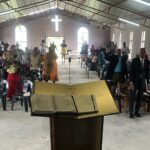
Forty pastors and ministry workers met in a cinder block, tin-roofed church on the edge of a road. After some lively a cappella singing, we settled in, with a volunteer reading John 1:1-5 and 9-13 in the native language Sotho.

Together we looked at how John introduces the Word as existing with God in the beginning, and being God– through whom all things were created—without even mentioning Jesus by name. Such a humble introduction, which presents the Word as giving life!

“Do any of you feel you need to hear from God? Do you need wisdom for a difficult decision, direction for your life, or revelation regarding a pressing question?” I asked.  

People were nodding and some were saying “Amen.” We stopped and prayed, asking for these things.

We read together John’s powerful words: “In him was life, and the life was the light of men and women. The light shines in the darkness, and the darkness did not overcome it” (Jn 1:4-5).

We notice together that when this true light comes into the world to enlighten every person, the world doesn’t recognize him and his own [people] don’t receive him” (Jn 1:9) (back then and still now). 

What humility! This God does not impose, but comes under the radar— incognito, a hidden light, and completely rejectable. 

What an indictment on humanity. That we can be so blind and ignorant, and reject God’s saving, enlightening Word– Jesus, who is life and light! Yet John writes on, inviting us to resist the status quo of blindness, ignorance and rejection. An alternative response is possible that leads to receiving our truest identity:

“But as many as receive him, who believe in his name, to them he gave the right [literally “the authority (exousia in Greek)] to become children of God” (Jn 1:12).

Receiving this humble Word, Jesus, brings us into a new identity, when we are “born, not of blood nor of the will of the flesh nor of the will of people, but of God” (Jn 1:13).

As we were reading and discussing these verses we noticed a growing desire to know and more deeply receive this humble God. Then we transitioned into the next and final part of our teaching on identity and authority.In nearly every one of our teaching session we use Bibliodramas to illustrate and experience the teachings. After reading Ephesians 2:5-6 I invited a volunteer to play God, and a pastor stepped forward to take on the role. I placed a plastic chair on the raised stage and invited him to take a seat.

“Imagine this being God, seated in the heavenly realm,” I said.

Then I invited someone to play Jesus. Surprisingly, a woman pastor stepped forward (pictured below with Gracie). Gracie and I wondered whether anyone in this group would have trouble with this, but they didn’t seem to. I placed a second plastic chair next to ‘God the Father’, and motioned for ‘Jesus’ to take a seat beside him.

I then asked for a volunteer to play a disciple. The soft-spoken older pastor of that church stood up and came forward. I placed a third chair beside ‘Jesus,’ and then summarized the new-birth baptismal identity of a disciple. I asked the pastor if I could pretend to baptize him and he agreed. I put my right arm around his back and pretended to dunk him, speaking out “I baptize you in the name of the Father, the Son and the Holy Spirit.

I then explained that in baptism we symbolically die and are raised to new life. Also because of Jesus’ ascension, we are raised and seated at the right hand of the Father in Christ, (summarizing Ephesians 2:5-6).

Next I invited the pastor to take a seat beside ‘Jesus’, explaining that this is our spiritual position which Jesus brings us into as sons and daughters of the Father– since Jesus has ascended and is seated in the heavenly realm. I emphasize that we simultaneously remain alive and active here on earth amidst our families, communities and nations.

“We are connected to Jesus and the Father,” seated in Christ at the right hand of God,” I said, “though nobody can physically see this spiritual dimension. I gently placed the right hand of the man playing God on the shoulder of the woman playing Jesus; and the woman’s hand on the shoulder of the pastor playing a disciple.

I asked Gracie to loan me her scarf, which I placed over the heads of the man and woman playing the Father and Jesus. Only the pastor playing the disciple was now visible.

“Here we are now in our new, spiritual identity as children of God,” I stated, pointing to the pastor seated before us.

I then asked if anyone was suffering from back pain. Five or so people raised their hands. I invited the first woman who raised her hand to come forward, and held the hand of the pastor playing the disciple, asking him to pray for the woman, empowered by his attachment to Jesus and the Father.

The pastor tentatively extended his hand towards the woman’s back and looked at me nervously, not sure what to do next. He needed a little coaching, so I suggested he trying speaking out a simple phrase:

“Be healed from your back pain in Jesus name!” I said to him, and the translator repeated my words to him in Sotho– which he repeated in a soft voice that only the woman and I could hear.

Immediately a look of shock came over the woman’s face. She exclaimed before the group that the pain was gone now! A second woman approached the pastor with excitement, and he spoke as softly and tentatively for her as well. She too said that the pain had completely left!

At this point I removed the covering from the heads of the man and woman playing God and Jesus. I immediately noticed that the woman playing Jesus was crying. Tears streamed down her face.

“What’s wrong?” I asked.

“I feel the touch of the Spirit,” she said as she sobbed, her face strangely radiant.

I was deeply impacted by the move of the Holy Spirit visible on this woman. So I asked if she’d be willing to pray for the whole group from the front. The woman agreed, standing and extending her hands towards, praying for the Holy Spirit to be poured out on us all. Immediately after praying she fell over her chair and landed on the stage, laughing and crying simultaneously.

At the same time our translator fell to the ground in front of the stage and began crying, telling us she’d been instantly healed of chronic back pain, which had started years before, after the birth of her teenage son. Others were crying and praying as the Spirit seemed to have fallen on the whole group.

We had never seen a manifestation of the Spirit quite like this, which resulted in five people being healed of back problems, and a man who had limped for seven years after a motorcycle accident being healed so he no longer limped.

There in Lesotho on this first day of training the Spirit walked into the room, confirming the Word of Jesus’ humble divinity and our ascension to the right hand of God in Christ, with the signs following (Mk 16:20).

Consider helping fund our next Certificate training in Benin, Africa August 24-29 through giving to The People’s Seminary here or by sending a check to Tierra Nueva, PO Box 410, Burlington, WA 98233.

Consider reading or listening to Daniel Bourguet’s two volume The Humble Divinity of Jesus in Mark’s Gospel, available as paperback or ebook volume one or two, or in audiobook volume one or two.

Check out my recent podcast “Disciple: Word, Spirit, Justice, Witness” on Apple or Spotify.


From the richness of lack to the poverty of plenty: Reflections from Burundi, Malawi and Washington

05.14.25

Paul writes from prison words that challenge me deeply:  

“I have learned to be content in whatever circumstances I am. I know how to get along with humble means, and I also know how to live in prosperity; in any and every circumstance I have learned the secret of being filled and going hungry, both of having abundance and suffering need. I can do all things through him who strengthens me” (Phil 4:11-13).

On a recent trip to Burundi and Malawi I experienced firsthand some secrets of finding a certain contentment in very humble places, where people are suffering need, even going hungry.

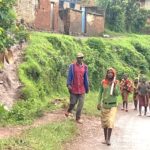
On this second trip to Burundi I was struck afresh by the masses of people walking (mostly barefoot) along the roads, or riding or pushing bikes heavily-laden with oversized loads.We stayed in a guest house off the main road in the high mountain town of Masango (at around 6,000 ft.). Our lodging was 3 1/2 miles from the center where we offered our Certificate in Holistic Liberation to 55 pastors. On three of the five mornings I walked to our venue, passing hundreds of pedestrians. I did this out of a desire to connect more with the land and the people, and to get exercise and pray. I was the only White person I saw on these walks, and for most of my time in that Country.

One morning, fifteen minutes into my walk I actually started counting the number of people I passed. Five hundred! And this was in a rural area. Many of the women and young girls were carrying hoes, or were working the fields along the roads.

On the final day, I walked I past a young girl carrying a curved machete. I continued walking, and then noticed feet slapping the pavement behind me. There was the girl, her mother and two other siblings walking right behind me. A young boy held an ancient-looking cell phone plastered to his ear. Burundian worship music was playing through his phone, to which the mother softly sang. I turned to her and said the name Jésus? as a question in French. She nodded and smiled. I joined in humming and trying to sing along as we walked the remaining fifteen minutes to the venue, feeling a deep sense of fullness and contentment.My second week was spent in the remote Southernmost town of Nsanje, Malawi, where we offered our final training module to 80 pastors. When I asked them what were their greatest challenges, they told me about the widespread hunger that affected their communities after two years of drought and a devastating cyclone. They shared how they lacked any means of transportation as they couldn’t afford bus fares, and didn’t have bicycles. Five pastors from across the border in Mozambique traveled seven hours on two bicycles (two on one and three on another) to attend the training. Only five of the 80 pastors owned a Bible. 

Our Malawian hosts cooked lunch for all the participants over fires on the ground– adding a small cereal breakfast a day into the training– as people were visibly hungry.People engaged with the teaching with unusual attentiveness, worshipped joyously, and expressed contentment and gratitude that our team of six had come so far to share with them. I have returned home with my heart pierced, inspired by these African sisters and brothers’ resilience and joy in the face of lack, suffering, and even hunger. 

Now back home I seek to discover the secrets of contentment here in the midst of abundance, and amidst our own versions of lack, suffering and hunger. 

If you would like to contribute towards purchasing a bicycle for one of the ten traveling pastors who visit even more remote communities, they cost $350 each (we’re trying to raise $3500). We were able to give out 80 Bibles in Chichewa, with another 100 or so needed at $10.00 each. We are also preparing to offer our Certificate in Benin in August, following up our Malawi course with a training to 70 pastors across the border in Mozambique. 

You can contribute towards bikes, Bibles or trainings expenses online here, or through sending a check to Tierra Nueva (Attn: The People’s Seminary), PO Box 410, Burlington, WA 98233.

Check out the final teaching on the Parable of the Sower given on May 2 by Tawanda, one of our teachers from Zimbabwe.

Finding Hope Between the Cross and Resurrecion

04.20.25

I’ve been feeling stuck in a perpetual Saturday of Holy Week– between Jesus’ execution by what looked like victorious powers, and his defeat of death through resurrection. 

Death seems to be winning on so many fronts. Confessing Jesus as victor feels necessary as an act of resistance. But it requires faith that must be fed by stronger doses of Gospel truth. True hope must keep us bold enough to stand in the face of harsh realities.

The earth’s temperature is rising unabated, accelerated by climate change denying politicians and business people. Meanwhile subsistence farmers in the Global South are being turned into landless, stateless refugees.

I’m on a flight now to Burundi to offer our Certificate in Holistic Liberation to pastors from remote villages who are are struggling to survive in hostile environments. The following week I’ll be doing the same thing in Malawi, a nation struck by cyclones, a record-breaking drought and resulting crop failures. What signs of resurrection hope await me?

Death seems to be winning in Gaza, with body counts increasing daily and starvation threatening. The rich and powerful are getting richer and meaner– visible in our increasing use of prisons to punish even the innocent.

My own brother Peter’s 2 1/2 years of incarceration in Charleston County, South Carolina’s Jail despite his innocence and no trial or even a plea offer, is a personal reminder of the state’s relentless, unjust warehousing of people.

The Trump administration’s contract with El Salvador’s brutal Centro de Confinamiento del Terrorismo (CECOT), where prisoners are kept like animals in cages, feels like a contemporary taunt against Jesus’ liberation movement:

“He saved others; he cannot save himself [and those oppressed prisoners]. He is the King of Israel; let him now come down from the cross, and we will believe in him. “He trust in God; let God rescue him now [and all of our beloved community members trying to stay sober and our of jail], if he delights in him; for he said, ‘I am the Son of God’” (Mt 27:42-43).

Yet last week my friend Jason and I were able to visit and personally encourage a prisoner friend incarcerated in a maximum security unit of Clallam Bay Corrections Centre. Talking, reading the Bible together and praying left us feeling tenderized and more hopeful. 

Even as my brother Peter continues to wait for legal relief, he regularly recounts his many opportunities to pray with prisoners facing even harsher challenges than his.

Hebrews 2:8-13 seems highly relevant now– speaking to me of the “not yet” and “alreadiness” of our resurrection hope.

The writer first quotes Psalm 8’s declaration of victory over the powers, “You have put all things in subjection under his feet” (Heb 2:8).

He then goes on to assure us as readers that “in subjecting all things to him, he left nothing that is not subject to him, in a bold declaration of the thoroughgoing, total nature of Jesus’ victory. Then his realism kicks in, followed by a bold declaration of faith.  First the realism. 

The writer speaks honestly, expressing the bleakness of the now in a way that gets my attention, inviting me to refuse any kind of false optimism that might want to pose as faith. “But now we do not yet see all things subjected to him! True enough!

The writer than announces Jesus, presenting and interpreting his victory and his suffering in a way that is both  hope-inspiring and daunting. First the hope-inspiring part.

“But we do see him who was made for a little while lower than the angels, namely, Jesus, because of the suffering of death crowned with glory and honor, so that by the grace of God he might taste death for everyone” (Heb 2:9).

May God reveal to us the truth of Jesus’ victory over the powers, and over death itself, so we can “see” Jesus! He is crowned with glory and honor now, having tasted death for everyone, insists the writer– and I choose to believe it. The writer continues with the part that is daunting.

“For it was fitting for him, for whom are all things, and through whom are all things, in bringing many sons and daughters to glory, to perfect the author of their salvation through sufferings” (Heb 2:10).

God our Father is inviting each and every one of us to share in this same glory, of which Jesus is the author and forerunner. But it seems that we too are brought to glory through suffering.

For both he who sanctifies [Jesus] and those who are sanctified [us] are all from one Father; for which reason he is not ashamed to call them brothers and sisters” (Heb 2:11).   I hear “fellow sufferers” here regarding us as Jesus’ sisters and brothers– daunting indeed!

As God’s people positioned between the cross of Good Friday and our own eventual resurrection, may we join Jesus in being perfected through suffering. It is Jesus’ very suffering and death, overcome by his resurrection that gives us hope in the midst of the struggles.

I look forward to sharing with you stories of resistance and hope from fellow believers in Burundi and Malawi, who I expect have much to teach us.

May we put our trust in Jesus afresh this Resurrection Sunday and beyond.  

Check out the video below documenting part of our journey to where we are offering our training.

Has anybody heard of Lesotho?

04.06.25

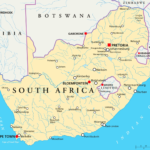
Gracie and I just returned from a week in the Kingdom of Lesotho, a small, land-locked mountain country surrounded by South Africa. We were invited to offer our Certificate in Holistic Liberation to a group of 35 pastors and leaders. As we introduced ourselves before launching into our first session I mentioned how sorry I was that our US President Donald Trump had dishonored their country March 4, saying:

“Eight million dollars to promote LGBTQI+ in the African nation of Lesotho, which nobody has ever heard of.”

This statement was met with laughter and applause from Republican lawmakers, who blindly accepted it as confirmation that Elon Musk is being effective at identifying and stopping international aid that goes against Republican values.

Trump’s slam shamed the people of Lesotho and worsened the situation for already marginalized LGBTQI+ individuals. Lesotho’s main LGBTQ rights organization, the People’s Matrix, denied receiving eight million dollars in US funding.

The pastors and leaders in our People’s Seminary training were visibly moved that I acknowledged Trump’s public disrespect for them and their country, and that I apologized. 

They clapped and cheered when I affirmed that the Creator of the Universe, our Father in heaven knows where Lesotho is, and sees, knows and loves every individual Mosotho of the country’s 2.4+ million population. 

I shared God’s words to his people in Isaiah 49:16: “See, I have written your name on the palms of my hands.”

Lesotho is a poor country, with over 70% of the population living below the international poverty line. 

We saw together that in Jesus’ parable of the rich man and Lazarus, it is the the poor beggar who sits at the gate who the rich man ignores whose name is known by Jesus. In contrast, the rich man has no name. 

This does not mean that there is no hope for individuals who are rich. But Trump’s ignorance and US lawmakers’ applause shows how the world’s most powerful seem clueless about God’s priorities and the movement of Jesus’ kingdom, as Mary states them:

“He has done mighty deeds with his arm; He has scattered those who were proud in the thoughts of their heart. He has brought down rulers from their thrones, and has exalted those who were humble. He has filled the hungry with good things; and sends away the rich empty-handed” (Luke 1:51-53).

Gracie, our Zimbabwean partner Pastor Richard Malitino and I were moved by the people’s deep humility and intelligence, the vibrancy of African worship and their commitment to be carriers of Jesus’ liberating message to the poorest and most far-flung places. We return home inspired afresh.

Fallen fallen is America the great– and our response

03.24.25

In Revelation 18:1 John sees an “angel coming down from heaven, having great authority, and the earth was illumined with his glory. And he cried out with a mighty voice, saying: “Fallen, fallen is Babylon the great!”

This vision is highly relevant to our situation now as America is in upheaval. On the one hand the divine messenger illuminates the earth with his glory– a heavenly perspective I need in these dark times. On the other hand the angel’s strong declaration of the dominant earthly power’s doom and five orders to those willing to listen have plunged me into weeks of prayerful study.

In Revelation, Babylon symbolizes the most powerful empire of our world, which in the first century AD was Rome, but has since manifested in many empires. Last week when I asked Christians living inside Iran with whom I meet monthly via Zoom who they think Babylon would be today, some wrote in the chat: آمریکا (America)—though there could be other contemporary manifestations.

John of Patmos next describes Babylon with detailed imagery, inviting us to honestly consider our own contexts now.

“She has become a dwelling place of demons and a prison of every unclean spirit, and a prison of every unclean and hateful bird. For all the nations have drunk of the wine of the passion of her immorality, and the kings of the earth have committed acts of immorality with her, and the merchants of the earth have become rich by the wealth of her sensuality” (Rev 18:2-3).

When I look at what America hosts and exports I see possible contemporary equivalents of Revelation’s list. America hosts the world’s most exploitive multinational corporations, billionaires, weapons manufacturers, and largest jail and prison system. America exports weapons, media violence, profanity, sexually explicit content (including porn), and other negatives– including greenhouse gas emissions, which contribute more to heat our planet per capita than any nation. And this is only the beginning of a noxious list of offenders.

The angel in Revelation 18 reveals God’s perspective on the powers– a zero-tolerance declaration that powers qualifying as Babylon are doomed to destruction. Though Babylon then and America now can look all-powerful in their arrogance and wealth— the divine messenger declares their true destiny: “fallen, fallen is America the great!”

Declaring these words now over America is certainly the opposite of today’s idolatrous mantra “make America great again.” Yet it seems especially called for in the face of the blatant and accelerated idolatry of America (evident in Trump’s renaming of the Gulf of Mexico the “Gulf of America,” declarations of taking over Greenland, making Canada the 51st State, and turning Gaza into luxury resorts).

The Trump Administration’s ongoing demonization of immigrants, refugees and so many others requires followers of Jesus to resist. Silence in the face of Trump’s self-adulation and dominance is highly irresponsible. A verse I memorized as a child keeps coming to mind:

“Pride goes before destruction, and a haughtier spirit before a fall” (Prov 16:18).

America truly looks like it is falling, especially from a European vantage point (where we were last week), and even more now from our vantage point in Lesotho, Africa, which Trump recently dissed.

America is currently turning its back on its European friends, punishing its closest neighbors with hostile tariffs, cutting off international aid to programs in the global south that mean life or death to millions in Africa, deporting vulnerable refugees, and threatening to round up and deport America’s undocumented immigrant workforce, and gutting its own government through mass firings, so it can afford massive tax cuts to the super rich.

The angel’s declaration regarding Babylon and its equivalent’s fall aligns tightly with Biblical teaching on the powers—which are not presented as reformable but as being eventually destroyed.

Yet watching things move towards going up in smoke is painful, even horrific. Certainly we must still engage in efforts to challenge and reform the powers for the sake of human beings (and our family and friends!), with a priority on advocacy for the powers’ most immediate victims and for the most vulnerable. Yet we mustn’t advocate naively, as if we will succeed at making America great again in a way that pleases us.

Moses did advocate for the Israelite slaves before Pharaoh. However, Moses’ advocacy backed by the ten plagues did not result in their release nor in Egypt’s reform. Pharaoh and his chariots perished in the sea.

God judges the rulers in Psalm 82, which are also called “sons of God” (a reference to their being originally created for good).

“They do not know nor do they understand; they walk about in darkness; all the foundations of the earth are shaken. I said, “you are gods, and all of you are sons of the Most High. Nevertheless you will die like people and fall like any one of the princes.” Arise, O God, judge the earth!” (Ps 82:5-8).

The Psalmist’s exposure of the ignorance and pathetic failure of the powers in reminiscent of Isaiah’s prophetic exposure of the total incapacity of human-fabricated wooden idols to save– and the resulting blindness to of those who worship them (Is 44:16-19).

The Apostle Paul is even clearer about the destruction (and not reformation) of the powers, which certainly includes USA when he says

“Then comes the end, when he [Jesus] hands over the kingdom to the God and Father, when he has abolished all rule and all authority and power” (1 Cor 15:24).

Coming out of America

Because Babylon, now manifesting as America, will fall (and appears to be falling now), what would it look like to seriously follow the angel’s first order, and four subsequent ones? John of Patmos hears another voice from heaven that calls disciples of Jesus to leave Babylon and her equivalents:

“Come out of her, my people, so that you will not participate in her sins and receive of her plagues; for her sins have piled up as high as heaven, and God has remembered her iniquities” (Rev 18:4-5).

“Come out of her!” is the divine messenger’s first order— the polar opposite of patriotic homeland defense. As someone who owns a home and land in the gorgeous Skagit County in Washington State, fully engaged in a faith community that I love, I have been prayerfully and painfully considering what this means.

Actual physical departure may one day be called for and should even prepared for– depending on what comes. Millions of people throughout the world have had to flee their countries as refugees—including most of America’s original colonizers. Boycotting certain companies and divesting from questionable investments and other actions may also be appropriate. However, the leaving the angel orders is first and foremost a heart posture of breaking ties of allegiance in favor of a higher calling– as when Jesus tells his disciples:

“No one can serve two masters; for either he will hate the one and love the other, or he will be devoted to one and despise the other. You cannot serve God and Mammon (Babylon, USA, democracy, the Stock Market, US dollar…)

But let’s look more closely at why the angel’s first command is: “Come out of her!”

The angel gives us a direct answer in the next line, warning that not coming out means continuing to participate in her sins, and receiving her plagues!

Another reason is visible in God’s designation “my people.” Coming out in response to God’s order means we are breaking with our old identity as Babylonians (Americans, British, Russians, Chinese, Israelis, Iranians, French…), behaving instead as God’s very own beloved people.

When we come out in response to God’s command, we die to our earthly identities, and fully receive our baptismal identity as God’s child. We then enter the Kingdom of God (by water and the Spirit), which then makes us “strangers and aliens” in this world—and we are not allowed dual citizenship!

Following the Angel’s next four orders

Once we have broken out of our captivity to the powers, renouncing our allegiance to the kingdoms of this world, we are then free to follow the angel’s next four orders. Serious prayer, research and reflection is needed to come up with Spirit-inspired action in response to these commands. A small sampling of possible actions are included under each order below.

The angel’s second order “Pay her back even as she has paid!” (Rev 18:6) is a command to engage in a sort of retributive justice. This is certainly not a call to exercise violence against flesh and blood humans (Babylonians, American, Russians or whomever), as Paul writes:

“Never pay back evil for evil to anyone” (Rom 12:17). But we are called to spiritual struggle against rulers, authorities, powers, world forces of darkness in the heavenly places (Eph 6:12).

Paying back here refers to retributive justice against a non-human entity, her, Babylon. Since America is now brazenly becoming a self-serving, oppressive idol, even fitting the OT category of a high place, it seems its spiritual and social status must be somehow torn down even as it has built itself up at others’ expense.

Paying back America “even as she has paid” requires research into how she has behaved in the past and how she behaves now. Prophetic exposure of America’s sins, in direct attack against her boasts is a way to practice this imperative now.

  • Exposing and denouncing the failure of America’s prison system to rehabilitate the incarcerated and assist then in effective re-entry.
    Exposing each and time the US Government broke treaties with indigenous tribal communities, restoring land and other treaty rights with interest.
  • Exposing and denouncing each and every self-serving US military intervention that pretended to defend or liberate.

The third order “Give back double according to her deeds” is similar to the second. Precision consequences are related to offenses times two—a kind of spiritual warfare retributive against the power called “America.” Examples might include:

  • Exposing and publicly denouncing twice as many of America’s abuses of human rights than positive contributions claimed by America’s apologists.
  • Exposing the corruption of America’s legal system twice as much as its proponents laud its superiority, demonstrating how it acquits the rich and powerful of their crimes and condemns the less privileged and poor.
  • Calling back twice as many Christian nationalists to Jesus from the clutches of allegiance to America.

The fourth order follows in kind: “in the cup which she has mixed, mix twice as much for her.”

  • The “cup” here might reflect what the dominant power (here identified as America) has given people to drink a manifestation of its hospitality.
  • Acknowledging, decrying and mourning the US Constitution’s second amendment right to bear arms as leading to extreme insecurity and fear inside America due to gun violence.
  • Decrying the failure of America’s education system to effectively educate its citizens and residents, and the mainstream media’s failure to effectively report national and world news due to its ownership by corporate and billionaire interests.

The fifth and final order again requires research to accomplish: “To the degree that she glorified herself and lived sensuously, to the same degree give her torment and mourning.”

  • Immediate, informed responses to each and every official or public statement glorifying America with detailed denunciations of America’s failures to liberate and defend life.
  • Public mourning for America’s crimes and failings, in direct response to each and every celebration of its claims to greatness.
    Acknowledging and mourning America’s failure to effectively address the roots of homelessness, the opioid pandemic, and mental health crisis.
  • Decrying and grieving the failure of America’s democracy, showing how its two-party system has been co-opted by the rich and powerful.

Far more prayerful work is needed if we’re to properly respond to the angel’s orders and prepare ourselves for highly challenging future. In conclusion, departure from America is an invitation to a new freedom to join Jesus himself, those already cast out, and those Jesus seeks, “outside the camp,” as Hebrew 13:13-14 brilliantly invites us to do:

“So, let us go out to him outside the camp, bearing his reproach. For here we do not have a lasting city, but we are seeking the city which is to come.”

Resisting the Lawless One(s) as America Falls

02.16.25

Last October I prepared an update that I now feel compelled to release. Now that we’re nearly a month into the new US Administration it is time to consider a few Scriptures that speak directly into these turbulent times.

In his Second Epistle to the Thessalonians, Paul warns persecuted believers expectant of Jesus’ second coming that pretender saviors would come first, preceding the true and only Savior.

“Let no one in any way deceive you, for it [the day of the Lord] will not come unless the apostasy comes first, and the man of lawlessness is revealed, the son of destruction, who opposes and exalts himself above every so-called god or object of worship, so that he takes his seat in the temple of God, displaying himself as being God…. For the mystery of lawlessness is already at work…” (2 Thess 2:3-7).

Paul warns believers in Jesus: “Let no one in any way deceive you.” This was because  being deceived was and continues to be a real possibility. “The apostasy comes first,” he says, using the Greek wordapostasia, meaning “the defection from truth, falling away, forsaking.”

The barrage of lies and disinformation we are faced with daily through mainstream and social media is often overwhelming. People’s inclination to believe what supports their biases makes us all vulnerable to propaganda, which takes hard work to resist through careful research and openness to views and sources that may challenge our preconceived ideas.

Paul writes of one who opposes and exalts himself, activities we certainly see in America’s leadership now– though this has happened in many times and places, and is occurring now in many nations.

Dominating, competitive leadership is rampant in the US, and self-exaltation is blatantly visible. The underlying Greek verb translated “exalts,” (huperairomai)in Paul’s description of the man of lawlessness is quite telling. It is defined as “to become puffed up with pride, with the probable implication of being disparaging toward others — ‘to be overly proud, to feel overly self-confident.” Being on the lookout for this and calling it out is critical as we discern our times.

The “man of lawlessness” aligns with Jesus’ warnings in Matthew’s Gospel, where he says: “because lawlessness is increased, most people’s love will grow cold. But the one who endures [lawlessness] to the end will be saved” (Mt 24:12-13). In the face of all this chaos do you ever notice your own love growing cold? Do you see lawlessness on the increase in your nation now? I certainly do! Today Donald Trump posted: “He who saves his Country does not violate any Law,” suggesting he sees himself as above the law.

In Revelation 13 John writes that people will worship the dragon (Satan), because “he gave his authority to the beast” (13:4), evoking the devil’s temptation of Jesus in the desert that he would give him “all this authority and glory” over “all the kingdoms of the world” if Jesus worshipped him (Luke 4:6-7). Jesus answered by quoting the first of the ten commandments: “You shall worship the Lord your God and serve him only”(4:8).

Here we are warned that the Ruler of this world is at large, seducing people to pursue dark sources of power. Do you see any signs of this happening in our times?

John of Patmos recounts that “they worshiped the beast, saying, “Who is like the beast, and who is able to wage war with him?” (Rev 13:4).

Capitulation before the powers was a temptation then and now!

“There was given to him a mouth speaking arrogant words and blasphemies, and authority to act for forty-two months was given to him” (Rev 13:5).

The reign of the beast appears linked to Paul’s warning that the man of lawlessness will come “in accord with the activity of Satan, with all power and signs and false wonders, and with all the deception of wickedness for those who perish, because they did not receive the love of the truth so as to be saved. For this reason God will send upon them a deluding influence so that they will believe what is false, in order that they all may be judged who did not believe the truth, but took pleasure in wickedness” (2 Thess 2:9-12).

I believe an apostasy is currently underway, marked by wholesale allegiance to arrogant leaders aligned with nationalists who claim to be Christian. The idolatry of America and overt worship, to “make America great again,” shows that a deluding influence is underway that is engulfing people here and in many other places where Christians aligned with American Christian nationalists are pursuing similar agendas in their own countries. There are even claims that “signs and wonders” are happening in these nationalists circles, which appear to confirm false narratives, as Paul warned. And all this is on the rise!

“Not receiving the love of the truth” and “believing what is false” open the doors to deluding influences, and to believing the ones with mouths “speaking arrogant words.” Yet what we see happening before our eyes is another spectre that we must pray for courage to directly face. The dominant empire is rapidly heading for ruin, threatening to take much of the world with it.

John of Patmos writes his vision of seeing an “angel coming down from heaven, having great authority,” to announce the fall of “Babylon,” the code name for the dominant global power.

“And he cried out with a mighty voice, saying, “Fallen, fallen is Babylon the great! She has become a dwelling place of demons and a prison of every unclean spirit, and a prison of every unclean and hateful bird. For all the nations have drunk of the wine of the passion of her immorality, and the kings of the earth have committed acts of immorality with her, and the merchants of the earth have become rich by the wealth of her sensuality” (Rev 18:2-3).

Unclean and hateful birds refer to birds of prey, which are symbols here of predatory powers, which could include marketers, influencers, propagandists, and manipulators of infinite varieties. Here in the US we certainly are home to many contemporary unclean and hateful birds!

From my vantage point here in the NW corner of the USA, as one who has studied history, has worked hard to stay informed, and is in regular contact with vulnerable populations, it looks like America’s fall is rapidly accelerating, and many are alarmed by this and lamenting.

America’s fall has been underway for decades, visible in disastrous military interventions such as the Vietnam War, Iraq war, invasion of Afghanistan, and interventions in Syria, Yemen and the world over. Other signs of the US’s fall in recent years include:

  • High death rate due to slow response to Covid 19 pandemic
  • Huge loss of life due to opioid epidemic (still underway).
  • Highest prison population per capita in the world
  • High numbers of unhoused people in our cities and towns
  • Increasing gap between the rich and poor and rise of billionaire class
  • Natural disasters on the rise (hurricanes, fires…) due to minimally addressed global warming

Now in 2025 the US decline is accelerating, visible in the following:

  • Open hostility and threats of deportation to millions of immigrant workers who serve the American public as low-wage earners, doing jobs most people would never choose to do
  • Thousands dying of fentanyl overdose in communities across the country
  • $36.22 trillion national debt, according to the U.S. Treasury
  • Open hostility to immediate neighbors (Canada and Mexico), with threats of tariffs, of making Canada a US state, changing the name of Gulf of Mexico to the Gulf of America
  • Defunding environmental protection agencies and initiatives that address climate change, accelerating global warming
  • Widespread division, hatred and fear
  • US two-party democracy in crisis
  • Gun violence
  • Executive orders canceling federal aid grants domestically and internationally, and firings and defunding of USAID and other agencies
  • Open hostility to European Union, evident in refusal to include Europe in negotiations between the US, Ukraine and Russia, de-funding and denunciation of International Criminal Court, pulling out of Paris Climate Agreement, threats to annex Greenland, taking it from Denmark, JD Vance’s recent criticisms of UK and other European allies
  • Trumps declarations about Palestinians permanent departure from Gaza that have alienated them and Arab nations

John goes on to describe the merchants of the earth weeping and mourning over Babylon’s fall, nostalgic for the glory days. Threats of tariffs are causing distress now, as prices rise. Many Europeans are lamenting America’s new hostile and isolationist posture, as are Canadians, Mexicans, and people the world over.

Threats of tariffs, the defunding of life-saving programs to vulnerable people all around the world, and the loss of perceived friendships are causing many to lament America’s fall from where it was. Some would like to make America woke again (or for the first time), which seems like a near impossible feat in the current climate.

Before America’s fall is complete, things can still get much worse as the current Administration seeks to exert and expand its control by rallying its faithful, building alliances with far right populist parties, Christian nationalists, reconstructionists, dominionists, and others around the world that align with its values and the politics of its empire.

Here’s where I find John’s next words to God’s people highly challenging and refreshing.

John hears another voice from heaven saying: “Come out of her, my people, so that you will not participate in her sins and receive of her plagues; for her sins have piled up as high as heaven, and God has remembered her iniquities” (Rev 18:4-5).

What would it look like for followers of Jesus to “come out” of the USA, and to “not participate in her sins?” How might this align with active solidarity with those currently out on our streets, being forced out of our country, or choosing to leave due to the current hostile climate? How can we come out from the impasses of partisan hostility, and become active peacemakers in alignment with Jesus?

I don’t believe that “coming out” requires physical departure– though it may come to that. But it aligns with Jesus saying his disciples are “not of the world” (Jn 17:24), and Paul’s “Come out of their midst and be separate” (2 Cor 6:17).

Our best efforts to resist in the here and now are critical, though they may not change what John announces. John goes on to describe coming plagues, pestilence, mourning and famine, “for the Lord God who judges her is strong” (Rev 18:8).

There are no false hopes of things getting better in this chapter, nor are there calls to resist the powers through armed struggle nor to reform them, to “make Babylon great again.” This absence of reformation as an option aligns with a current that flows throughout Scripture.

Moses does not succeed in winning over Pharaoh through non-violent advocacy, nor through violent resistance or even through God’s judgement via the ten plagues. Pharaoh, his horsemen and chariots are drowned in the waters as they pursue God’s people as they go out from the land of slavery to freedom.

Jesus himself declares that not one stone will be left upon the other of Israel’s sacred Temple. He prophesies it’s destruction, and the sacking of Jerusalem by the Romans. He calls his followers to flee to the mountains rather than defend the homeland, in alignment with commands to disciples to flee to the next city when persecuted for announcing the kingdom of God.

Paul states clearly that when the end comes, and Jesus hands over the kingdom to God the Father, it is after he has “abolished [and not reformed] all rule and all authority and power” (1 Cor 15:24) and destroyed [and not redeemed] the last enemy, death itself (1 Cor 15:26).

Revelation 18:20 calls believers to an action that is the opposite of current calls to make America or any nation great again, or to pledge allegiance to anything other than to Jesus and the kingdom of God. Believers are told to join heaven’s chorus:

“Rejoice over her, O heaven, and you saints and apostles and prophets, because God has pronounced judgment for you against her” (Rev 18:20).

This rejoicing is not about gloating or winning, but celebrating God’s liberating actions and victory through Jesus– to bring freedom to the oppressed, and to usher in his eternal kingdom.

I’m not saying I know that day or the hour as we face what looks like apocalyptic times, and the end of history. I find Jesus’ words to his disciples especially relevant, which he offers in response to their question as to when he would restore the kingdom to Israel.

“It is not for you to know times or epochs which the Father has fixed by his own authority; but you will receive power when the Holy Spirit has come upon you; and you shall be my witnesses both in Jerusalem, and in all Judea and Samaria, and even to the remotest part of the earth” (Acts 1:7-8).

May we welcome the Holy Spirit’s empowerment and step more fully into our highest callings, to be Jesus’ witnesses, to announce his kingdom, in this world but decidedly not “of” this world.

Check out my recent podcasts “Refusing Idolatry and Worshipping Jesus as our Highest Power,” and “Speaking Prophetically Today” on Spotify or Apple.

Sign up for this online video course here: https://www.deepwideacademy.com/offers/Q24MASTW/checkout

Today let us celebrate the inauguration of Jesus the Commander-in-Chief ‘Not of this World’

01.20.25

As Donald Trump was inaugurated America’s 47th President and begins his term I find comfort in remembering and celebrating the world’s highest (and very different) Commander-in-Chief—Jesus, the King of Kings and Lord of Lords. Jesus was enthroned on the cross, where he defeated the ruler of this World and every one of Satan’s principality and power minions. This I celebrate! Let us choose to worship Jesus.

Jesus understood his destiny as he approached Jerusalem—the Israeli equivalent of Washington DC. He revealed to his disciples then (and to us now) how the leaders of God’s people and secular rulers would respond to him. He highlighted their reaction so that they (and we) would know in advance what we can expect as we follow him.

“Behold, we are going up to Jerusalem; and the Son of Man will be delivered to the chief priests and scribes, and they will condemn him to death, and will hand him over to the Gentiles to mock and scourge and crucify him, and on the third day he will be raised up” (Matthew 20:18-19).

The leaders of God’s people and the majority they influenced did not “elect” Jesus as their King when he came in the flesh—so why would they now? They rejected him, engaging in the then equivalent of organizing, voting, lobbying, and demonstrating before the Roman Empire’s governor, Pilate to have him executed.

“We have no king but Caesar!” stated the chief priests of God’s people, a warning to us all as we watch the equivalent today.

Jesus prophesied his elevation (enthronement) at his execution on the cross, where he would be glorified, as he defeated the ruler of this world.

“Now judgment is upon this world; now the ruler of this world will be cast out. And I, if I am lifted up from the earth, will draw all people to Myself” (John 12:31-32).

He declared that his enthronement would benefit the whole world that he came to save— with no resemblance to anything close to “make Israel (and certainly not America) great again.”

Jesus, Israel’s Messiah and the world’s King was enthroned at his crucifixion. He took no mountain (of the supposed “seven”)– but was taken to Golgotha, the Place of the Skull.

The soldiers of the world’s most powerful empire draped a scarlet robe on his bleeding shoulders. They placed a crown of thorns on his head, a reed in his right hand and mockingly knelt before him, spitting on him and striking him on the head, saying: “Hail King of the Jews” (Mt 27:27-31). They crucified him between two criminals, and placed a sign over his head, “This is Jesus, the King of the Jews” (Mt 27:37).

The king of America will no doubt receive much better treatment.

Jesus was brutally enthroned, without fanfare or endorsements from the equivalents of tech billionaires, media moguls, defense industry and financial sector CEOs, religious leaders, and other powerful opportunists. No former or present heads of state were there.

His only endorsers were his acquaintances and women who followed him who were looking on from a distance, a criminal who said: “Jesus, remember me, when you enter your Kingdom,” and a centurion who on seeing the way he died confessed him to be the Son of God (Mk 15:39).

Today as we commemorate Martin Luther King Jr. and as Donald Trump is being glorified, let us choose to remember and celebrate Jesus, who “sanctified the people through his own blood, suffering outside the gate.”

“So, let us go out to Him outside the camp, bearing his reproach. For here we do not have a lasting city, but we are seeking the city which is to come” (Hebrews 13:12-13).

May we choose to accompany those who are outside the camp now: undocumented immigrants, asylum claimants, the homeless, addicted and incarcerated, those who await execution on death row, the poor and excluded, and anyone who is not represented or attended to.

May we fix our eyes on Jesus, our Commander-in-Chief, victor over the powers and over death itself—and celebrate!

  • « Previous Page
  • 1
  • 2
TwitterFacebook

Bob Ekblad P.O. Box 410 Burlington, WA 98233 | (360) 755-5299

Website Built and Hosted by Koinonos

Bob and Gracie Ekblad