Bob & Gracie Ekblad

  • About
    • Schedule
  • Ministries
    • Tierra Nueva – New Earth
    • The People’s Seminary
    • Teaching
      • Speaking Topics
    • New Earth Refuge
  • Blog
    • Blog en Español
    • Blog en Français
  • Podcasts
    • Podcast in English
    • Podcast en Español
    • Podcast in Persian
  • Resources
    • Books and Articles
    • Talks & Lectures
    • Articles
    • Ekblad Updates
    • Bob and Gracie Ekblad’s news
  • Get Involved
    • Links
  • Contact
  • Store

Keep your love from growing cold

07.10.18

Jesus’ words to his disciples regarding signs of his second coming and the end of the age are highly relevant today. Jesus tells his followers to expect wars, famines, earthquakes, persecution, killing, betrayal, hatred, false prophets, and lawlessness.

“Lawlessness” (anomia), translated “wickedness” or “iniquity,” refers specifically to disregarding God’s word and ways—which Jesus says will increase over time.

“Because lawlessness is increased, most people’s love will grow cold. But the one who endures to the end, he will be saved. This gospel of the kingdom shall be preached in the whole world as a testimony to all the nations, and then the end will come” (Mat 24:12-14).

I’ve been noticing signs of people’s love growing cold, visible quite recently in a hardening of attitudes towards immigrants and refugees in Europe—and notably in the Trump Administration’s immigration policies. Arresting and sending back immigrants fleeing violence and poverty in Central America and Mexico, and separating children from parents are disturbing signs of hardness of heart.

In response to international outrage, some cosmetic changes have happened that might keep children together with parents. But many children have still not been reunited with their parents and detention centers (falsely called migrant camps) are being built around the United States to imprison thousands of immigrants.

Attorney General Jeff Sessions has recently called on Immigration Judges to refuse asylum to people fleeing gang violence in Central America—as well as victims of domestic violence. Many are being deported by US Immigration authorities to life-threatening situations (read this).

Just before Christmas I bailed out a Salvadoran pastor from an Immigration and Customs Enforcement (ICE) prison in San Diego (Otay Mesa Detention Center). For over 20 years he ministered to incarcerated gang members in El Salvador, since his conversion out of a gang lifestyle. When police repeatedly accused him of being an active gang member and threatened to kill him, he fled overland to the United States with his 14-year-old son. I advised him to go to the US-Mexican border and request asylum.

Upon turning himself in to ICE agents at the San Diego border he was arrested and incarcerated. At this point US authorities separated his son from him, sending the boy to a juvenile facility, where he was held for 42 days. Since Christmas the family has been reunited—but now they face the possibility that their asylum claim will be denied due to Trump Administration decisions.

From the perspective of Jesus’ kingdom, gang violence, domestic violence and economic inequalities underlying poverty fit the category of lawlessness. The current US policy of “zero tolerance” towards undocumented immigrants and refugees also constitutes lawlessness from the perspective of Christian faith.

In Deuteronomy 14:29 God directs his people to tithe from their produce, feeding “the alien, the orphan and the widow in your town,” so they “shall come and eat and be satisfied.” “Do not neglect to show hospitality to strangers, for by this some have entertained angels without knowing it” (Hebrews 13:2).

It is easy to let the bad news of growing lawlessness distress and even enrage us—threatening to diminish our love. Jesus warned that “lawlessness will increase and the hearts of most people will grow cold.” In the face of this he continues: “but the one who endures till the end will be saved.”

“The numbing of empathy, the dehumanization of other people through the encouragement of distain are documented stages in history that have led to atrocities and even genocide,” writes Laura Janner-Klausner, senior leader of Reform Judaism in the UK.

“How do we endure the lawlessness without our empathy being numbed, our love growing cold?”

I believe Jesus’ next words hold the key. “This gospel of the kingdom shall be preached in the whole world as a testimony to all the nations, and then the end will come.”

“This gospel of the Kingdom” refers to Jesus’ message and ministry during his earthly life. Proactively engaging in Jesus’ ministry will keep our love from growing cold in the face of lawlessness.

At the beginning of Jesus’ ministry he called humble fishermen as disciples. He then went “throughout all Galilee, teaching in their synagogues and proclaiming the gospel of the kingdom, and healing every kind of disease and every kind of sickness among the people” (Mat 4:23).

Jesus countered legalistic, hard-hearted, attitudes of his time by lifting up the lowly. He declared “blessed” categories of people we must seek to embrace and become: The poor in spirit, those who mourn, the meek, those who hunger and thirst for righteousness, the merciful, the pure in heart, peacemakers, and those who have been persecuted for the sake of righteousness (Mat 5:1-10).

At another time when proclaiming the gospel of the kingdom and healing the sick Matthew’s Gospel states that “seeing the people he felt compassion for them, because they were distressed and dispirited like sheep without a shepherd.” Jesus then declared his priorities in the clearest terms to his followers: “the harvest is plentiful, but the workers are few. Therefore beg the Lord of the harvest to cast out workers into his harvest” (Mat 9:36-38).

Our love will grow strong as we proclaim and live out the gospel of Jesus’ kingdom in the face of lawlessness wherever it is found. As you exercise your love it will increase, and you will find your compassion for the desperate growing. In this way we will see the reign of God advance throughout the world.
Father’s Day Jail Bible Study on Luke 15:11-32

06.22.18

My Tierra Nueva colleague, Danielle, and I were at the women’s jail pod on Father’s Day. Once gathered around the circular metal table for the Bible study, we discovered that most of women had experienced feelings of sadness, regret and disappointment when thinking about their fathers that day.

We prayed together and then turned to Luke 15, which begins with the tax collectors and sinners, coming near to Jesus to listen to him. The Pharisees and scribes were disgusted by the attention Jesus was giving to these despised outcasts and started to grumble, saying: “This man receives sinners and eats with them.”

Jesus responded by telling them three parables: the first about a lost sheep, the second about a lost coin, and the third about a lost son. In each story Jesus describes what was lost to be of great value, worthy of especial effort in being sought after—and joyfully celebrated with friends and neighbors once found.

“Which one of you wouldn’t leave 99 of your flock to look for one sheep which wandered away or look diligently for one precious coin until it is found?” Jesus asked.

All of us can relate to the joy of recovering a valuable animal or lost money, so Jesus has our attention. But a prodigal (wasteful) son? What is it about this guy who not only dishonors his father by demanding an early inheritance and but then wastes it all on prostitutes and partying? More importantly, what is it about this father who looks co-dependant in granting his son’s audacious request? Does God’s love have no limits?

The women in the bible study recount times when they “wasted” their bodies, resources and opportunities, damaging relationships, burning bridges and suffering devastating consequences on all levels. What earthly parent would warmly welcome such a son or daughter back in this state?

The response of the father to the wasteful son returning home in shame, asking to be treated as a hired servant is truly astonishing. Seeing his son approaching from a long way off “he felt compassion for him, and ran and hugged him and kissed him.” He didn’t even let the son finish the speech he had prepared about his unworthiness to remain a son. Instead the father prepared a lavish party to celebrate his son’s return and invited his friends and neighbors to come share his happiness.

The response of Jesus to the religious leaders and to all who take offense at the Father’s embrace of such “sinners” demonstrates the unfathomable depth of his love and forgiveness: “there will be more joy in heaven over one sinner who repents than over 99 who need no repentance.” What parent would go to this extent to love a kid who wasted everything? Only our Heavenly Father. And this is the Good News.

The women and Danielle and I shared a moment of wonder and amazement at the crazy love of our Heavenly Father, which was starting to sink into our wounded and needy hearts. We marveled together about what this could mean. Could Jesus be telling us that God is this good? Better than anyone we could ever know or imagine? Yes! Even when we leave our Heavenly Father, we can return to him and expect to be embraced and celebrated regardless of how we have messed up.

At Tierra Nueva we are inspired to embody this radical love and welcome in all our encounters and gatherings, inside and outside the jail.

Overturning Prejudice: Abraham & Abimelech’s peacemaking in Gaza challenges us now

04.23.18

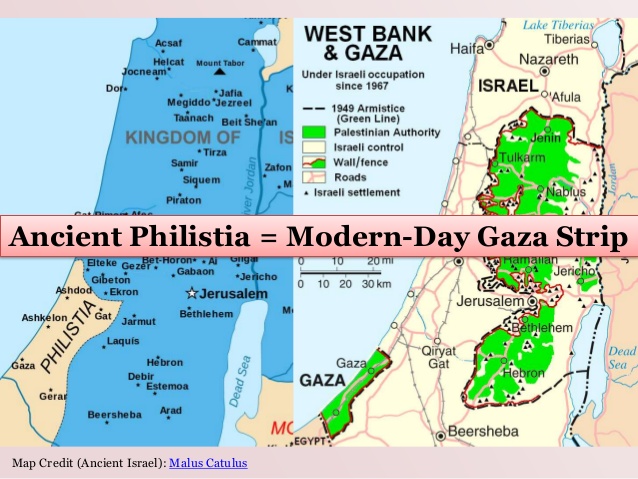
Violence in Gaza is once again on the rise as the Israeli Defense Forces battle Palestinian protesters outraged by inhumane living conditions in what is often referred to as the world’s largest outdoor prison. The last time tensions flared Israel brutally bombed Gaza in response to Hamas’ missile attacks in 2014— killing over 2000 Palestinians and wounding thousands more. The story of Abraham’s conflict and reconciliation with the ancient king of Philistia (located in modern day Gaza) in Genesis 20-21 is an invitation to Jews, Muslims and Christians to see each other through the eyes of faith.

Genesis 20 tells the infamous story of Abraham’s residence as an alien in Gerar, where he lies to Abimelech, king of Philistia, about the identity of his wife Sarah, saying she was his sister. Abraham expects the worst from this foreign king, assuming he will kill him and take Sarah for himself– since she is so beautiful. But after Abimelech takes Sarah into his harem God confronts him in a dream and Abimelech proves attentive. He dialogues with God, defending himself as innocent– and God affirms his integrity (20:5-6).  Abimelech confronts Abraham about his lie: “You have done to me things that ought not to be done” (v. 10). He gives Sarah back along with many gifts, 1000 pieces of silver and a welcome to settle wherever they please (20:14-15).

Abraham clearly misjudged Abimelech in assuming he and his people did not fear God. Deep prejudices and hatred abound today on all sides of the current Israeli-Palestinian conflict—and this text from the Torah offers a prophetic challenge. Might we consider asking God to give us a divine perspective on people and conflicts?

Abraham prays for Abimelech’s wife and maids, who God had kept from getting pregnant until things were resolved with Sarah—and their wombs are opened. Abraham is a blessing to this non-Jewish leader, in keeping with God’s people’s vocation: “through you all the families of the earth will be blessed” (Gen 12:3).

In the next chapter, Isaac is born, and Abraham sends Hagar and Ishmael into the desert– a text dear to Muslims. Abraham is their patriarch and the well that God shows Hagar they identify as located in modern-day Mecca.

Immediately following this story in Genesis 21:22-34, Abimelech and Phicol, the commander of his army, approach Abraham. They recognize God’s presence with him, saying: “swear to me here by God that you will not deal falsely with me, or with my offspring, or with my posterity; but according to the kindness that I have shown to you, you shall show to me, and to the land in which you have sojourned.”  And Abraham says, “I swear it.” (21:24).

While there are no known ties between Abimelech and modern day Palestinians living in Gaza, Abraham’s covenant to not deal falsely but rather kindly with the residents of Philistia seems highly relevant to Abraham’s Jewish and Muslim descendants in Gaza and throughout the West Bank today.

In the next story we see that Abraham and Abimelech’s covenant is tested by conflict, and Abraham models healthy peacemaking. He complains to king Abimelech about his servants, who seize his well. Abraham offers sheep and oxen as gifts and the two of them make a covenant (21:30). Later in Genesis 26:1-30 Isaac has a nearly identical run-in with Abimelech (perhaps the first Abimelech’s son), making a similar covenant with him. This story appears to emphasize the Jew’s special responsibility to keep and renew this covenant from generation to generation.

Gracie and I became aware of this story during a life-changing visit to Israel and the West Bank for three weeks in 2014. We began our trip by spending a week in Bethlehem, East Jerusalem and Hebron, learning about the Israeli-Palestinian conflict from the Palestinian perspective. We witnessed firsthand Israeli soldiers shooting rubber bullets into a crowd of Palestinian protesters. We toured impoverished Palestinian communities trapped behind the formidable border wall or under the shadow of heavily-fortified Jewish settlements in East Jerusalem and Hebron.

We then rented a car and traveled past Gaza into the Negev, and visited Abraham’s well in Beersheva, a mere 27 kilometers from Gaza City. At that time Hamas was beginning to shoot rockets into Israel from nearby Gaza. Before heading to Beersheva I called a Messianic Jewish leader I had met a few years before at a conference in Paris. He welcomed us into his home and he shared his perspective on the Israeli-Palestinian conflict. Gracie and I then headed to a local restaurant for some lunch before our planned visit to Abraham’s well.

The young Israeli waitress who took our order asked Gracie what we were doing in Beersheva. When she heard we planned to visit Abraham’s well she surprised Gracie by saying:  “Be sure you go into the cistern, the Presence of God is really strong down there.” We learned that she believed in Jesus, and was active in the Messianic Jewish house gathering of the man we had just visited. She gave us the phone number of a woman from her fellowship who she said knew a lot about Abraham’s well and might be willing to meet up with us. We were excited by this unfolding adventure and called her. She offered to meet us briefly at the well.

There in the parking lot of the ancient Beersheva ruins she told us that Abraham’s well was actually the first piece of land that was owned by the Jewish people. She believed that the now empty cistern was symbolically important, but didn’t tell us why. She repeated what our waitress had said that the Spirit was especially strong in the cistern, and prayed for Gracie and I before we spent a few hours touring the ruins. It was then that Gracie and I read Genesis 20-21 and 26 together, and began reflecting on these questions.

That same day we continued eastward, visiting the Fountain of Tears. We were deeply impacted by this series of sculptures depicting Jesus’ final words from the cross, each one before a Holocaust survivor dressed in prison clothes. Our guide, himself a Messianic Jew, shared his conviction that Jesus’ suffering and death as the descendent of Abraham is what breaks down the dividing wall between Jews and gentiles, Israelis and Palestinians (Eph 2:13-18).

According to Paul’s writing in the NT, believers in Jesus Christ are grafted into the Jewish people, becoming “children of Abraham” through faith in Christ (Rom 4:19).

Jesus told his Jewish listeners to do the deeds of Abraham (Jn 8:39). He commanded his Jewish disciples and all who follow him today: “But I say to you who hear, love your enemies, do good to those who hate you” (Lk 6:27).

Tensions are rising in the Middle East— between Israelis and Palestinians, between Israel, Syria and Iran– and in many other places as well. Superpowers are aligning themselves, funding and arming enemy camps for war.

May we resist partisan divisions and violent approaches—actively praying and working for peace in alignment with Jesus—the Prince of Peace. May we step more  fully into the “ministry of reconciliation” that Jesus has given us: “Namely, that God was in Christ reconciling the world to himself, not counting their trespasses against them, and he has committed to us the word of reconciliation” (2 Cor 5:18-19). In so doing we will experience the benefits of Jesus’ promise: “Blessed are the peacemakers, for they shall be called the sons and daughters of God” (Mat 5:9).

The Invitation to the Cross

03.01.18

Last Sunday while preaching at Tierra Nueva Jesus’ words about rejection struck me as highly relevant for us today.

“The Son of Man must suffer many things and be rejected by the elders and the chief priests and the scribes, and be killed, and after three days rise again.”

Jesus is talking about himself here. But his followers are also included in this trajectory that looks suicidal.

Right before Jesus says these words Peter had confessed Jesus to be the Christ— and Jesus had warned his disciples they mustn’t tell anyone. Now Jesus informs his disciples that he will not succeed in winning over religious leaders, assuming power, expelling the Romans and making Israel great again. He will achieve victory over death itself. But not without himself passing through death on a cross, the only way to be raised to new life by the Father.

Peter thought Jesus’ words and path were lame. He rebukes Jesus for his way of talking about being the Christ.  I imagine Peter insisting that Jesus be strong and successful, with growing acceptance until he achieves earthly power.

Peter represents those who want Jesus and themselves to be associated with social acceptance and material and political success– not suffering, failure, rejection and death. Peter wants to make Israel great again—like some today (even Christians) want to make America, or any prized party, tribe, nation, ministry or agenda great again.

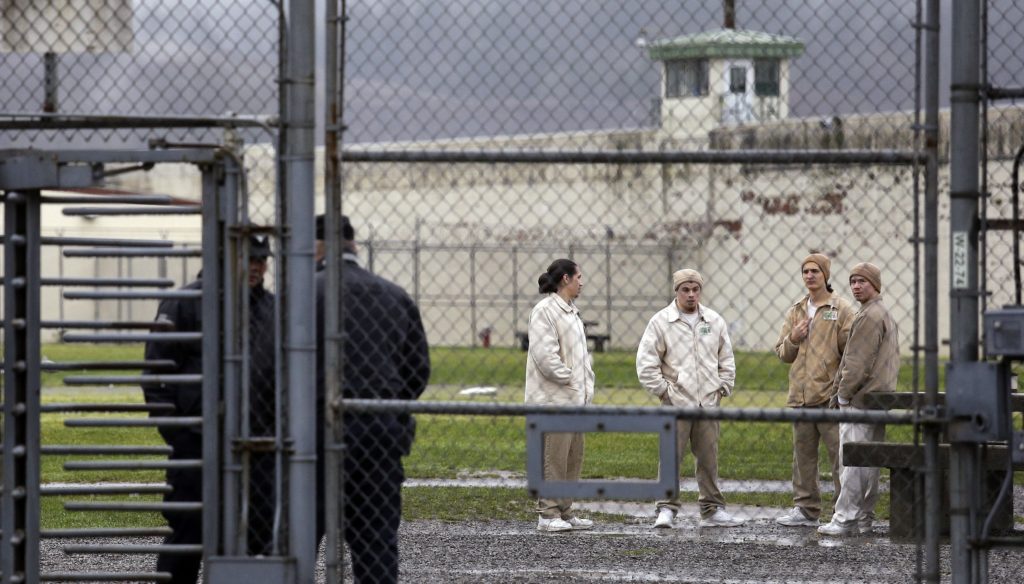
Earlier last Sunday at Washington State Reformatory I met with a group of prisoners I read the Bible and pray with every two weeks. I know from many conversations that they feel despised by the State and mainstream society—and assume churchgoers look down upon them unless proven otherwise. And yet their association with Jesus in the prison system also marks them for rejection.

The men share how when they walk along their cell blocks with their Bibles to our gatherings, people mock them—saying church is for sex-offenders, hypocrites, and people who can’t face the consequences of their crimes or life without a crutch.

Jesus turns around and seeing his disciples, he rebukes Peter for trying to take him away from rejection—the direction he’s going. He rebukes Peter publically in the strongest terms:  “Get behind me, Satan; for you are not setting your mind on God’s interests, but man’s.”

Here Jesus is literally telling Satan and anyone associated with that agenda to get behind him in the direction he is going in his downward descent to save humanity through his suffering and death. Is Jesus calling Peter’s pressure to move upward towards social acceptance, earthly success and power ‘satanic’? It seems so.

Jesus is not about achieving acceptance, power and being number one, but about emptying himself, taking on “the form of a slave, humbling himself and becoming obedient to the point of death, even death on a cross” (Phil 2:7-8).

“You are not setting your mind on God’s interests—but on people’s,” he says.

Jesus is 100 percent committed to God’s interests for the world—which go in the opposite direction of normal human priorities. God’s sacred movement involves bringing rulers down from their thrones, and Jesus leads the way as God’s Son. Jesus’ priorities are about exalting the humble and filling the hungry with good things (Lk 1:52-53), not allying with the powers to dominate and control.

“And for whom might this be good news?,” I ask people at Tierra Nueva church on Sunday. A man in the front row, just released from a three-year prison sentence looks up and nods—“people like me,” he says. A woman struggling to kick her heroin addiction so she can get custody of her toddler is listening intently— her wide eyes are searching for hope.

Jesus invites the crowd and his disciples to make a radical choice to follow him on this same hard path: “If anyone wishes to come after me, he must deny himself, and take up his cross and follow me.”

Here Jesus calls us to move in the opposite direction of our culture—which prizes self and personal success and security as sacred.

“Life, liberty and the pursuit of happiness are overrated,” I say. “Satisfying your every desire and giving yourself what you want is pursuing the American Dream, not the Kingdom of God.”

If you are drawn to Jesus and want to follow behind him, then he invites you to three practices: “Deny yourself, take up your cross and follow me,” (8:34). Denying our self is a necessary prerequisite for taking up our cross, and then following Jesus.

But how do we come to this point of being willing to deny our self?

We are more likely to be ready to deny our self if we have lost confidence that we know best how to run our lives. If choosing my own destiny has led to anxiety, serious troubles, addiction, relationship breakdown, and incarceration, then I’m ready to dethrone self and even take aggressive measures—what Paul calls “crucifying the flesh.”

But we must hear this call to deny ourselves and take up the cross positively, as a personal invitation from Jesus to join him in a new life together with him.

“I have been crucified with Christ; and it is no longer I who live, but Christ lives in me; and the life which I now live in the flesh I live by faith in the Son of God, who loved me and gave himself up for me” (Gal 2:20).

Jesus gives himself up for me ahead of my giving myself to him. I join Jesus on the cross as the instrument of his and my symbolic death—my crucifixion with Christ equals total surrender so I can go in a new direction, wholly given over to following Jesus in a life of joyful adventure behind God’s interests.

The cross also represents death to sin that enslaves me. “Our old self was crucified with him, in order that our body of sin might be done away with, so that we would no longer be slaves to sin” (Rom 6:6). “Now those who belong to Christ Jesus have crucified the flesh with its passions and desires” (Gal 5:24).

For Jesus the cross was the means the powerful used to execute him. “Taking up your cross” signifies following Jesus even in the face of disapproval and rejection from the important people deemed competent to determine your value or legitimacy. Back then these were elders, chief priests, and scribes. Who would be their equivalents today for you?

There are pressures on us today to conform to other agendas, rather than choose the path behind Jesus and give up personal control to him. But the alternative according to Jesus is the forfeiture of our soul.

If we continue to believe we ourselves know how to save ourselves and be the masters of our own lives, Jesus has strong words of warning for us.

“Whoever wishes to save their life,” (going with Satan in the direction of being popular, well-received, successful, secure, and being on top), “will lose their life.”

In contrast, “whoever loses their life for my sake and the gospel’s will save it” (8:35).

Today Jesus might say something like this:  “What does it profit a person to make self/ministry/America great again and forfeit their soul?

He then asks his listeners: “For what will a person give in exchange for his soul?” In other words—what payment can you receive from the world that could possibly lead you to sell your soul?

Jesus calls his followers to turn away from the shame they might feel about him and his path, calling them to total allegiance to him and his teaching: “For whoever is ashamed of me and my words in this adulterous and sinful generation, the Son of Man will also be ashamed of him when he comes in the glory of his Father with the holy angels.”

Jesus invites us to surrender to his love which saves us, rather than exchanging our soul for a false security.

“For the love of Christ controls us, having concluded this, that one died for all, therefore all died; and He died for all, so that they who live might no longer live for themselves, but for Him who died and rose again on their behalf” (2 Cor. 5:14-15).


Discovering the kindness of God that leads to repentance

01.22.18

For the past two weeks Gracie and I have ministered alongside our African partners to run four-day trainings for pastors and leaders in Kenya, Tanzania and Zimbabwe. We have been delighted to see widespread negative images of God dramatically give way to our teachings and group Bible studies on God’s love and grace, exciting us to further equip people to proclaim good news.

Negative images of God are common in places of poverty and hardship. Christians, Muslims and adherents of traditional African religions are all inclined towards legalism and performance. Known “sinners” usually do not feel welcomed in church services, until they first make required changes. Once inside the church they will often hear messages of condemnation, and promises that a life of purity and sacrifice will lead to financial and personal success.

Christians who are not experiencing prosperity and “success” are often tempted to engage in traditional African religious practices. In this way people come under the law of ancestral traditions and even witchcraft practices in addition to Christian legalism. These practices, which are usually kept secret, involve costly sacrifices and elaborate rites that must be followed exactly.

In our teaching we directly challenge this tendency to focus on sacrifice, purity and laborious observance of laws as prerequisites. In Bible study after Bible study we help people see how God loves us in our brokenness and sin, with no pre-conditions. People are shocked and delighted to see that God pursues Adam, Eve, Cain, Israel, David and countless others when they’re in the midst of their sin. They become won over to the good news that sin doesn’t separate God from us when they see Jesus pursuing tax-collectors, sinners, and Scribes and Pharisees in the midst of their activities– calling them to follow him.

A big shift takes place as people see repentance, hunger and thirst for righteousness and other changes flowing naturally out of an experience of God’s unconditional kindness and embrace. People need repeated doses of good news in order to let go of fear of condemnation underlying a life of striving.

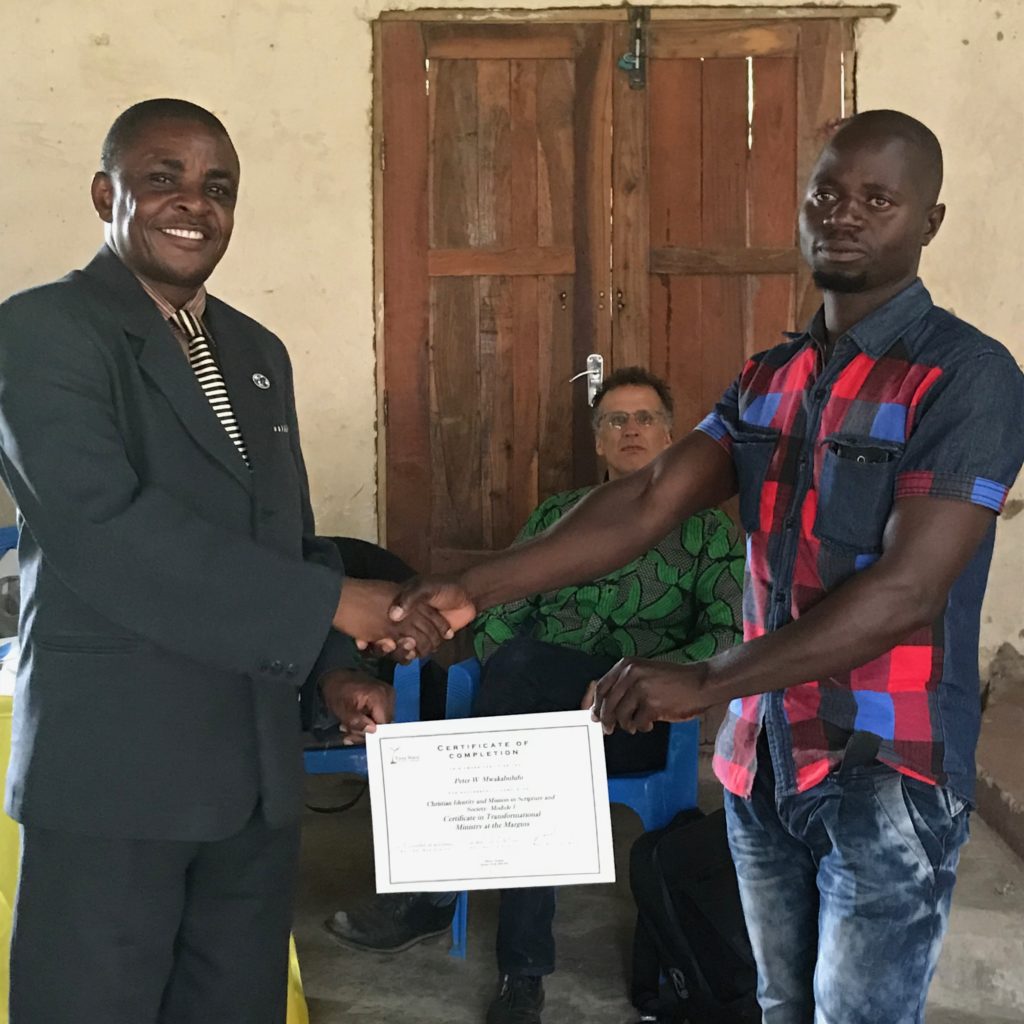
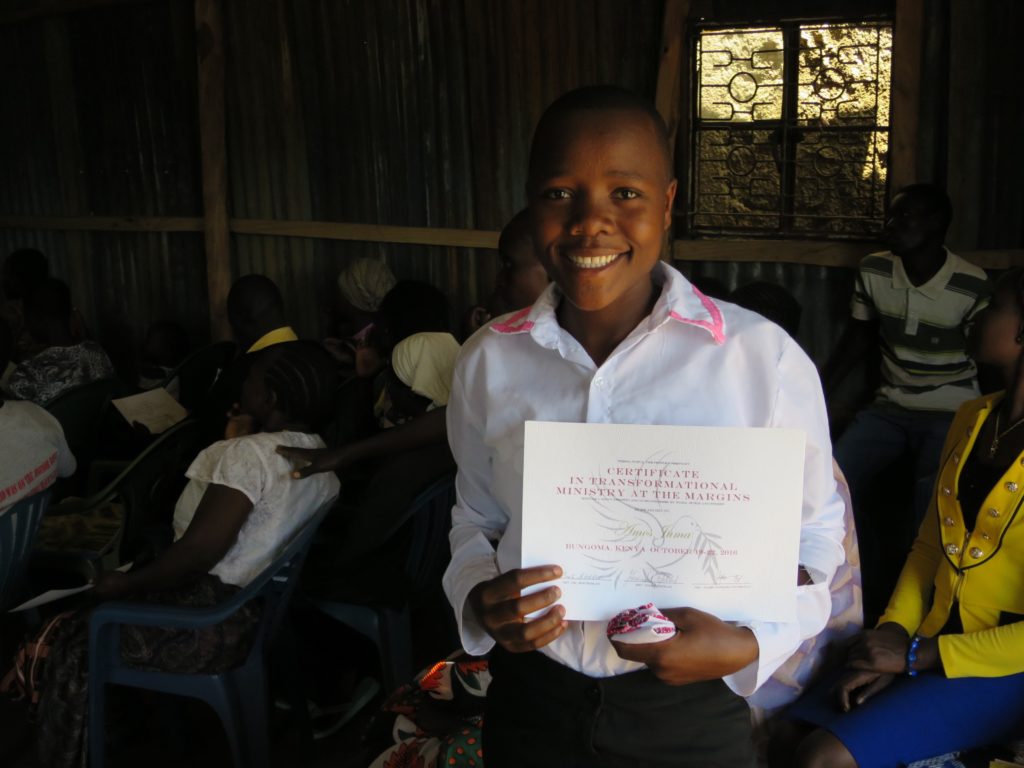
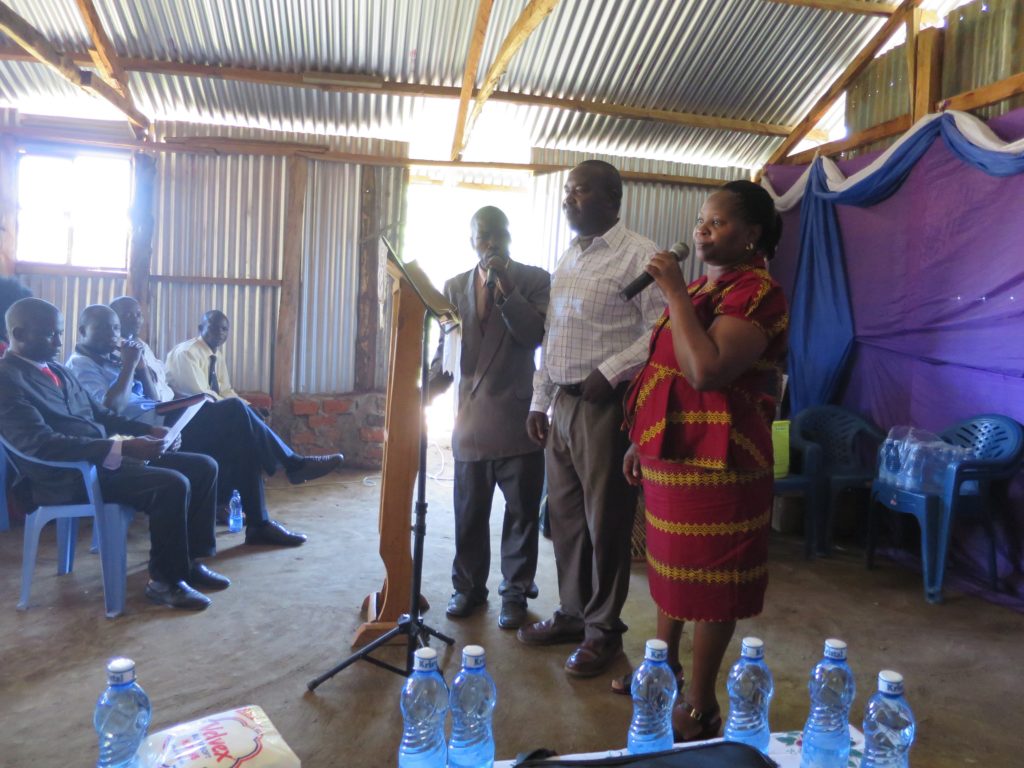
Our first training took place in a humble sheet-metal church in Kimwanga, an impoverished village of the city of Bungoma in Western Kenya. There we offered the third and final course of our Certificate in Transformational Ministry at the Margins (CTMM). At the end of our second day a drunken woman on her way back from a nearby bootleg distillery stumbled into the church at the end of one of our session—something locals told us never happens.

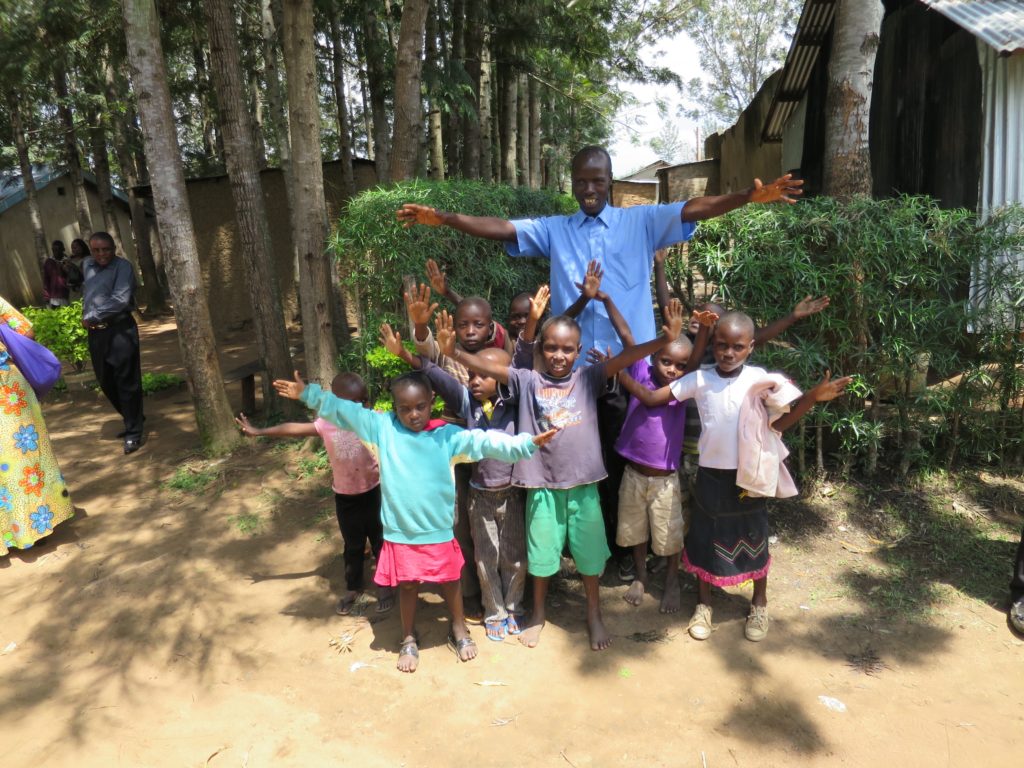
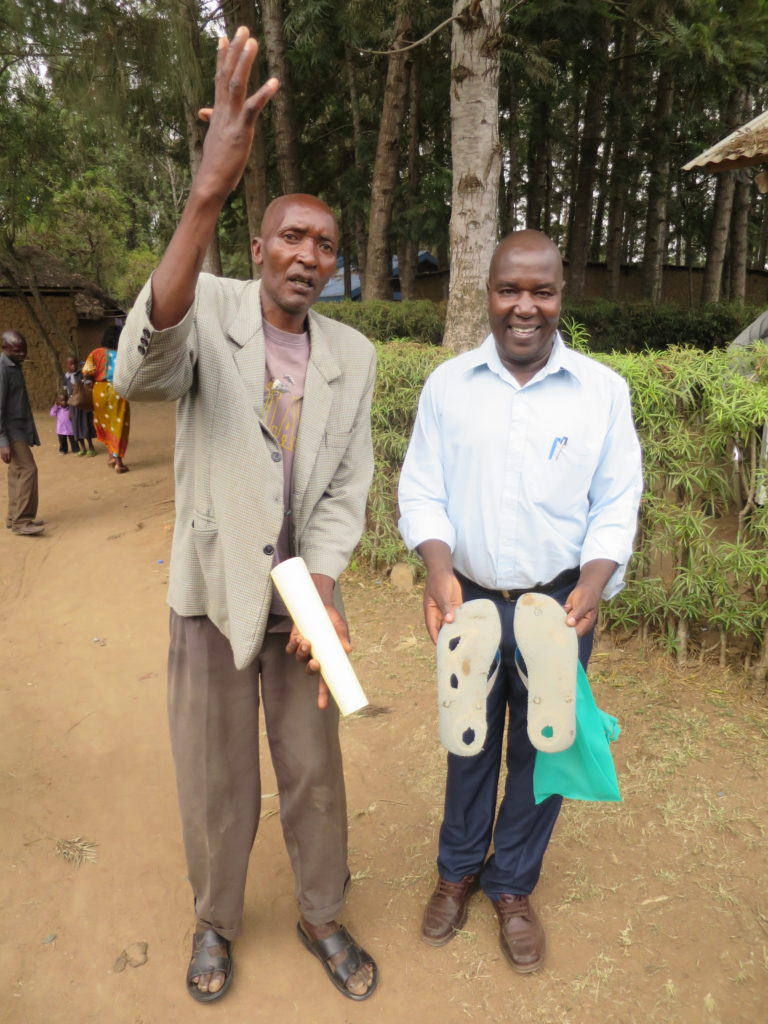
The woman came up to the front confessing her sins aloud, repenting of her alcoholism. She dropped to her knees at the front of the church before Gracie, me and our Kenyan colleagues, James and Helen. The pastors all rose and began to sing a worship song, and we prayed for her. Over the course of the remaining two days this woman returned two more times to request more prayer. Two other drunken and heavily demonized men also joined the group—one of whom surrendered his life to Jesus and even completed the training. He was thrilled when James bought him a new pair of sandals to replace his hole-filled flip-flops (see photo below).

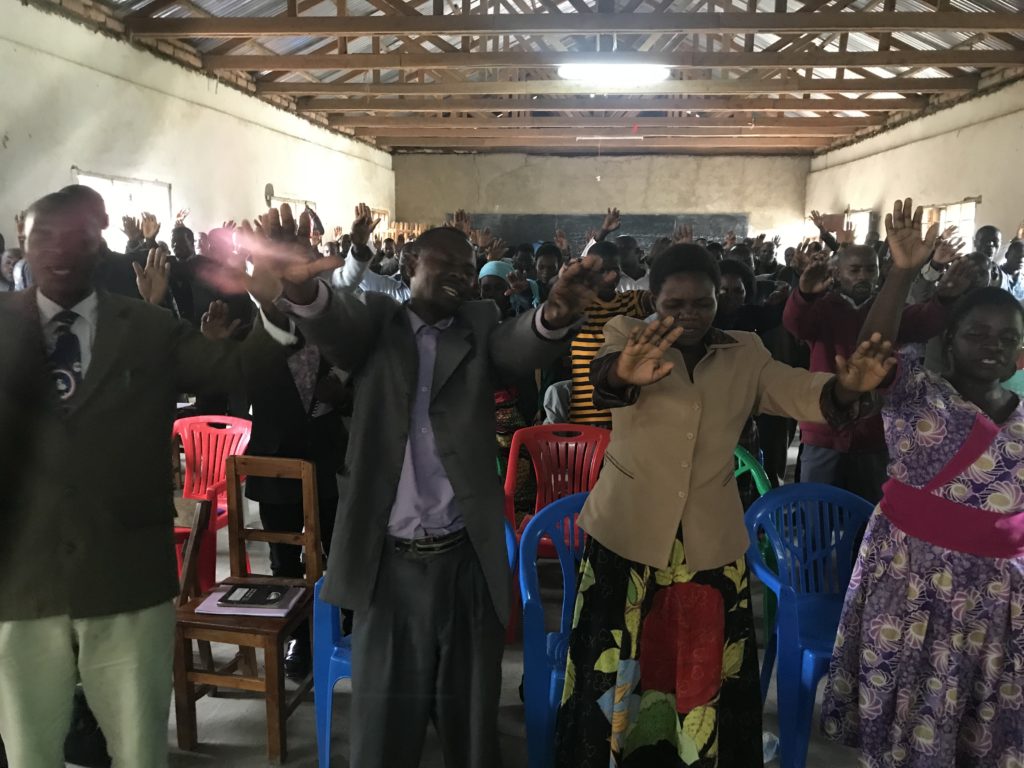
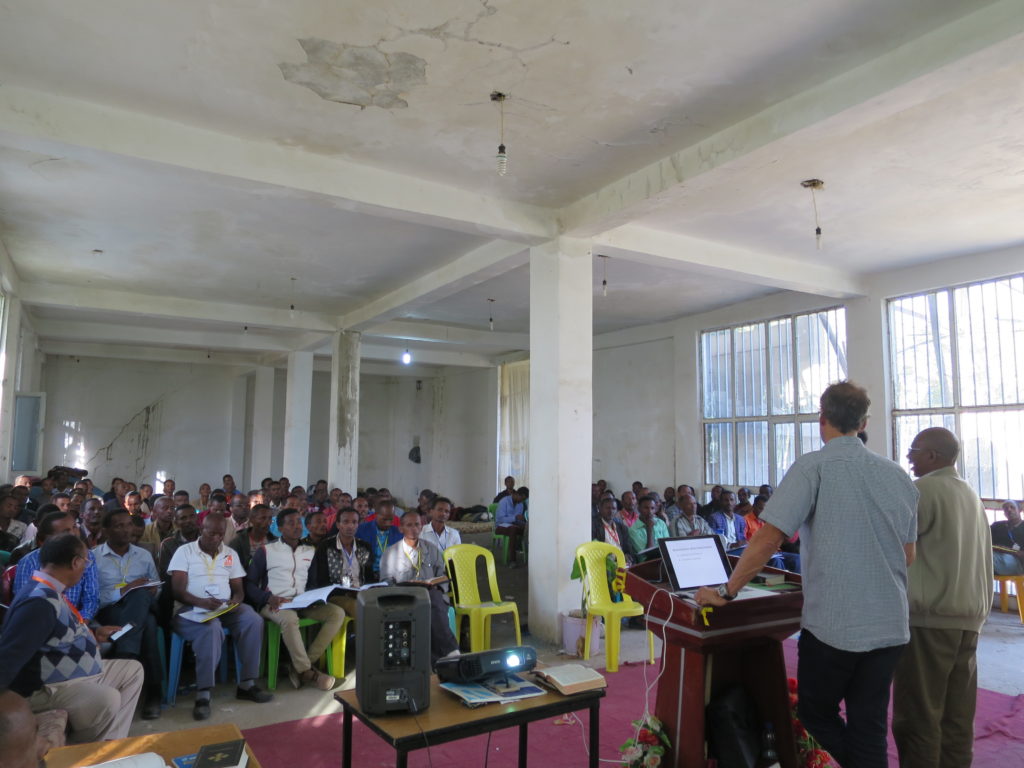
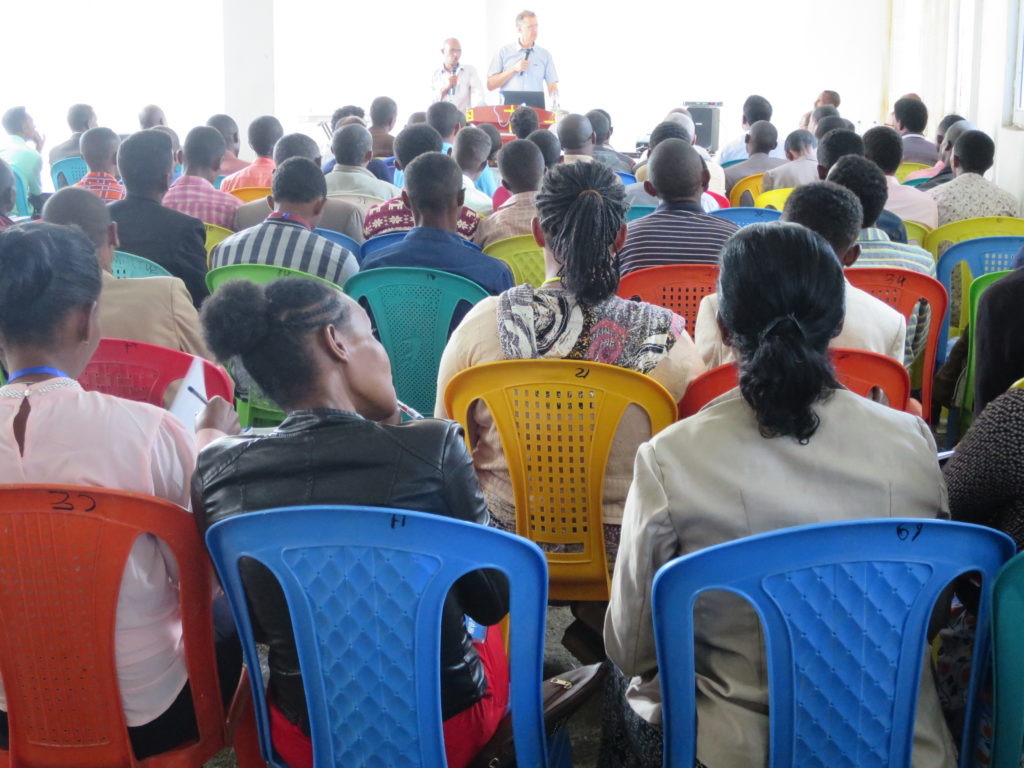
Last week in Mbeya, Tanzania we offered the first module of our CTMM to over 150 pastors and leaders. On the third day a man came forward confessing that his uncle had recruited him to take over his vocation as witchdoctor before he died. In front of a roomful of pastors and leaders he renounced practicing witchcraft and dedicated his life fully to Jesus. We prayed for his full deliverance and he graduated the Course with joy (photo below).

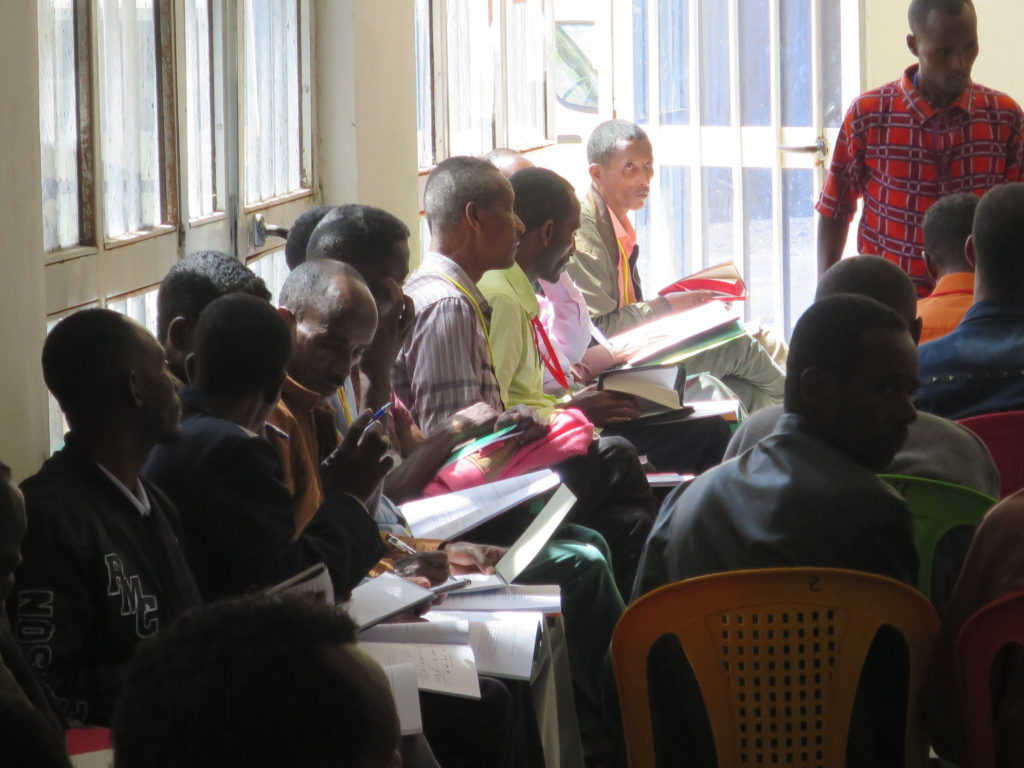
These public confessions and conversions served as visible signs confirming the teaching and the very good news announced by the Apostle Paul that the God’s kindness, tolerance and patience leads to repentance (Romans 2:4). The people blessed us as we left for Zimbabwe (final photo), where we start our final course tomorrow. Here’s a link if you’re interested in collaborating.


Christmas Eve with Inmates: Tidings of Great Joy

12.29.17


This Christmas Eve afternoon I read the story of the birth of Jesus with five Spanish-speaking men at Washington State Reformatory. After reading Luke 2:1-7 I sought ways to engage prisoners especially sad to be separated from their families over Christmas.

We notice that Joseph and Mary were forced to go to Bethlehem to comply with a “count” (census) ordered by the Roman Empire (inmates have at least two mandatory counts daily, while most of us may experience one census in our lives).  A Messiah liberator was supposed to come from this city of David, and it already intrigues the men that he’s showing up under the radar in this way.

Mary had to give birth in a barn, as all the motels were full. They must have been poor as she wrapped baby Jesus is rags and laid him in a feeding trough for a cradle. It seems to comfort the men that Joseph, Mary and baby Jesus, like them, were forced to be separated from family and friends that first Christmas—until God provided…

We talk about how there in the same region as the humble birth, an angel of the Lord suddenly stood before shepherds who were staying out watching their sheep in the fields all night. The glory of the Lord was all around them and they were terrified. But the angel told them:

“Do not be afraid; for look, I bring you good news of great joy which will be for all the people; for today in the city of David there has been born for you a Savior, who is Christ the Lord (v. 10-11).

I ask the men what they think the “for you” means, and why God sent an angel to humble shepherds to tell them about the birth of his son instead of to rich people or religious leaders.

“The shepherds were the only ones awake in the middle of the night, and were probably the only ones available and willing to go in the dark to track down a poor couple and a newborn in some stable,” says Rogelio, a Chicano man nearly twenty years into a forty-six year sentence.

We talk about the clues the angel gave, special signs for the shepherds that would help them identify the Savior Jesus:

“This will be a sign for you: you will find a baby wrapped in cloths and lying in a manger.”

The humble attire and location of the Christ child identifies him with the inmates in ways that continue, showing us the kinds of clues we should be looking for.

I ask a humble 36-year-old indigenous Guatemalan man named Vicente who is ten years into a twenty-year sentence how the angel would describe the place where he was born.

“I was born in a shack made of wood slats in a village of Huehuetenango. We slept under sheep skins,” he says.

We read how more angels show up in the fields, praising God and saying “Glory to God in the highest, and on earth peace among men with whom he is pleased.”

The men don’t understand why God was for some reason pleased with these shepherds, because they can’t see anything about them that would have qualified them to be the first witnesses of the baby Jesus- Savior King. Everyone is in agreement though, that God was eager to share his joy at the birth of his son, and the shepherds were keeping watch, available and chosen– to celebrate Christmas with them.

I ask the men if any of them had ever seen an angel. The first two men say they haven’t.

“I have!” says Vicente, with confidence that gets everyone’s attention.

“Two times!” he emphasizes, lifting his hand and showing us two fingers.

He goes on to share how earlier in the year he was dying of leukemia and was taken by a prison guard to a big hospital in Seattle. As he lay there he was suddenly enveloped in a bright light and heard a voice say: “No, it’s not his time yet.”

Then an angel went to my feet and another to my head. The one by my head said: “We’re not going to take you. You will be healed.”

He awoke and was well enough to return to prison, but then the leukemia flared up again and he was hospitalized in the prison. For three months he had been suffering from a terrible, constant headache. He was asleep when the same two angles appeared to him again in a dream, one at his feet and another at his head. The angel at his head put a hand on his head and told him he was healed. When he awoke his headache was gone. Blood tests now show there is no sign of leukemia.

Rogelio points out how Vicente’s photos on his inmate ID badge shows a pale, emaciated face that contrasts with his dark, healthy face now. We all stop for a moment to look at his badge and him and he grins with contentment.

Vicente’s face shines as he tells the group how he became a believer in Jesus while in solitary confinement five years before.

“When I was in the hole I heard testimonies of guys from other prisons who had killed people, were doing 60 years, heads of gangs. But God touched them. Now they are not gang members. Now they are not about beating people up. Now they are soldiers of God. I got on my knees and I prayed. I was at Coyote Ridge Prison. It was 2012.”

We read the final verse: “The shepherds went back, glorifying and praising God for all that they had heard and seen, just as had been told them.”

Jesus’ first witnesses are humble shepherds working graveyard shifts. Now they include people like Vicente, prisoners in solitary confinement and many others whose stories are yet to be heard—yours and mine included. May we find ourselves watching and waiting for good tidings of great joy for all people.

The challenge of equipping ministry workers at the margins in East Africa

12.17.17

Across the developing world, 3.2 million pastors are untrained or under equipped. In Africa, it is estimated that 90% of church leaders may never have received even one day of formal training. This is especially true in East Africa, where poverty, drought, disease, conflict and religious persecution are wreaking misery and chaos.

While some training is available to the privileged, training is needed for front-line Christian ministry workers who are giving their lives in service of the excluded and under-reached.

As you may know, we have developed a training program that helps grass-roots ministry workers of all ages develop core competencies in skills such as leading Bible studies, teaching, emotional and physical healing, advocacy, gifts of the Spirit, conflict resolution, addiction-recovery approaches, prison ministry and sustainable agriculture. This program offers a “Certificate in Transformational Ministry at the Margins,” which can be taken in three, four-day intensive seminars or through a distance learning program over 12-18 months. We have completed CTMM cohorts in Burlington, London, Glasgow and Seoul.

If you live in the UK, consider enrolling in one of our CTMMs in Glasgow (March 14-17, 2018) or Bristol (April 18-21, 2018). See www.tierranueva-europe.org for more information and applications.

To respond to the acute need for training in East Africa, we currently have four different four-day trainings planned to equip 500 leaders in: Western Kenya (Jan 10-13), Mbeya, Tanzania (Jan 17-20), Gueru, Zimbabwe (Jan 23-26), and Ethiopia (April). Normally I do not send out fund raising appeals through these updates. But funds are needed now to purchase airline tickets and make other arrangements, and we have initiated an unprecedented GoFundMe campaign. We would love your help to promote it.

The cost for one African leader to receive this four-day training course is $55.00, which includes meals and accommodation for participants from remote areas, travel expenses for African trainers who help teach and minister, airfare (from Europe) and accommodation for us, the translation and printing of training manuals and certificates, along with other incidental expenses. This must be heavily subsidized due to people’s limited resources. We are trying to raise $27,500.00, which will allow us to offer a four-day CTMM to about 500 people in four countries.

Please inform people you know about our campaign, which is live here. If you personally feel called to give you can do so directly to Tierra Nueva in one of the following ways:

1)  Online E-giving to The People’s Seminary through the Tierra Nueva website:
2) Sending checks earmarked “CTMM training” to Tierra Nueva, PO Box 410, Burlington, WA 98233
3) Donating via PayPal through:  http://give.fivetwo.org/give.tierra-nueva.org
4) Contact Tierra Nueva Europe at

Thank you for your support and prayers.

Peace and joy to you this Christmas!

Bob and Gracie Ekblad
Tierra Nueva & The People’s Seminary

Ransoming hostages and posting bail get God’s attention

12.07.17

I have been closely following the European refugee crisis due in part to my regular teaching of mission courses in the UK and around the world. Two years ago I visited the refugee camps in Calais, France, where I met refugees from Ethiopia, Eritrea, Somalia, Sudan, Iraq, Iran and many other countries (see update) who were seeking entry into the UK.

Months before visiting Calais I had run into Ismahan, a friend from Ethiopia living in Paris. She had visited us at Tierra Nueva back in 2009 before moving to France. It was then that I connected her to a church in Paris where we have close ties. When I saw her I told her about my plans to visit Calais and asked if she had any contact with East African refugees in France.

Ismahan became distressed and told me that her 15-year-old brother was being held captive in Libya and was in grave danger of being killed. She shared how her brother had paid a trafficker to bring him from Ethiopia to Europe. In Libya he’d been captured by pirates, who were demanding $12,000 ransom. She asked if I would accompany her to a part of Paris where there were lots of refugees. She hoped to find someone who might know how to effectively get ransom money to the traffickers to secure her brother’s release.

That afternoon we headed to a metro stop where East African refugees are known to congregate. Almost immediately we met an Ethiopian man who introduced us to Eritreans who’d arrived that day from having just crossed over by boat from Libya to Italy. He guided us to an abandoned school where over 500 refugees from many countries were squatting in crowded, miserable conditions. We ended up praying for a number of people there, and the reality of the European refugee crisis suddenly became all too real for me (see past update). We raised some funds to help pay the ransom to free Ismahan’s brother, and she was able to arrange her brother’s release.

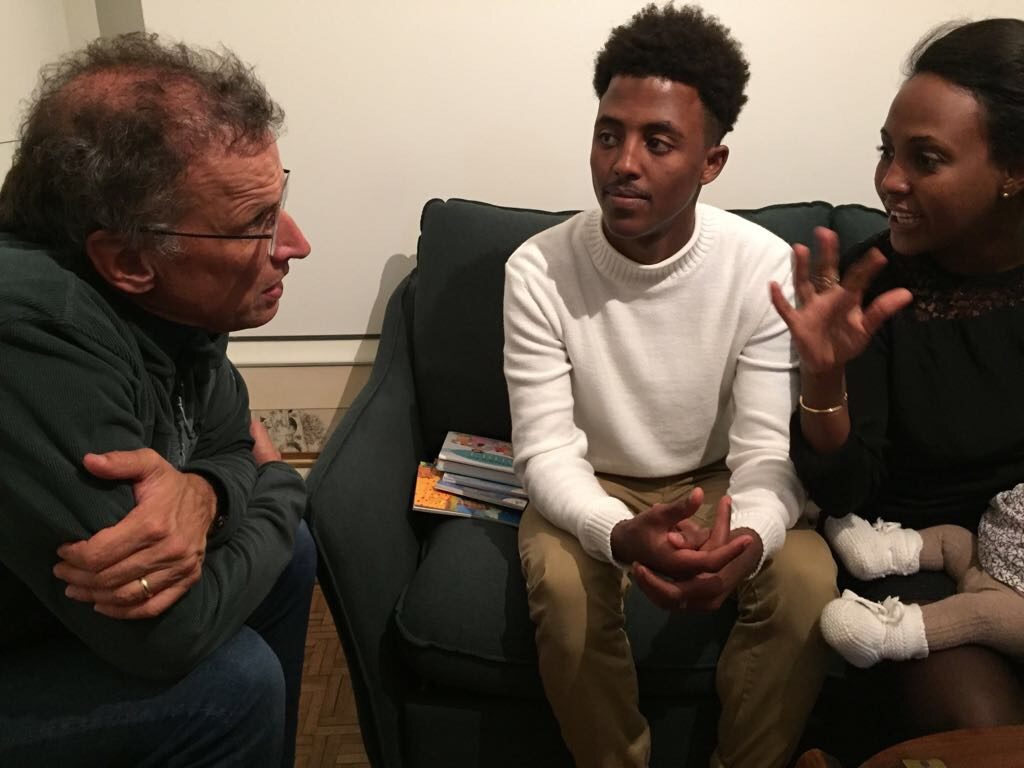
On our recent trip to Paris this Fall, Ismahan introduced us to her brother Aydarusse, now 17, who has finally made it to France (photo above). He told us how his captors held him in a shipping container full of other mostly young migrants in the desert for three months (read more here). His captors regularly tortured him and the other prisoners, some to the point of death. They would hang him and other hostages by their wrists and whip them on a daily basis—calling their family members threatening to sell them as slaves, or sell their organs if they didn’t send money immediately. When his captors finally received their ransom Aydarusse was released, put on a boat full of migrants.

“There was nobody to guide the boat full of refugees,” he said. “They just gave us the GPS coordinates for Italy and sent us across the Mediterranean.”

The boat behind them capsized and hundreds of people drowned, including one of his close friends. He made it across to Italy and spent a year in a refugee resettlement camp before Ismahan was able to arrange his passage to Paris. Since his confinement in Libya, he has been suffering from anxiety and seizures. Though he considers himself a Muslim he asked us to pray for him. What a privilege to have this opportunity to hear his story and minister the love of Jesus to him!

On November 5 during a layover in Paris from Ethiopia I preached at a special international service with French, Japanese and Egyptian congregations gathered at Eglise Protestante Unie du Marais (watch here in English and French). I had been asked to preach on Isaiah 58, the biblical text at the heart of my pastoral call.

I shared how I’ve been struck afresh by God’s word to the prophet: “Cry loudly, do not hold back; raise your voice like a trumpet, and declare to my people their transgression and to the house of Jacob their sins” (vs. 1).

Why is the prophet to speak so strongly about the people’s sins?

The people considered themselves in active pursuit of God through spiritual practices, but they were frustrated: “Why have we fasted and you do not see? Why have we humbled ourselves and you do not notice?”

God, too, notices his people’s spiritual quests. “They seek me day by day and delight to know my ways.” They ask me for just decisions, they delight in the nearness of God” (58:2). However God is not impressed, seeing and exposing social sins blocking their relationship with him and with each other.

“Behold, on the day of your fast you find your desire, and drive hard all your workers. Behold, you fast for contention and strife and to strike with a wicked fist.”

Isaiah exposes and denounces spirituality devoid of social compassion and equity. Here God dismisses religion practiced by people who’ve hardened their hearts to the plight of the poor. Isaiah’s message seems highly relevant to our times.

I wonder what the equivalents of this would be today. I know how easy it is for me to justify consumerism, and hostility around politics. Today’s growing lack of civility sadly includes many Christians, and tough attitudes towards immigrants, certain kinds of transgressors and national enemies are certainly on the rise.

Through the prophet God calls the people to a spirituality that involves them becoming agents of freedom to people who are oppressed.

“Is this not the fast which I choose, to loosen the bonds of wickedness, to undo the bands of the yoke, and to let the oppressed go free and break every yoke? Is it not to divide your bread with the hungry and bring the homeless poor into the house; when you see the naked, to cover him; and not to hide yourself from your own flesh?”

According to Isaiah 58, abundant life, recovery and deep spiritual connection with God will happen when we take action against injustice and engage concretely with people in need around us.

“Then your light will break out like the dawn, and your recovery will speedily spring forth; and your righteousness will go before you; the glory of the Lord will be your rear guard. Then you will call, and the Lord will answer; you will cry, and he will say, ‘Here I am.”

Hearing God’s voice and being guided spiritually are intimately linked to acting compassionately towards hurting people around us.

“And the Lord will continually guide you, and satisfy your desire in scorched places, and give strength to your bones; and you will be like a watered garden, and like a spring of water whose waters do not fail.”

As I shared these thoughts and the story of Aydarusse, Ismahan suddenly noticed that her brother was standing at the back of the church with a big smile on his face. The whole congregation broke out in cheers. Many had contributed so he could be released.

Currently I am in contact with a Salvadoran pastor named Giovanni who had to flee El Salvador due to his prison ministry to gang members. He himself is a former gang member and was being targeted and persecuted by law enforcement. Upon entering the United States this past August he was arrested by Immigration and Customs Enforcement (ICE) agents, and is being held in detention. Giovanni continues to share his faith with fellow detainees and is making a big impact. However he has just been given the opportunity to bail out to pursue his claim for political asylum, but needs $5000 for bail. Consider helping him bail out so he can rejoin his wife and son, now in Washington State (see our Gofundme campain here).

May you open your heart afresh to the living God and to vulnerable people around you during this season, as you celebrate the birth of Jesus, the world’s Savior.

Ethiopian Adventures

11.08.17

The story of Philip’s encounter with the Ethiopian eunuch in Acts 8 has always inspired me—making me long for such adventures. Philip is attentive and flexible- wholly given over to Jesus’ movement. His availability to go out on missions is contagious, and Gracie and I are enlisted. May this contagion pass on to you, inspiring you to new ventures.

Philip is first mentioned in Acts 6:5 as second on a list of seven deacons recruited by the first believers to serve Greek-speaking widows who had been overlooked as food was distributed at the early church’s equivalent of a food bank.

After the apostles commissioned these seven, the first man on the list, Steven is propelled into an unexpected vocation. “Full of grace and power,” he answers with great wisdom those who oppose him. He preaches a detailed apologetic from the Scriptures that prophetically challenged his audience to embrace Jesus. His enraged Jewish audience consequently stones him to death.

An ensuing wave of persecution causes Christians in Jerusalem to scatter. Philip, next on the deacon list, goes to Samaria, proclaiming Christ with powerful results. Many are delivered of unclean spirits and many paralyzed and lame are healed. On his way back to Jerusalem an angel speaks to Philip, telling him to go to a desert road heading to Gaza.

There he encounters an Ethiopian eunuch who is reading the book of Isaiah in his chariot. The Spirit tells him to join the chariot and he runs to offer his assistance in interpreting the Scriptures, preaching Jesus to him. The Ethiopian man believes and is baptized, becoming the first known African Christian. Philip is then transported by the Spirit to the town of Azotus, where he continues his preaching all the way to Caesarea.

Over the past few years I’ve had my own series of encounters with Ethiopians, from meetings in Paris with people who’d just been trafficked from Libya, to visits with immigrants and a deacon of an Ethiopian Orthodox church in a refugee camp in Calais, France. This exposure to Ethiopians and to immigrants and refugees fleeing war and persecution in Iraq, Iran, Afghanistan, Kurdistan, Eritrea, Somalia, South Sudan, and Yemen contributed to my prayer two years ago this month. Then I deliberately offered myself to God anew to provide training to leaders in poorer countries with minimal access to education.

Within two weeks I received seemingly random invites to train leaders in Kenya, Zimbabwe, Tanzania, and Siberia, most of which we have already pursued. During this same two-week period I accidentally locked my keys in my car on the last day of a course on prophetic ministry at The Seattle School of Theology and Psychology. After calling the roadside service, AAA, I began teaching my class, and soon received a call from the tow-truck operator who had arrived to unlock my car.

An African man met me at the door of the school, introducing himself as Yared. He surprised me by immediately asking me what I teach at The Seattle School. I told him I teach Biblical studies classes.

“Why do you ask?” I said. “Are you a Christian?” “Yes,” he said. “I’m a worship leader for an Ethiopian congregation here in Seattle.”

I then told him that my real passion is to offer hands-on equipping of pastors and leaders in poorer countries through our Certificate in Transformational Ministry at the Margins. I briefly told him how our course combines skills in interpreting the Bible and facilitating relevant theological reflection, exercising the gifts of the Spirit, prophetic response to social justice issues and Christian identity in places rife with nationalism and tribalism.

“In Ethiopia there is real need for such training! He exclaimed excitedly—and I have connections with people back in my country who could benefit greatly!” He asked me to wait while he ran to his tow truck to get me his business card.

“Next time you come to Seattle I will take you out for Ethiopian food and we will talk more about training leaders in Ethiopia,” he said.

When I returned to my class and told my students what had happened, one of them asked me why I hadn’t invited Yared to come and share with our class. So I texted him immediately to see if by chance he was available to speak to my class. He said he had a few minutes to share. For over an hour he told us about his life in Ethiopia, his departure and move to Seattle, his roadside business, and passion to combine practical service to people in need with sharing his faith in Christ. My students were totally inspired and we asked him to pray for us.

Yared and I met several times for meals and coffee. Earlier this year he introduced me to an Ethiopian Bishop of a Pentecostal denomination who is now based in Seattle. We met Bishop Fecadu in a café in North Seattle frequented by many Ethiopian immigrants. He told us about the network of leaders that he oversees in Ethiopia- evangelists, elders and pastors that serve impoverished rural and urban communities. I was struck by his heart of compassion and longing to see his leaders more fully equipped and encouraged. I shared with him about our training program, and he invited us to offer our first module of our CTMM in October during his visit to oversee his churches.

There’s a lot of logistics involved in offering our training to African pastors. Bishop Fecadu explained how his pastors are poor subsistence farmers from all over the country. They would need their travel, food and lodging covered, and he and we would need to cover our travel and other costs. In addition, we would need an interpreter and our English training manuals would need to be translated into both Oromo and Amharic.

Gracie and I didn’t have money for this, like all our mission trips, but we prayed for provision to cover our travel costs, pursued the translation of our materials, and began making plans. An old friend who teaches at the Mennonite seminary in Fresno connected me with people he knew in Ethiopia who agreed to translate our manual into Oromo and Amharic. One of these men, Teferi offered to be our interpreter free of charge. A few people offered to contribute towards our travel expenses and the trip became a reality.

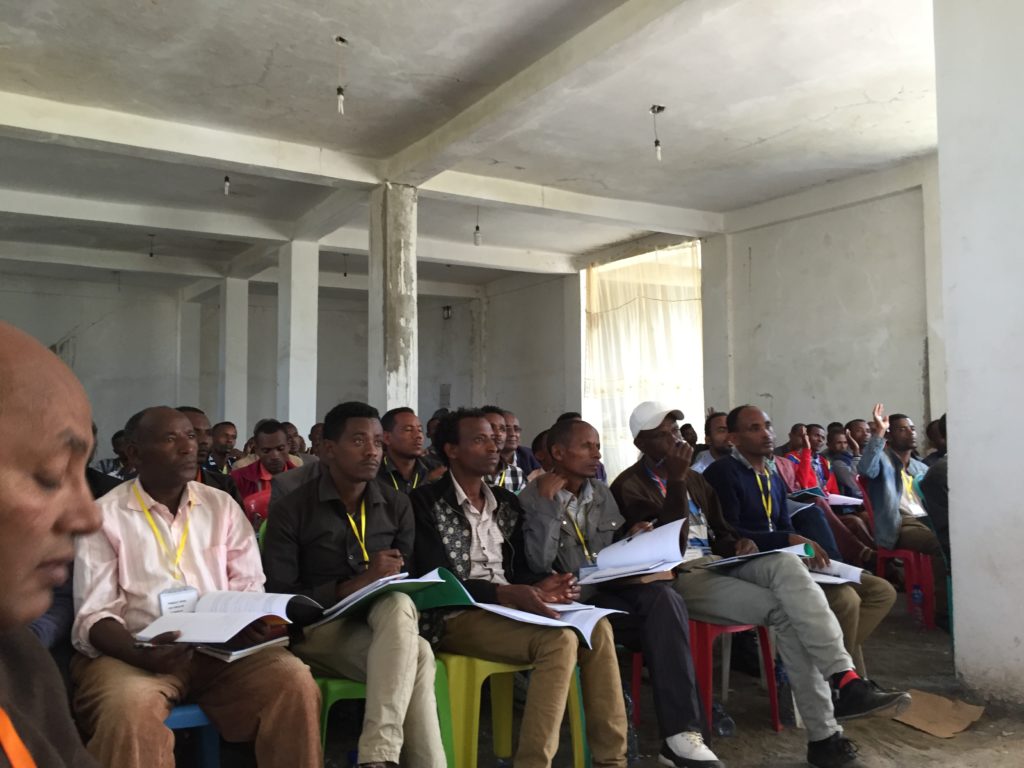
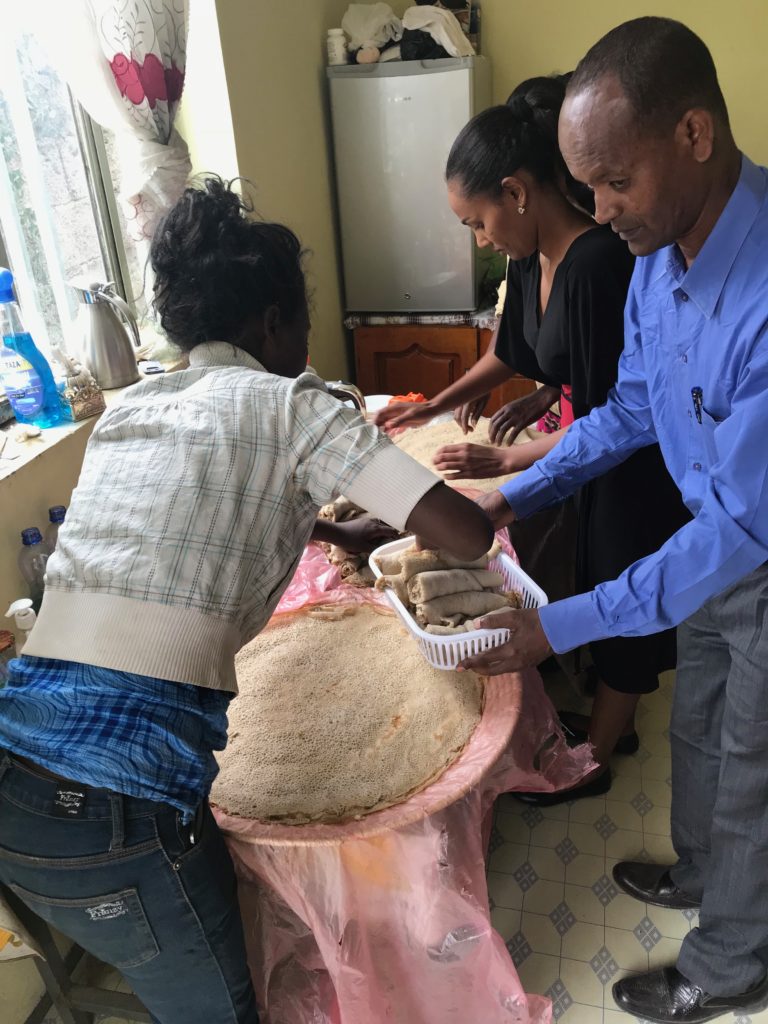
The last week of October over a hundred leaders gathered for four days in Bishoftu, a small city in central Ethiopia. We were able to share our teaching to pastors and leaders who were hungry for training in the Scriptures and passionate worshippers. Most of the participants slept on rented mattresses on the floor of the big room where we gathered. Bishop Fekadu’s Ethiopian family organized all the meals, which were cooked in massive pots over the fire in the rustic courtyard—with only a small sink for washing all the dishes. We enjoyed injera (large fermented bread crepes made of teff, a fine ancient grain of Ethiopia) with a spicy meat sauce and vegetables for every meal. Our hosts served delicious traditional Ethiopian coffee three times a day to all 100 plus participants!

Ethiopia is currently in the midst of a political crisis fueled by ethnic divisions that threaten to plunge the country into civil war. We could see that our teaching on Christian identify versus tribal and national allegiance is a timely word. Please pray for Ethiopia, and for Christians to be wise and prophetic in these dangerous times.

As usual Gracie and I were deeply blessed by the people, whose deep spirituality was evident in their vibrant worship, joy and active practice of the spiritual gifts. On several occasions people approaches us to share dreams and impressions they said they’d received from God for us—which were accurate, relevant and deeply encouraging. We were moved by people’s familiarity with Scripture, thoughtful questions and deep trust in God for health, provision and direction. We return home with hearts full of joy to be part of an adventure of faith in alignment with Philip—our first connection to Ethiopia.

Blessed are the leakers

09.05.17

Followers of Jesus have a spiritual obligation to bring into the light offenses or injustices otherwise hidden from sight. While discernment is certainly needed in knowing how and when to speak, prohibiting leaks is like silencing the prophets, who in Scripture carried out a function in Israel similar yet far beyond that of WikiLeaks or the best investigative journalism.

Jesus himself taught: “Blessed are those who hunger and thirst for righteousness, for they shall be filled,” affirming all who long for truth and justice. This hunger and thirst will lead us to walk in the light ourselves through personal confession and repentance, and also to expose injustices that affect the vulnerable.

Think of confession of sin as the exposure of our own hidden secret attitudes and actions that the Holy Spirit brings up. The Spirit sounds our hearts, “leaking” our sins into our conscious awareness, bringing conviction and inviting confession, renunciation and new, life-giving choices.

The writers of Scripture exposed or “leaked” classified, seemingly uncensored information about Israel’s patriarchs and matriarchs, political and religious leaders and the people as a whole. Incest, adultery, deception, murder, massacres, corruption, idolatry, power-grabbing schemes, rape, treason and every imaginable injustice and sin was brought into the light vocally and in written form for all the world– past, present and future to see.

The prophet’s role in Scripture included exposing injustices and confronting perpetrators. The prophet Nathan brought a message from God to King David, exposing his adulterous affair with Bathsheba and his murder of her husband Uriah. Isaiah, Jeremiah and every other prophet exposed both known and hidden sins and injustices of kings, and announced God’s judgment as consequences.

Leaking has always been a high value for prophets, who bring the final judgment into the present, demanding that things change now in alignment with heaven. Keeping evils hidden in the interests of national security brings no security at all, from a divine perspective. The prophet brings the high demands for truth in the innermost places as a precondition for real security—which is eternal.

There are justifiable reasons for keeping some information confidential. But oppressive policies, lies, actions bringing harm and other injustices should and will come into the light, as Jesus says:

“There is nothing covered up that will not be revealed, and hidden that will not be known. “Accordingly, whatever you have said in the dark will be heard in the light, and what you have whispered in the inner rooms will be proclaimed upon the housetops” (Lk 12:2-3).

Prophetic exposure of injustice continues in the New Testament. John the Baptist was a prophet and a leaker. He exposed and denounced Herod’s affair with his brother’s wife—which cost him his head. Jesus too knew people’s thoughts and often revealed them, and exposed in graphic detail the hypocrisy of Scribes, Pharisees, Sadducees, priests and the High Priest and secular leaders. These leaders were exposed as opposing and calling for the crucifixion of God’s promised Messiah Jesus, the Son of God himself. Jesus described people’s rejection of himself, the Light of the World, as the ultimate exposure of evil:

“This is the judgment, that the Light has come into the world, and men loved the darkness rather than the Light, for their deeds were evil” (John 3:9)

One sure sign of Scripture’s inspiration is the radical honesty and vulnerability of Biblical writers to tell what looks like a lot of embarrassing truth—which most certainly exposed the Jewish people to anti-Semitic assaults (too often even from Christians!) throughout history.

The Bible’s WikiLeak-like exposé of the sins of God’s people must be read as an invitation to transparency for us today. We mustn’t scapegoat Jews, Christians or anyone, “for all have sinned and fallen short of the glory of God.” Let us allow Scripture’s public prophetic judgment to expose our personal, racial and national sin.

The good news is that evil actions do not disqualify perpetrators from God’s call and longsuffering pursuit. Jesus was and still is a friend of sinners, and God’s forgiveness and mercy for the undeserving is available and is far superior to human justice.

So there’s no reason to hide, and followers of Jesus must be the first to acknowledge and renounce personal, collective and national sin. We must be like transparent participants in a twelve-step group, presenting ourselves in humility with full disclosure. “Confess your sins one to another” (James 5:16).

“If you continue in my word, then you are truly disciples of mine,” taught Jesus. “And you will know the truth, and the truth will make you free.” (Jn 8:31-32).

The Apostle Paul writes: “Do not participate in the unfruitful deeds of darkness, but instead even expose them.” This is certainly what Amnesty International, Human Rights Watch and many other watch groups do and must continue to do. Other famous leakers like Edward Snowden, Chelsea Manning, Julian Assange and even former FBI director James Comey have exposed dark deeds of corporations, officials and governments to the news media through WikiLeaks, calling for public accountability and the redress of wrongs.

So we must welcome quality journalistic reporting that exposes today’s evils—like recent journalistic exposés showing how US and UK weapons manufacturers make cluster bombs used to kill children in Yemen, and how the US military refuels Saudi Arabian planes used to drop these bombs. Holding perpetrators of injustices accountable can lead to life-saving policy changes.

Because we know that Jesus died on the cross to save sinners, we can confidently approach the judgment seat, knowing that “if we confess our sins, he [Jesus] is faithful and just to forgive us our sins, and cleanse us from all unrighteousness” (1 Jn 1:9).

Rather than participate in cover-ups, remaining silent, denying difficult truths as “fake news” or calling on authorities to punish today’s leakers, let us re-examine our own prophetic heritage in Scripture and hunger and thirst for righteousness. Rather than seeking personal and national security, may we be willing to be persecuted for the sake of righteousness. Jesus promises that those that so act will be filled and theirs is the kingdom of heaven.

  • « Previous Page
  • 1
  • …
  • 14
  • 15
  • 16
  • 17
  • 18
  • …
  • 30
  • Next Page »
TwitterFacebook

Bob Ekblad P.O. Box 410 Burlington, WA 98233 | (360) 755-5299

Website Built and Hosted by Koinonos

Bob and Gracie Ekblad